
Hyundai Owner Manual vs Service Manual: What Most Drivers Get Dangerously Wrong
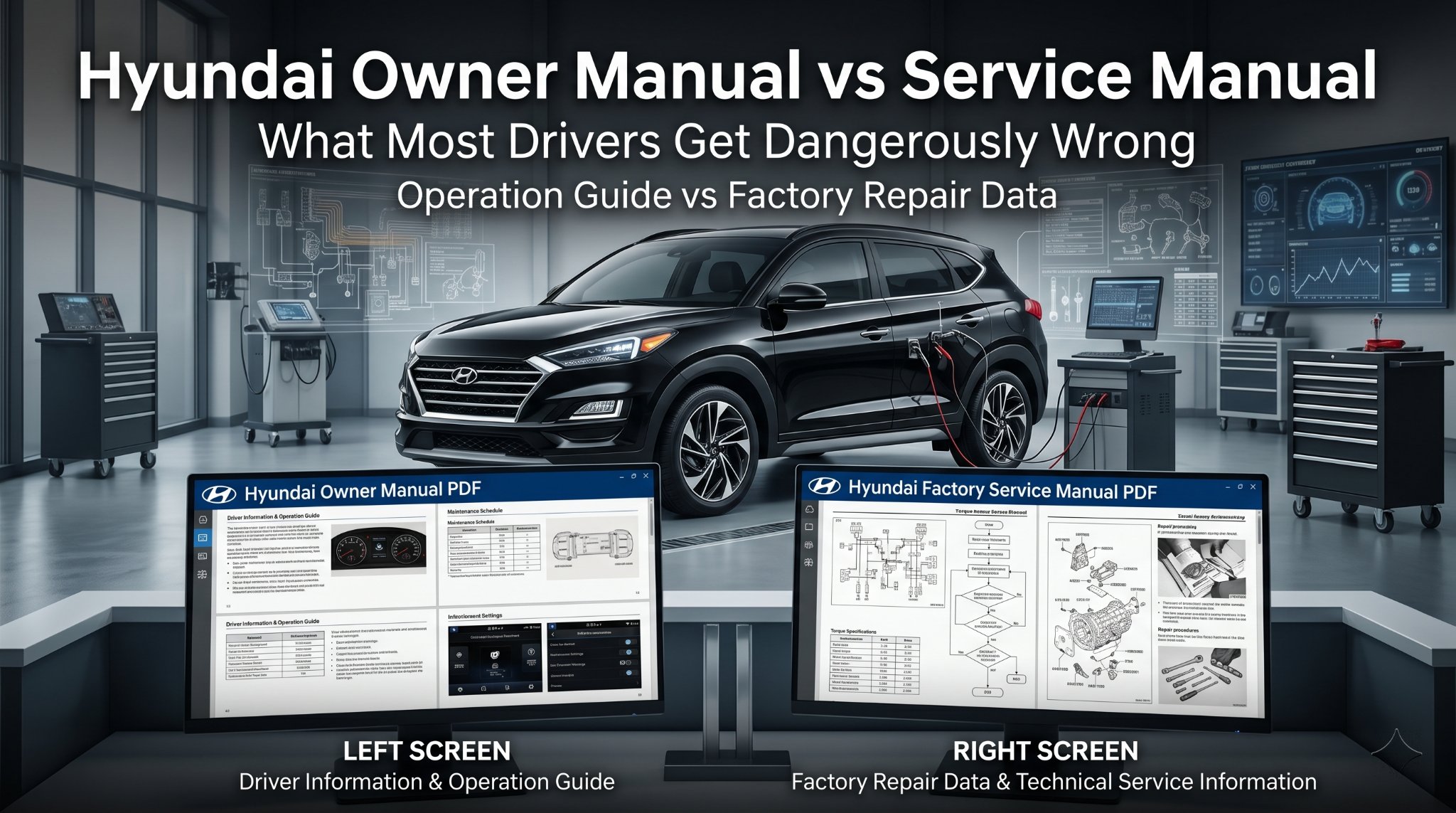
Most Hyundai drivers never realize they are using the wrong manual until something breaks. Grabbing an owner manual when you actually need a service manual can lead to missed torque specs, wrong fluid grades, and botched repairs that cost far more to fix later.
The Owner’s Manual is a consumer guide for vehicle operation and maintenance, while the Service Manual is a technical resource for repairs, diagnostics, and teardowns.
This article breaks down exactly what each manual covers, when to use one over the other, and how to pick the right document for your specific Hyundai model and situation.
Hyundai Owner Manual vs Service Manual: The Truth Most Sites Won’t Tell You
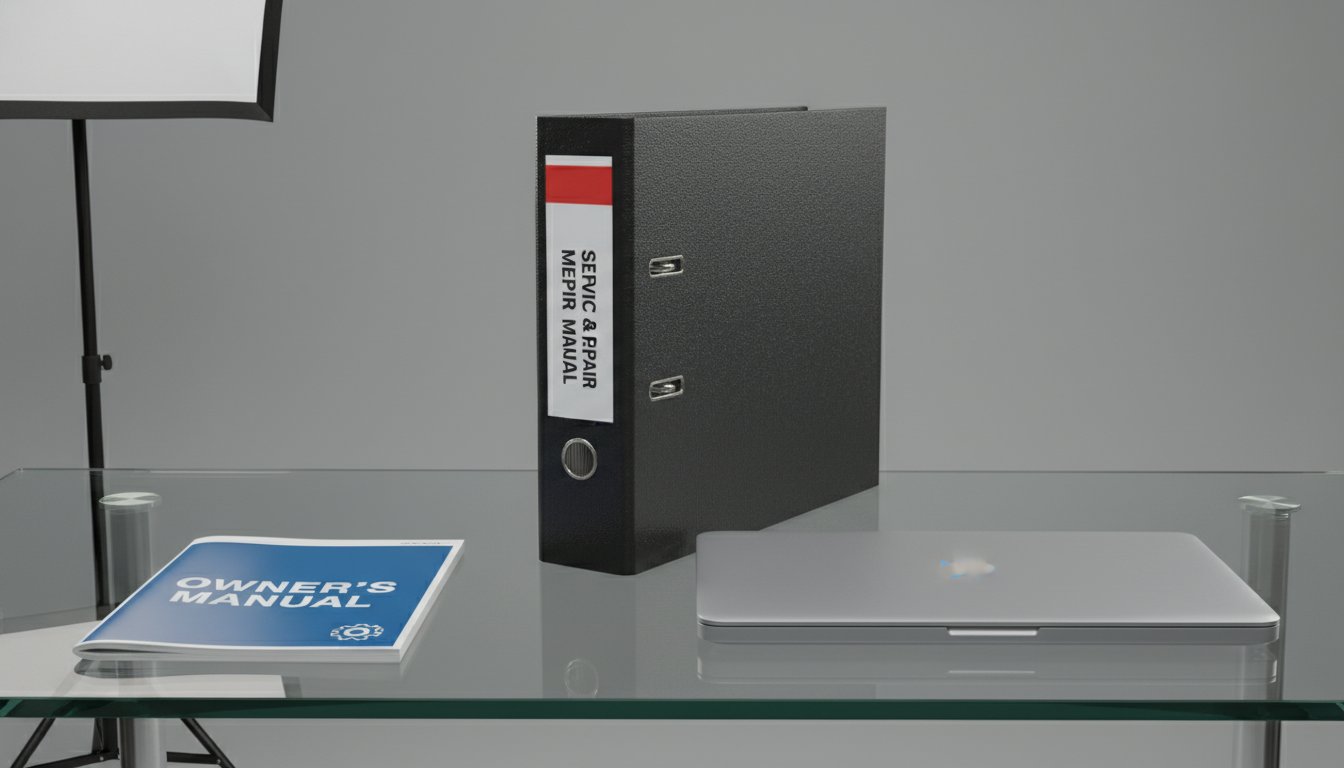
Most comparison articles treat these two documents as similar resources with slight differences. They are not. They serve completely different purposes, have different technical depth, and target entirely different users.
The Hyundai owner manual is written for the everyday driver. The Hyundai service manual is written for technicians or serious DIY mechanics. Confusing the two wastes time and, in some cases, risks real damage to your vehicle.
What a Hyundai Owner Manual Actually Covers
Many drivers assume the owner manual is all they need. It is a good starting point, but its scope is deliberately limited to keep things accessible for general audiences.
A Hyundai owner manual typically includes:
- Dashboard warning lights and what each symbol means
- Fluid check locations with basic top-up guidance
- Recommended maintenance intervals (oil, filters, tires)
- Infotainment and ADAS feature explanations, such as Lane Keeping Assist and Smart Cruise Control
- Tire pressure tables and load ratings
- Fuse box diagrams with fuse ratings
- Safety and recall notices relevant to your model year
What it does not include is step-by-step repair instructions, factory torque specifications, wiring diagrams, or diagnostic trouble code breakdowns. Those live in the service manual.
If you drive a 2018 Elantra or a 2024 Tucson, your owner manual runs between 400 and 500 pages. It covers roughly 75 labeled components with color diagrams.
Fluid specs list volume in liters and quarts with viscosity grades. It is thorough for general use. But the moment a repair is needed, it stops being useful.
If you need to find a vehicle-specific manual based on your VIN, this vehicle-specific manual lookup can point you in the right direction before you even open either document.
What a Hyundai Service Manual Actually Contains
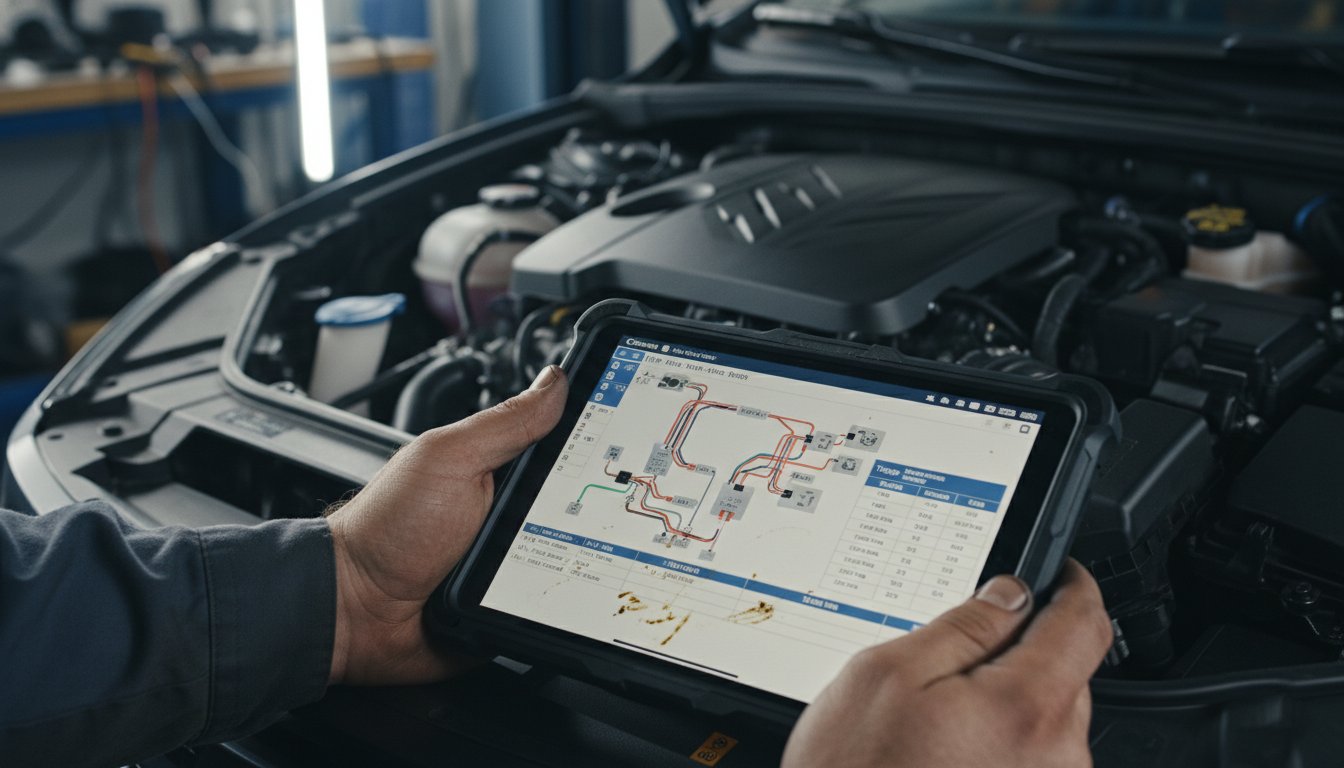
The Hyundai service manual, sometimes called a workshop manual or factory service manual, is a technical document built for repairs. This is the exact same documentation that dealer technicians reference when your car goes in for a scheduled or unscheduled service.
A Hyundai service manual typically includes:
- Step-by-step repair procedures for every major system
- Factory torque specifications down to individual fasteners
- Wiring diagrams and connector pin-outs for electrical diagnostics
- OBD2 diagnostic trouble code charts with flowcharts
- Engine, transmission, and suspension disassembly and reassembly sequences
- Hybrid battery diagnostics for applicable models like the Sonata Hybrid
- Maintenance schedules tied to specific mileage and time thresholds
- Fluid capacities with exact part numbers for OEM filters and seals
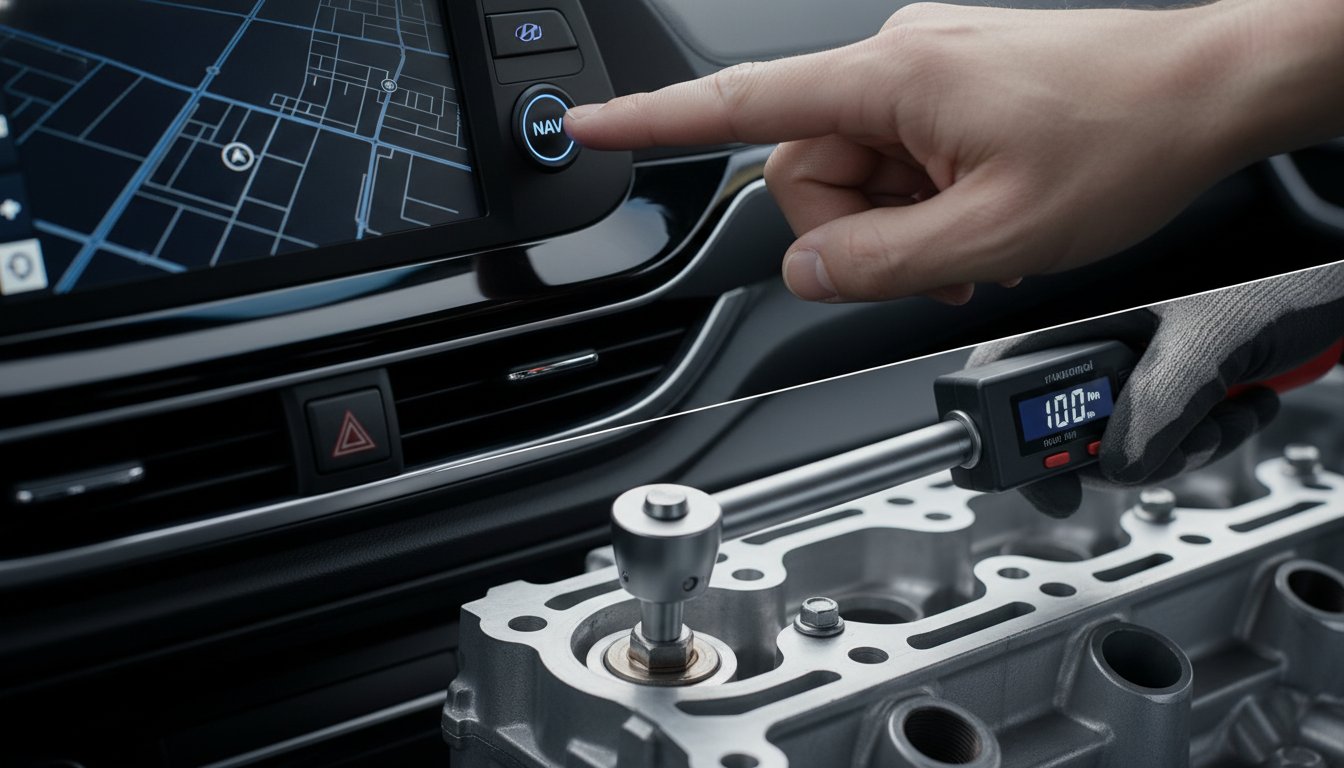
The level of detail is not comparable to an owner’s manual. Where an owner manual says “check coolant level,” a service manual walks you through pressure testing the cooling system, identifying leak points, and specifying the exact torque for the expansion tank cap.
For anyone serious about DIY repairs, a proper Hyundai service manual can significantly reduce repair time and parts costs by avoiding trial-and-error replacements.
Side-by-Side: Owner Manual vs Service Manual at a Glance
| Feature | Owner Manual | Service Manual |
|---|---|---|
| Target User | Everyday driver | DIY mechanic/technician |
| Repair Instructions | None | Full step-by-step |
| Torque Specifications | None | Complete factory specs |
| Wiring Diagrams | Basic fuse map only | Full electrical schematics |
| Diagnostic Trouble Codes | Warning light descriptions | OBD2 flowcharts |
| Maintenance Schedules | General intervals | Mileage-based detail |
| Length | 400-500 pages typical | 1,000+ pages typical |
| Technical Depth | Low | High |
| Use Case | Daily operation reference | Repair and diagnostics |
When to Use the Owner Manual vs Service Manual
Knowing which document to open first saves real time. Here is a practical breakdown by situation.
Use the owner manual when:
- A dashboard warning light appears, and you want to know what it means
- You need to confirm the correct tire pressure before a long trip
- You are checking recommended oil type or change interval
- You want to understand how a feature like adaptive cruise or park assist works
- You need to locate a fuse for a non-working accessory
Use the service manual when:
- You are performing an oil change and need the drain plug torque spec
- A Check Engine light has triggered, and you want to diagnose the exact code
- You are replacing brake pads, rotors, calipers, or suspension components
- You are working on the electrical system and need connector pin-out data
- You want to replace a sensor, gasket, or timing component correctly
If you are still deciding which document best suits your repair goal, this Hyundai repair manual selection guide clearly lays out the decision-making process. And if you are comparing OEM factory manuals with aftermarket options, this breakdown of how to choose the right repair documentation is worth reading before you commit to a purchase.

Where to Find a Genuine Hyundai Service Manual
Sourcing the right manual matters. A mismatched or outdated document can give you incorrect torque specs or obsolete wiring data, which creates more problems than it solves.
Reliable sources for a genuine Hyundai service manual include:
- Hyundai’s official dealer portal for factory-level documentation
- Verified digital manual providers that supply model-year-specific PDFs
- Haynes and Chilton manuals for a more reader-friendly alternative
- eManualOnline and FactoryManuals for instant downloadable access
Always verify the manual matches your exact model year, trim level, and engine variant. A 2.0L Elantra and a 2.0T Elantra N use different torque specs for shared components. Using the wrong spec is not a minor issue.
For trusted sources of official workshop manual documentation, this guide covers verified options. If you are buying for the first time, this workshop manual buying guide can help you avoid common purchasing mistakes.

Common Mistakes Hyundai Owners Make With Manuals
These errors come up repeatedly in forums, repair communities, and shop discussions. Avoiding them saves time and money.
- Using only the owner’s manual for repairs. It was not designed for that. Missing torque specs cause stripped threads and failed gaskets.
- Downloading a manual for the wrong model year. Hyundai updates specifications between model years, sometimes significantly.
- Confusing a workshop manual with a parts catalog. A parts catalog shows what fits. A service manual shows how to install it correctly.
- Skipping electrical diagnostics sections. Modern Hyundai vehicles have complex CAN bus systems. Guessing at wiring causes expensive ECU damage.
- Relying on generic third-party repair guides. These often carry incorrect or incomplete specs for Hyundai-specific components.
Conclusion
The Hyundai owner manual and the Hyundai service manual are not interchangeable. One is for operating your vehicle. The other is for repairing it. Using the right document for the right job is not optional if you want accurate results.
For basic questions about dashboard warnings, fluid checks, or feature operation, the owner manual is exactly what you need. The moment a real repair or diagnostic task begins, the service manual becomes the only document worth trusting.
Identify your task first. Then reach for the correct manual. That single habit will save you time, money, and a lot of unnecessary frustration in the driveway.
Common Asked Questions About Hyundai Owner Manual vs Service Manual
Can I use a Hyundai owner manual to do my own oil change?
The owner manual will tell you the correct oil grade, capacity in liters or quarts, and the recommended change interval for your model. However, it will not provide the drain plug torque specification or the filter tightening sequence.
For a proper DIY oil change, you need to cross-reference the service manual for those mechanical specs. Using the wrong torque on a drain plug is one of the most common causes of stripped threads on Hyundai aluminum oil pans.
The owner’s manual is a starting point for confirming the oil type, but the service manual completes the job safely and correctly.
Is a Hyundai factory service manual the same as a workshop manual?
Yes, these terms are used interchangeably in most contexts. A factory service manual is documentation produced by Hyundai or under OEM authorization for dealership technicians’ use.
A workshop manual is typically a technical document, sometimes produced by a third party like Haynes, that covers similar repair content in a more DIY-friendly format. The factory version uses OEM part numbers and exact specifications.
Third-party workshop manuals are often structured for easier reading but may not always match the OEM level of detail. For complex repairs or electrical work, the factory version is generally preferred.
Do Hyundai service manuals cover the electrical system and OBD2 codes?
Yes, a proper Hyundai service manual includes full wiring schematics, connector pin-out diagrams, and OBD2 diagnostic trouble code flowcharts for covered systems. This is one of the biggest gaps between the owner manual and the service manual.
The owner manual only identifies what a warning light means in general terms. The service manual tells you which sensor triggered the code, how to test it, what the voltage range should be, and when to replace it. For electrical diagnostics on models like the Sonata Hybrid or Ioniq PHEV, this section of the service manual is especially critical.
How do I know if my Hyundai service manual matches my exact trim level?
Always cross-check the manual against your vehicle’s VIN, model year, engine code, and trim designation before starting any repair. Hyundai produces different spec pages for the 1.6T, 2.0, and 2.5T engines even within the same model generation.
A service manual downloaded for a base Elantra may not carry the correct torque specs or wiring data for an N-Line or N variant. Most reputable providers allow you to filter by VIN or engine code.
If you are uncertain, the vehicle-specific manual lookup tool is a reliable way to match the correct documentation to your exact vehicle.
Is it worth buying both an owner manual and a service manual for my Hyundai?
For most Hyundai owners who handle even basic DIY maintenance, keeping both documents on hand is genuinely useful. The owner manual handles quick daily-use questions fast. The service manual provides the technical depth needed when actual work begins.
Many experienced DIY mechanics keep the owner manual in the glove box for quick fuse or feature lookups and store the service manual digitally for repair sessions.
The upfront cost of a quality service manual is typically recovered in the first repair, helping you avoid a single dealership labor charge. For anyone doing more than basic fluid top-ups, the investment makes clear practical sense.