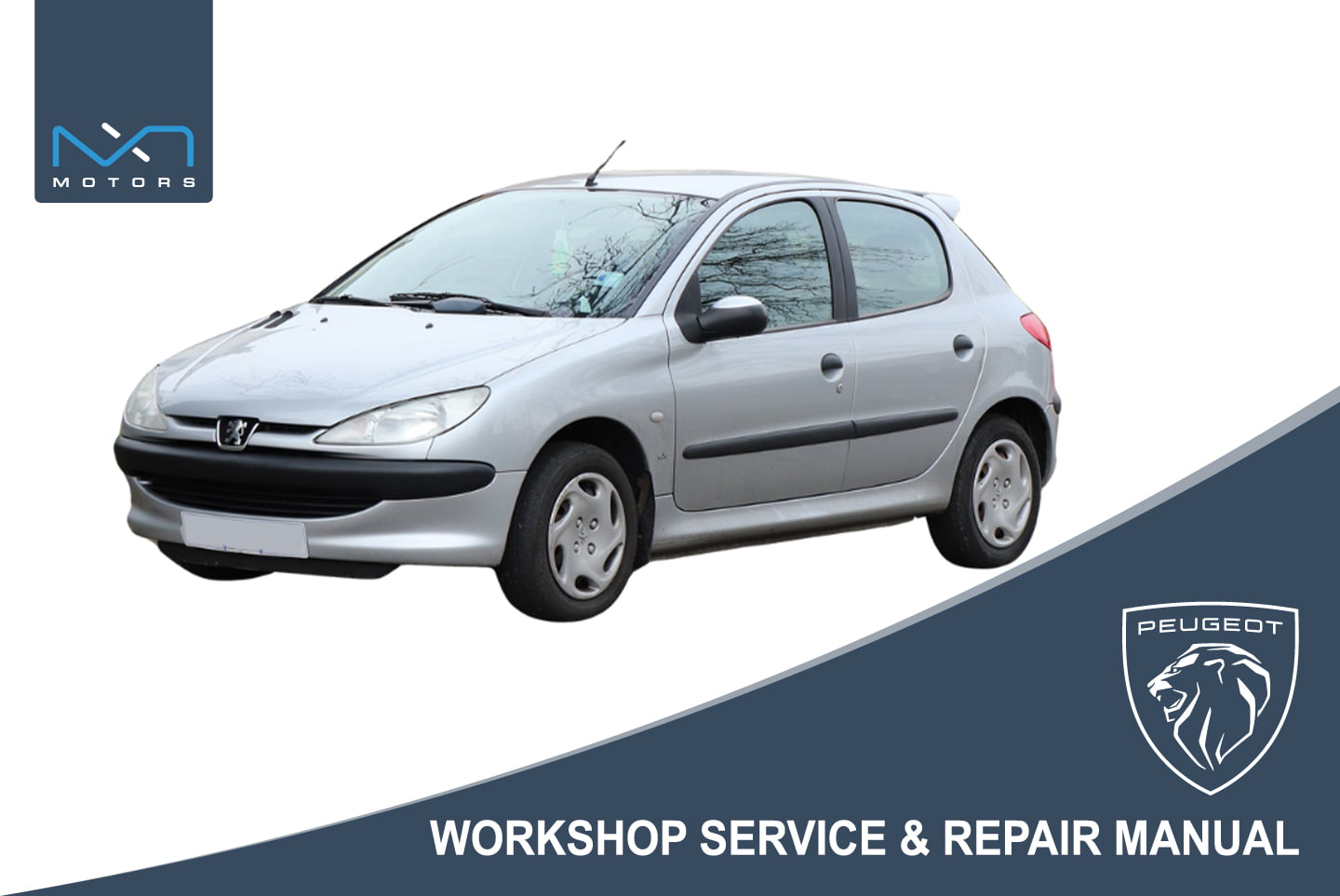
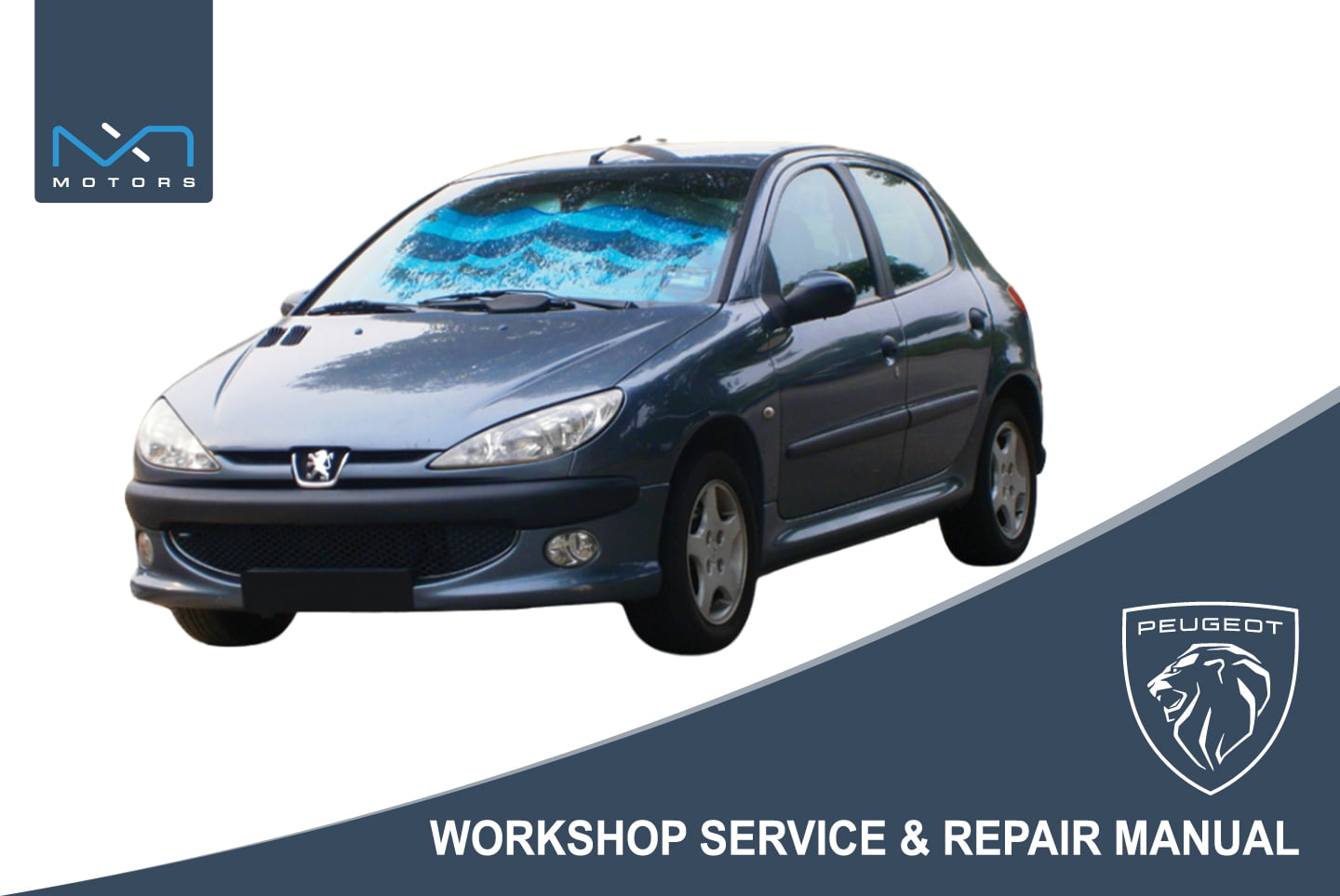
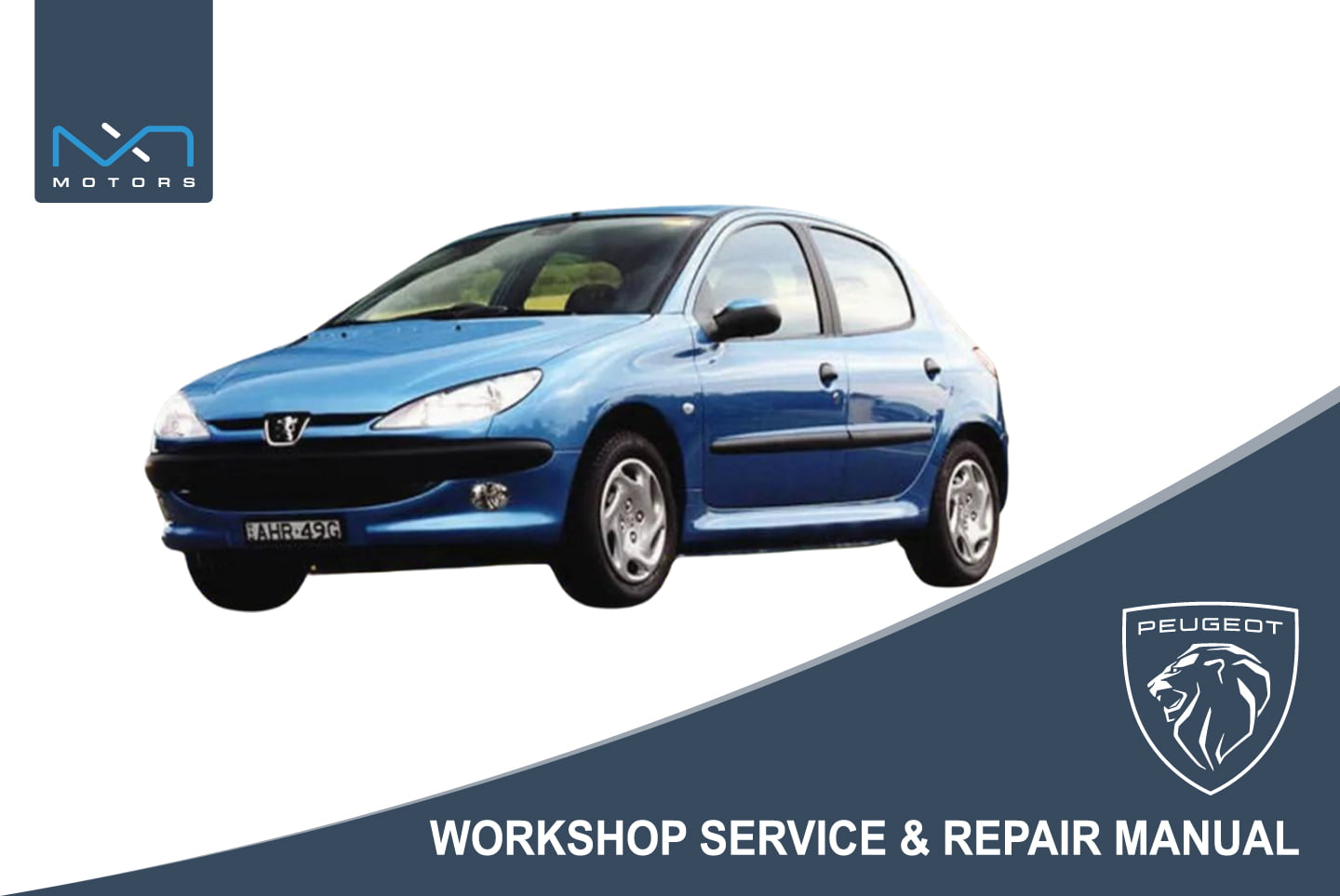
Peugeot 206 Workshop Manual and Repair Guide
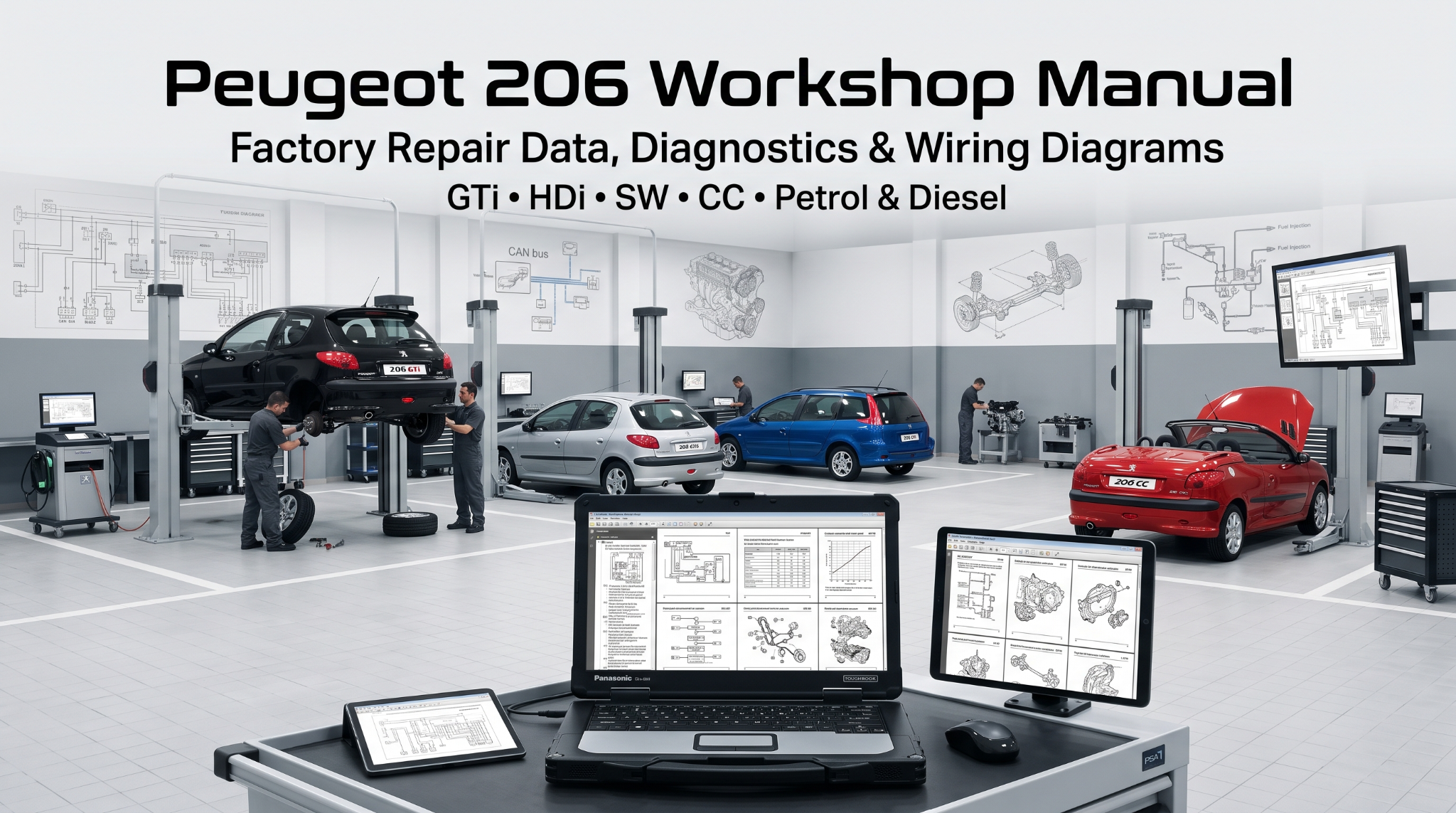
A Peugeot 206 workshop manual is one of the most useful tools you can have when maintaining, diagnosing, or repairing a 206.
This category covers Peugeot 206 repair manuals for petrol, diesel, HDi, GTi, SW/estate, CC coupe cabriolet, 3-door, 4-door, 5-door, and firm/commercial body styles.
Whether you are dealing with routine servicing, rear axle wear, BSI electrical faults, timing belt work, brake repairs, clutch replacement, or a 206 CC roof issue, choosing the correct manual helps you work with the right procedures, diagrams, torque settings, and component locations.
Finding the Right Peugeot 206 Manual for Your Model
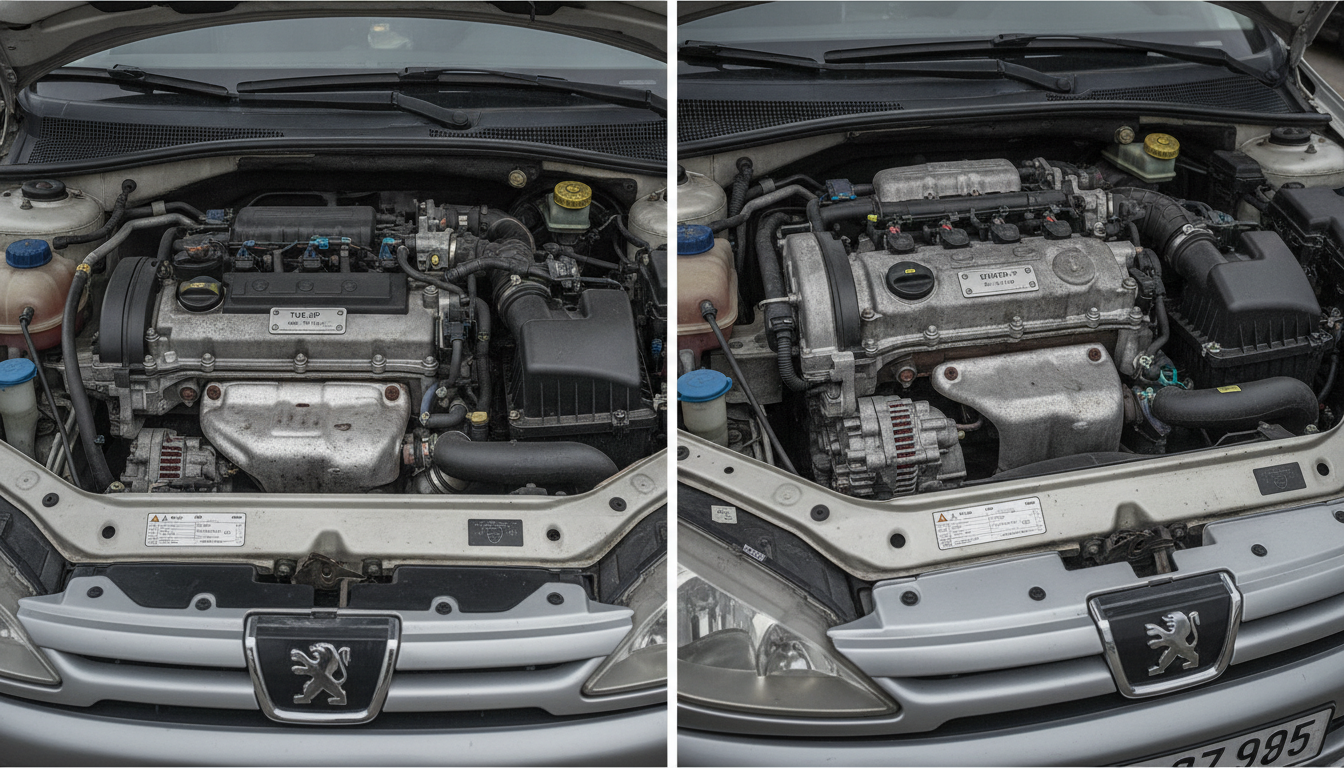
The Peugeot 206 was sold with several engines and body styles, so the best manual is the one that matches your year, engine size, engine code, fuel type, and body type.
A 1.4 TU petrol hatchback does not need the same technical data as a 2.0 HDi diesel or a GTi 180, and a 206 CC may include roof, body, and electrical procedures not found in a standard 3-door model.
| Peugeot 206 version |
Common years covered |
What to check before choosing |
| 1.0 i / 1.1 i TU1JP |
1998–2012 |
Basic petrol servicing, ignition, cooling, timing, wiring |
| 1.4 i TU3A / TU3JP / TU3AF |
1998–2014 |
Timing belt, head gasket checks, sensors, fuel injection |
| 1.4 i 16v 90 |
2000–2009 |
16-valve petrol engine procedures and diagnostics |
| 1.6 i 90 / 1.6 i 16v TU5JP4 |
2000–2009 |
Clutch, gearbox, timing belt, ECU, and injection repairs |
| 1.4 HDi 70 / 1.6 HDi 110 |
2000–2009 |
Injector seals, turbo, fuel system, EGR, and emissions checks |
| 1.9 D / DW8B |
1998–2006 |
Simple diesel maintenance, glow plugs, cooling, and belt service |
| 2.0 HDi 90 |
2000–2009 |
Common-rail diesel troubleshooting, fuel pressure, and sensors |
| 2.0 i 16v / GTi / GTi 180 |
1999–2009 |
Performance engine, suspension, brakes, and gearbox repair |
| 206 SW / Estate |
2000–2009 |
Rear suspension, tailgate wiring, interior trim, and body repairs |
| 206 CC Coupe Cabriolet |
2000–2009 |
Roof mechanism, boot switches, seals, hydraulic and wiring faults |
For example, owners working on a performance petrol model can use a model-specific manual such as the 2004 Peugeot 206 GTi 180 workshop repair manual, while diesel estate owners may find the 2006 Peugeot 206 SW 1.4 HDi 70 manual more relevant.
What Is Included in a Peugeot 206 Repair Manual?
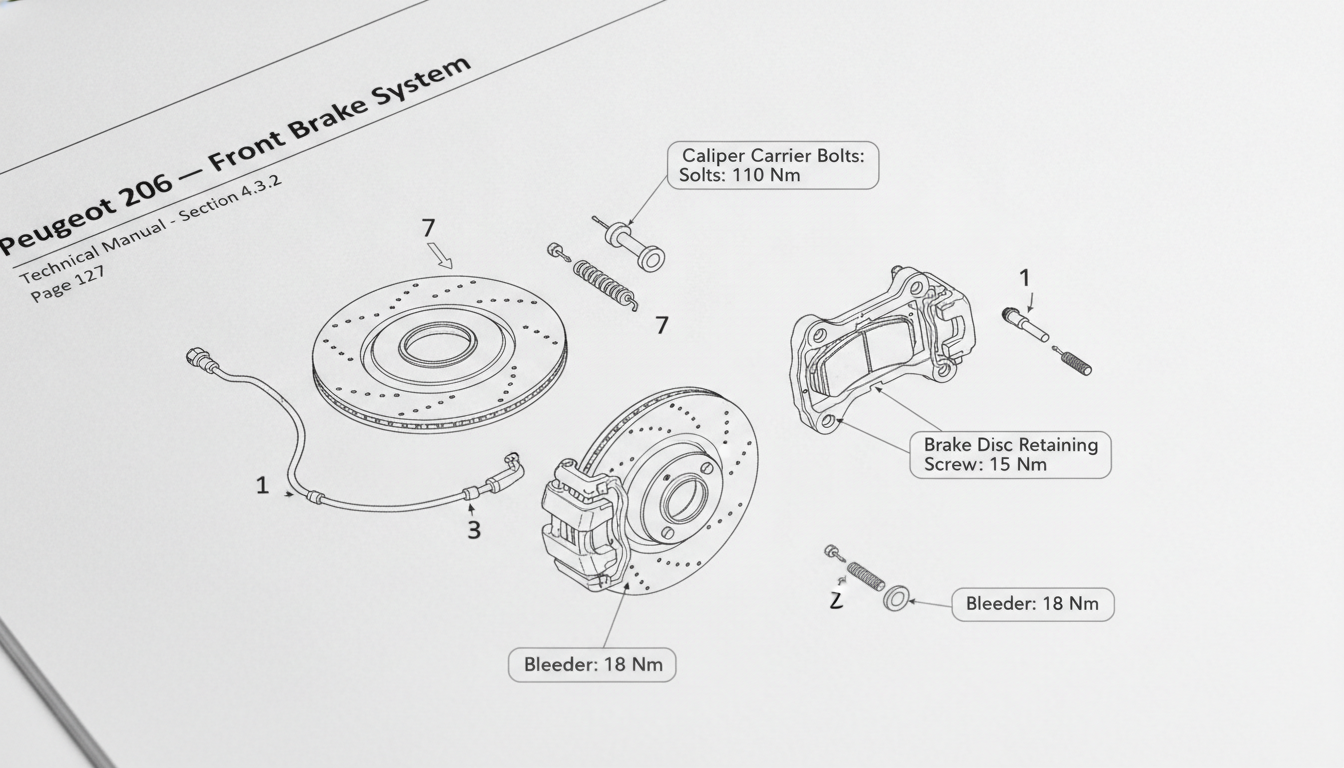
A good Peugeot 206 repair manual PDF or workshop service manual is designed to help both DIY owners and professional technicians.
It typically provides step-by-step procedures rather than vague advice, which is important when working on older vehicles, where seized bolts, worn connectors, and previous repairs can make diagnosis harder.
Typical Peugeot 206 factory service manual content may include:
- Engine servicing, including oil, filters, spark plugs, glow plugs, and timing belt information
- Cooling system repair for radiator, thermostat, water pump, and fan faults
- Fuel and injection system diagnostics for TU petrol, HDi diesel, and DW8 engines
- Manual and automatic gearbox procedures, clutch removal, and driveshaft repair
- Brake system service, ABS checks, disc, pad, drum, and handbrake adjustment
- Front suspension and rear axle repair, including bearings, bushes, and shock absorbers
- Steering system checks, track rods, power steering, and alignment guidance
- Interior, body, and trim removal for hatchback, SW, firm, and CC body styles
- Torque settings, fluid capacities, service intervals, and component diagrams
- Peugeot 206 wiring diagrams for lights, charging, starting, sensors, and control modules
Common Peugeot 206 Repairs and Problems Covered
Many Peugeot 206 owners search for manuals to solve specific problems, not just to perform routine servicing.
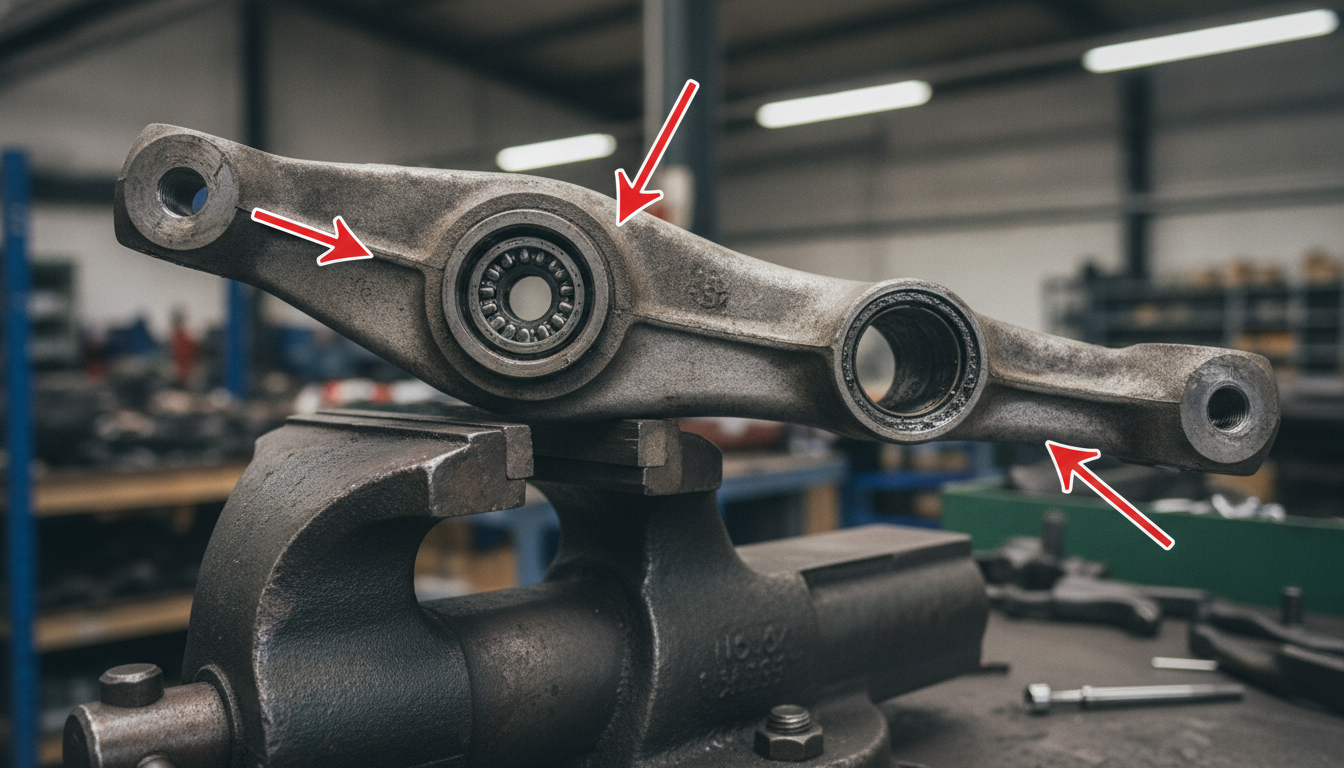
Common repair areas include the rear axle and trailing arm bearings, which can cause knocking, uneven rear wheel angle, tyre rubbing, poor handling, or a loose feeling from the back of the car. A workshop manual helps identify the correct removal sequence, axle mounting points, brake line routing, and suspension torque settings.
Petrol models such as the 1.1 TU1JP, 1.4 TU3A/TU3JP, and 1.6 TU5JP4 often need clear procedures for timing belt replacement, coolant leaks, idle problems, ignition coils, oxygen sensors, throttle body cleaning, head gasket checks, and exhaust repairs. If you own an early hot hatch, the 1999 Peugeot 206 GTi workshop service manual is useful for engine, gearbox, braking, and suspension work on the GTi platform.
Diesel versions need different diagnostic information. The 1.4 HDi 70, 1.6 HDi 110 DV6TED4, 1.9 D DW8B, and 2.0 HDi 90 manuals can cover injector testing, glow plug circuits, EGR cleaning, turbo checks, diesel fuel pressure, timing belt procedures, and emission system repairs. For owners of the larger diesel hatch, a model-specific option, such as the 2009 Peugeot 206 2.0 HDi 90 5-door workshop manual, provides more relevant guidance than a general Peugeot service manual.
Wiring Diagrams and Electrical Troubleshooting
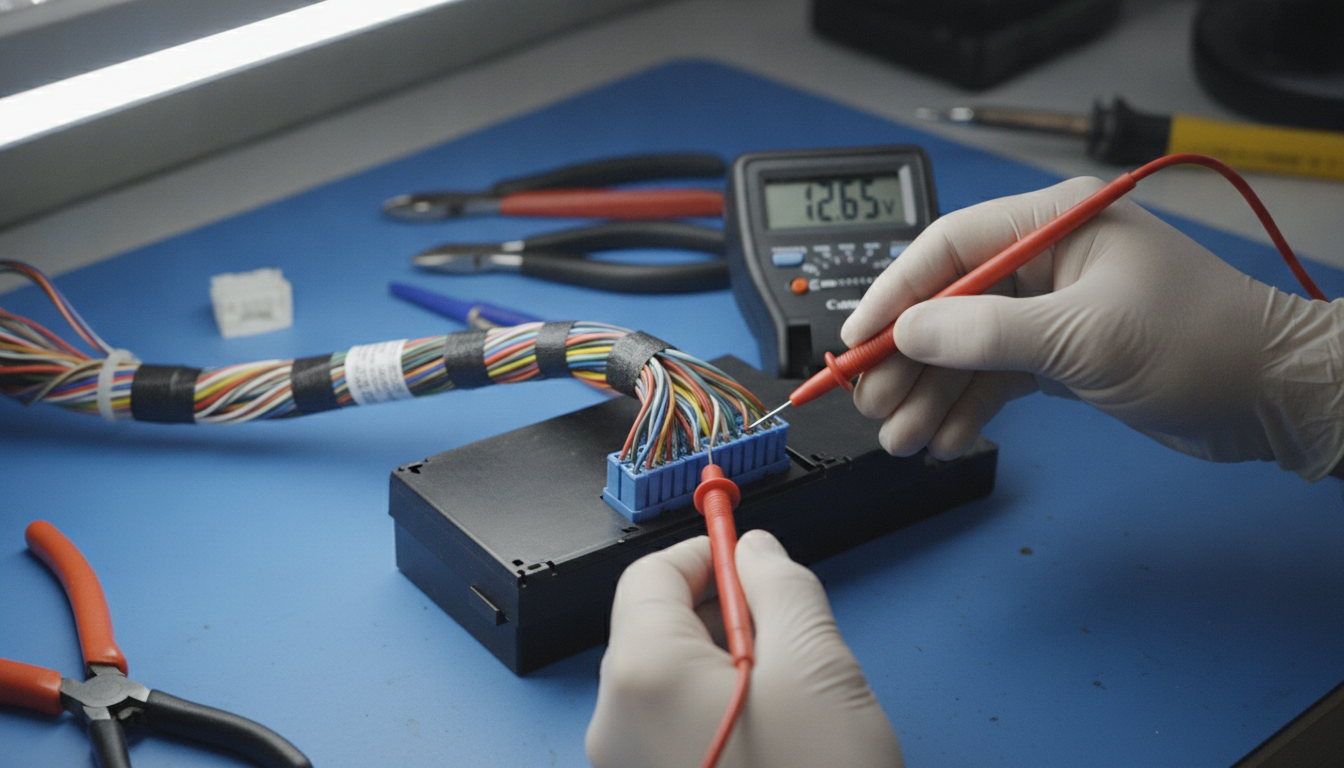
Electrical faults are a major reason owners look for a Peugeot 206 wiring diagram. The 206 can suffer from battery connection issues, poor earth points, damaged door wiring, lighting faults, central locking problems, ABS warning lights, cooling fan faults, instrument cluster errors, and BSI module communication issues. A repair manual helps trace circuits rather than replace parts at random.
Useful electrical sections may include:
- Fuse box and relay locations
- Battery, alternator, and starter wiring
- Engine sensor circuits
- ECU and BSI pin information
- Lighting, indicators, and wiper circuits
- ABS, airbag, and dashboard warning systems
- 206 CC roof switch and hydraulic control wiring
- Tailgate, door loom, and central locking diagrams
For convertible models, the roof system makes wiring information even more important. A 206 CC owner working on a folding roof fault, boot switch problem, or hydraulic pump issue should choose a specific CC manual, such as the Peugeot 206 CC 2.0 i 16v 138 workshop service manual.
Peugeot 206 Manual Types and Model Coverage
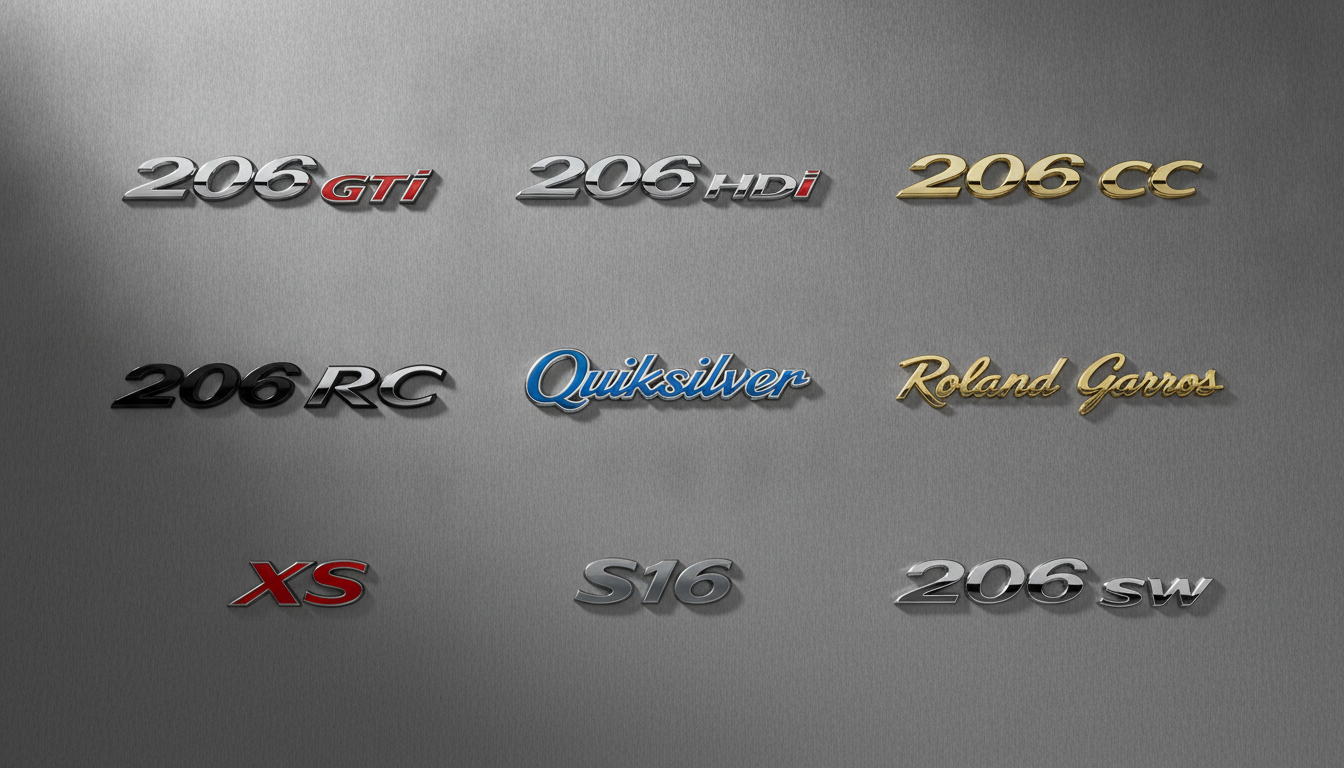
The Peugeot 206 lineup features diverse engine configurations and body styles, each requiring specialized maintenance information to ensure optimal performance. Selecting the right manual based on your specific vehicle model, from basic petrol hatchbacks to specialized CC convertibles, guarantees access to the accurate procedures, torque settings, and diagnostic data necessary for effective repairs.
Peugeot 206 1.0 i and 1.1 i Manuals
These manuals are ideal for smaller petrol models used for city driving. They focus on basic servicing, ignition faults, cooling system care, timing belt replacement, and simple fuel injection checks.
Peugeot 206 1.4 i 75 and 1.4 i 16v Manuals
The 1.4 petrol range is one of the most common 206 versions. Manuals for TU3A, TU3JP, TU3AF and 16-valve engines are useful for oil leaks, thermostat issues, idle faults, sensors, cambelt service and head gasket checks.
Peugeot 206 1.6 i and 1.6 i 16v Manuals
These manuals suit owners who need more detailed engine and gearbox data. The TU5JP4 16v version often needs accurate timing, clutch, ECU, cooling, and fuel injection procedures.
Peugeot 206 GTi and GTi 180 Manuals
GTi models need performance-focused repair data for the 2.0 petrol engine, uprated brakes, suspension, and gearbox. A dedicated GTi or Peugeot 206 GTi 180 service manual is better for sport models than a basic 1.1 or 1.4 guide.
Peugeot 206 HDi Diesel Manuals
The 1.4 HDi 70, 1.6 HDi 110, and 2.0 HDi 90 manuals cover diesel-specific troubleshooting, including injectors, turbo components, EGR systems, glow plugs, fuel pumps, sensors, and particle emission filter equipment where fitted.
Peugeot 206 1.9 D and DW8B Manuals
The 1.9 diesel manuals are practical for owners who prefer a simpler non-HDi diesel setup. They are useful for glow plug replacement, timing belt work, cooling repairs, fuel delivery checks, and general high-mileage maintenance.
Peugeot 206 SW / Estate Manuals
SW and estate manuals include practical body and trim information as well as rear suspension, tailgate wiring, load-area trim and hatch-specific repairs. They are especially helpful for family use and daily-driver maintenance.
Peugeot 206 CC Coupe Cabriolet Manuals
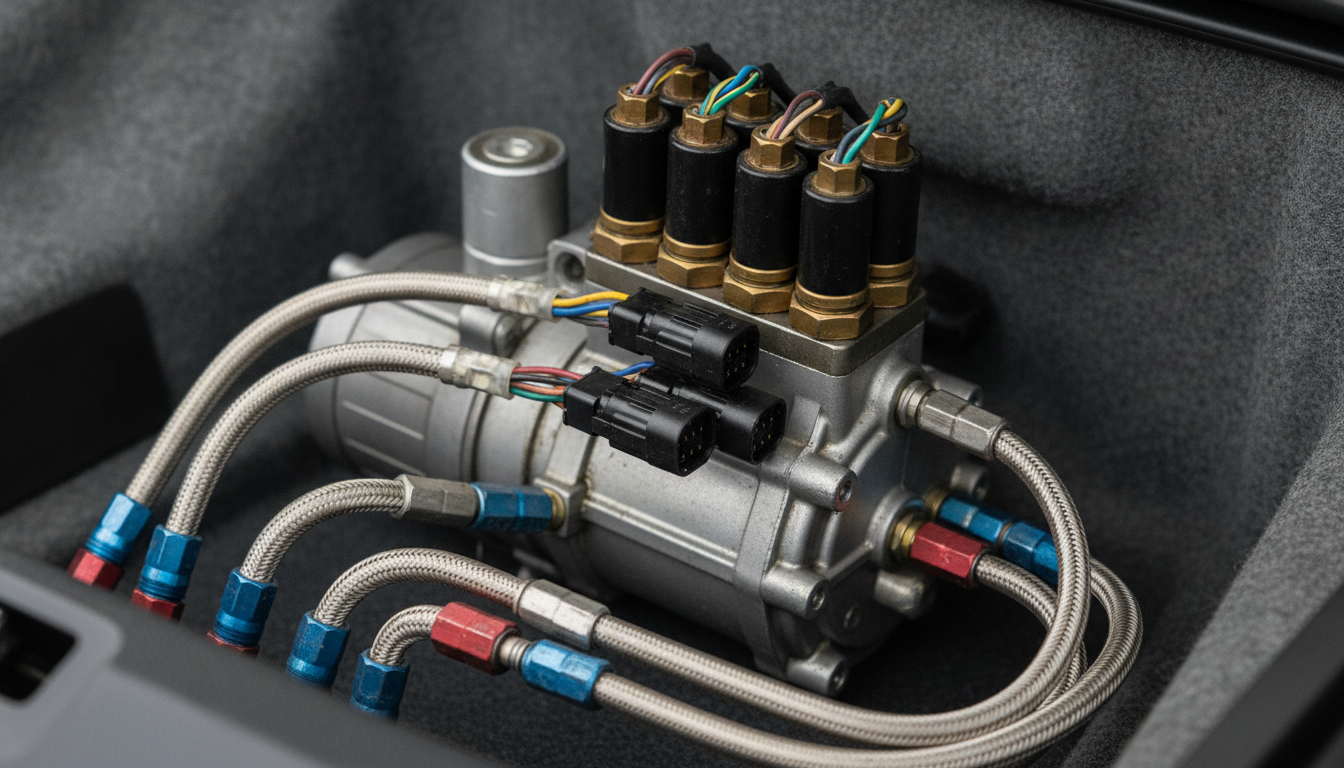
The 206 CC manual type is important because the folding roof, boot switches, seals, and hydraulic roof system are unique. It is the best choice for roof leaks, non-operating roof faults, window alignment, and convertible body repairs.
Peugeot 206 3-Door, 4-Door, 5-Door and Firm Manuals
These manuals match the body configuration listed for your vehicle. Firm or commercial-style listings are useful for work vehicles, where trim, rear body layout, suspension load use, and electrical routing may differ from those of standard passenger models.
Commonly Asked Questions About the Peugeot 206
What is the best manual for a Peugeot 206?
The best manual is the one that matches your exact year, engine, body style, and fuel type. A Peugeot 206 1.4 petrol manual is not the same as a 1.6 HDi, GTi 180, or CC convertible manual.
Do Peugeot 206 manuals include wiring diagrams?
Yes, many Peugeot 206 workshop manuals include wiring diagrams, fuse layouts, relay locations, earth points, and diagnostic information for lighting, starting, charging, ABS, airbag, ECU, and BSI-related faults.
Can I use a Peugeot 206 repair manual for DIY repairs?
Yes. A repair manual is useful for DIY servicing, brake replacement, suspension work, fault-finding, and minor engine repairs. For safety-critical work such as airbags, ABS, steering, roof hydraulics, or major engine repairs, use the manual carefully and follow the correct tools and torque settings.
Which Peugeot 206 problems are most commonly repaired?
Common repair topics include rear axle bearing wear, timing belt service, clutch replacement, cooling system leaks, ignition faults, diesel injector issues, glow plug faults, ABS warnings, electrical earth problems, and 206 CC roof faults.
Is a Peugeot workshop manual better than a general repair guide?
A model-specific Peugeot workshop manual is usually more useful because it gives procedures, diagrams, and specifications for the exact engine and body type. General guides can help with basic maintenance but may miss important model differences.
Choose the Peugeot 206 workshop manual that matches your vehicle’s year, engine code and body style, then use it as a practical guide for servicing, troubleshooting and repair. The correct manual can save time, reduce guesswork, and help keep your 206 reliable for daily use, restoration, or long-term ownership.