
2006 Ford Focus XR5 Turbo – Workshop Repair Manual
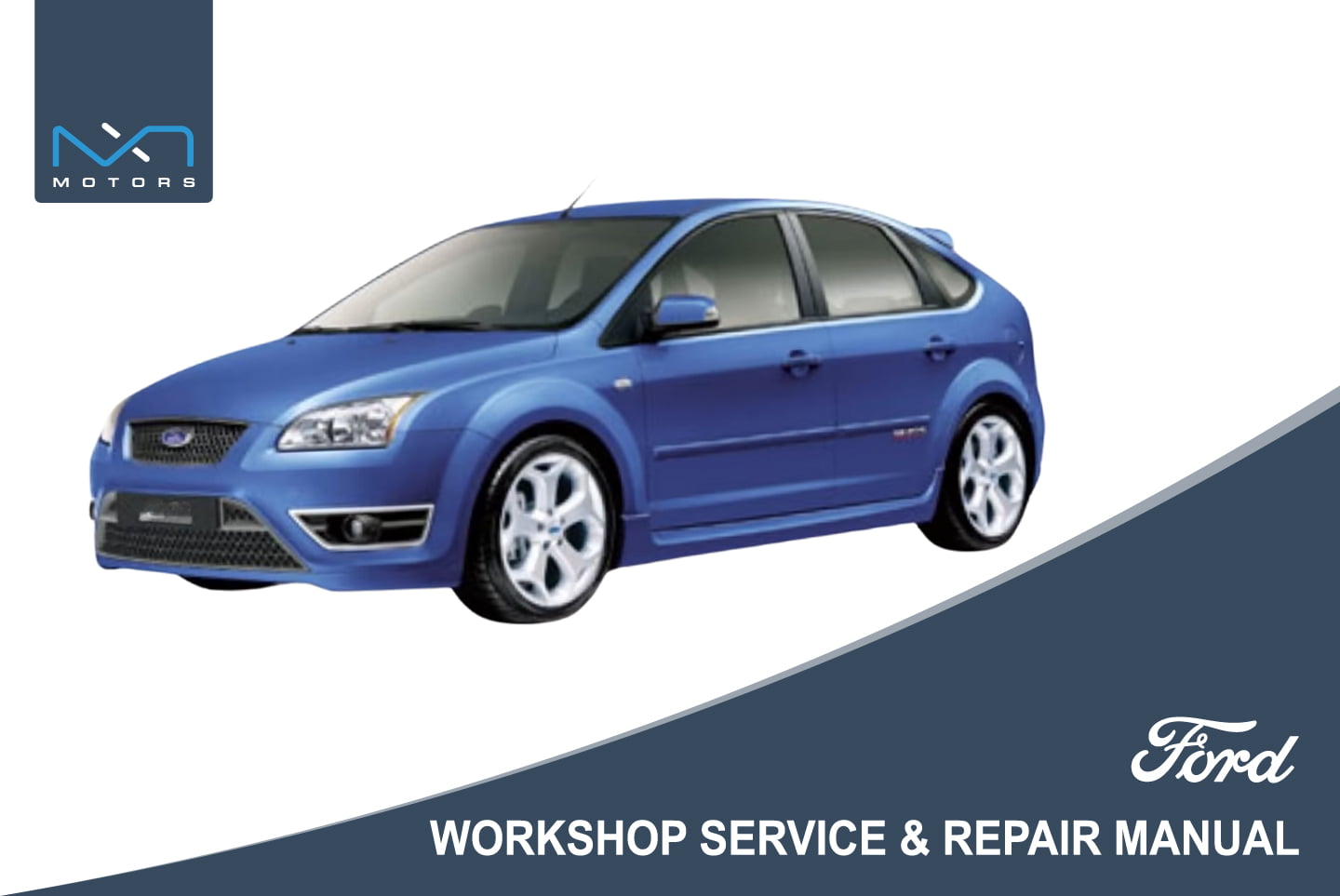
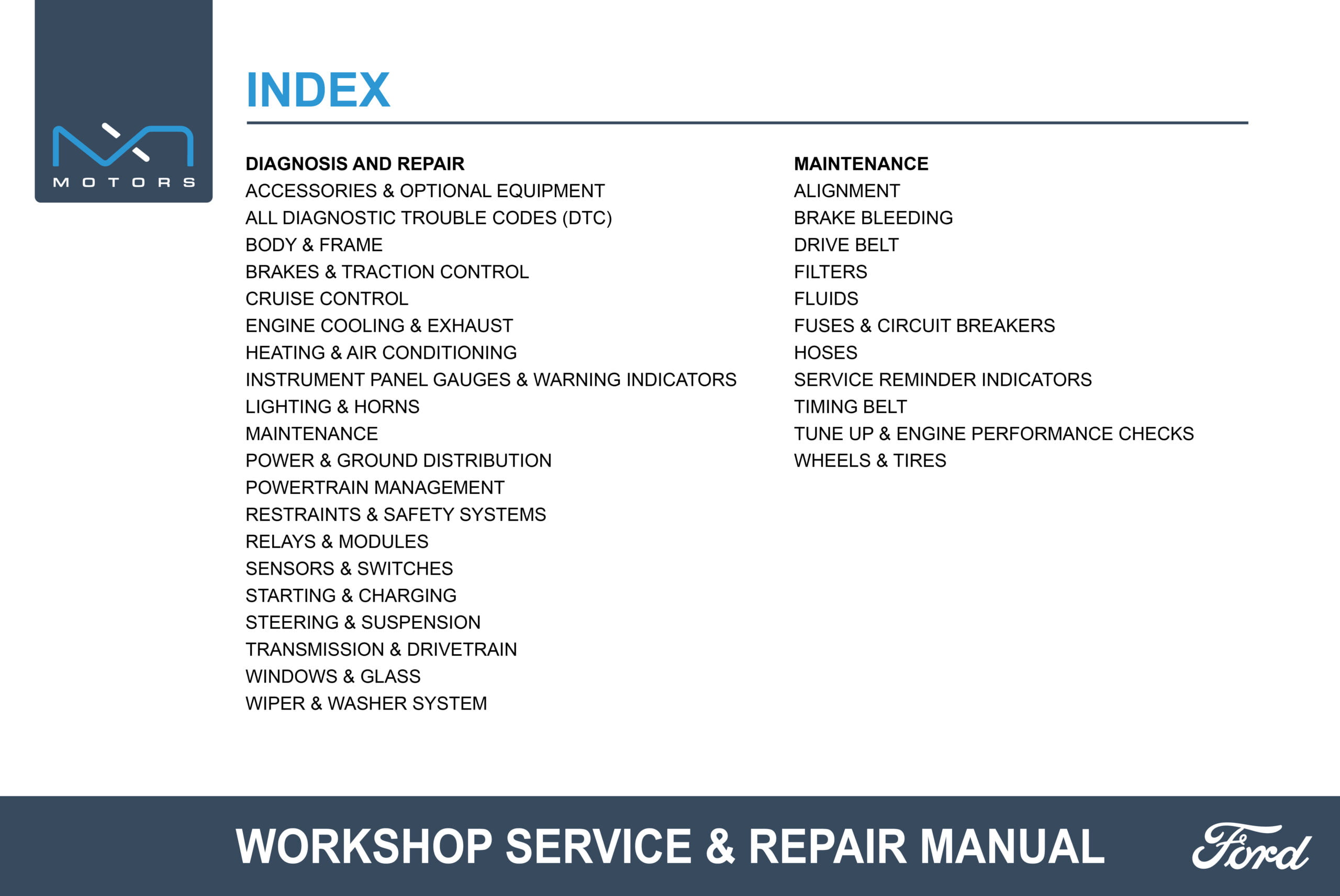
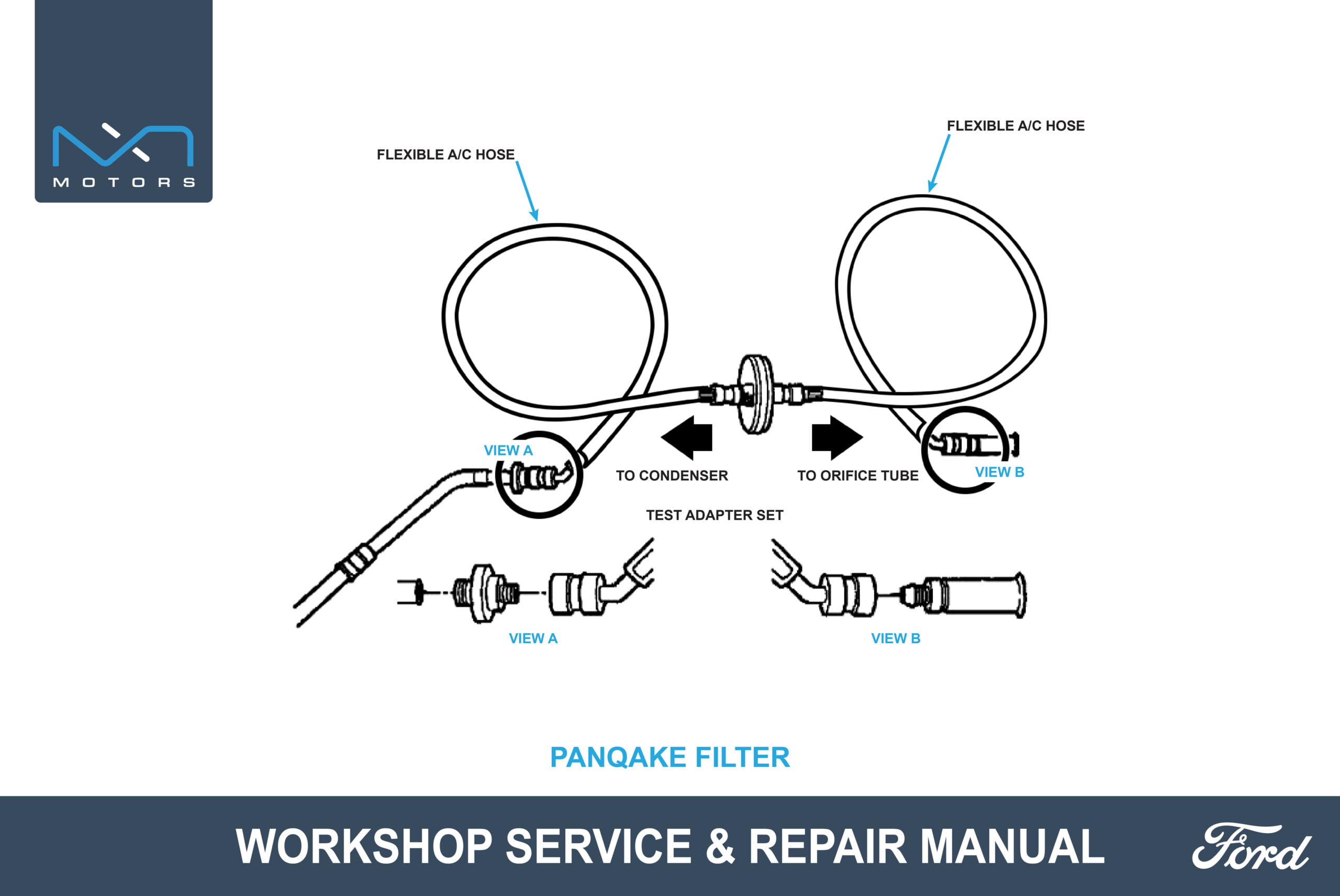
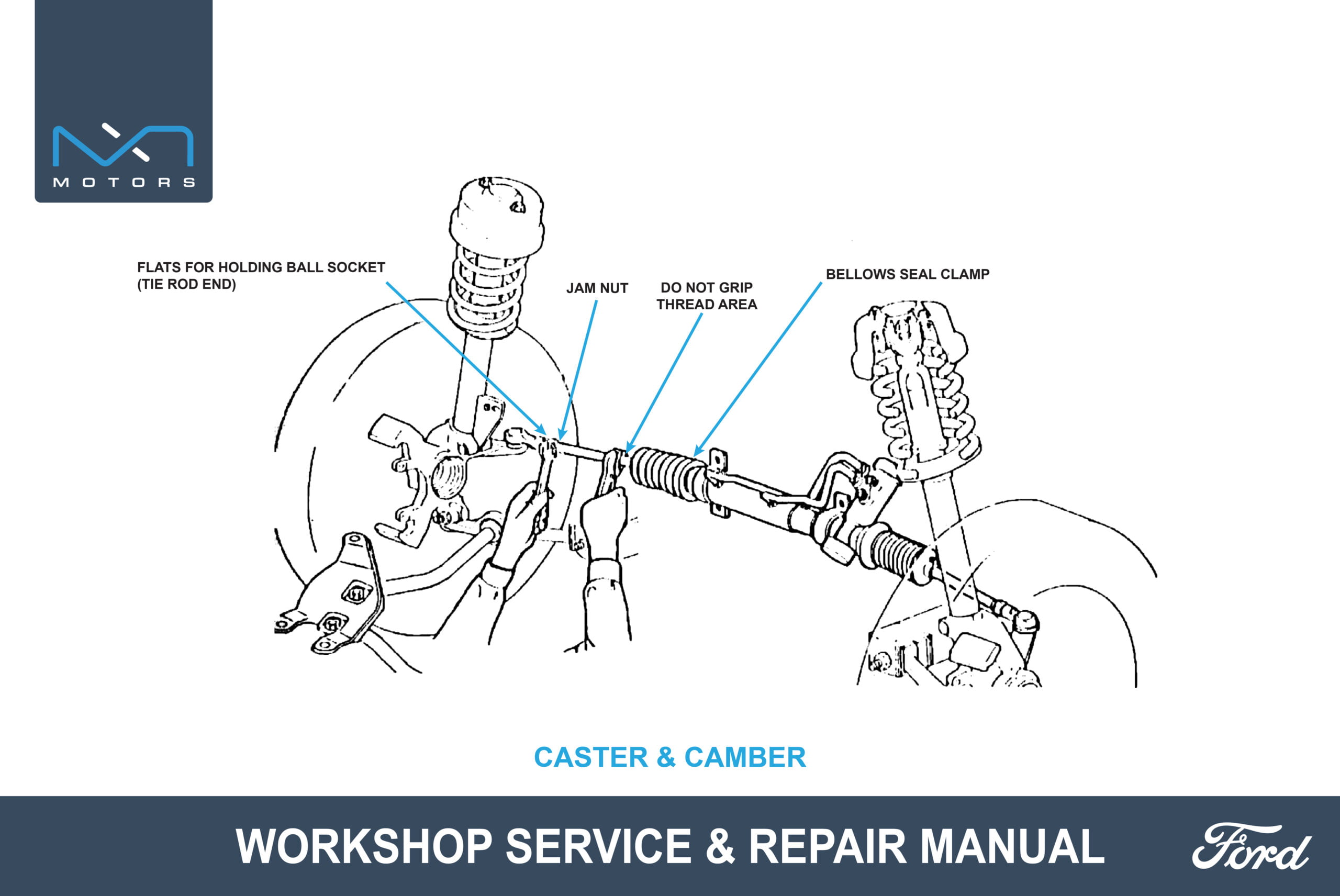

| MANUFACTURER | Ford (Australia) |
| YEAR | 2006 |
| MODEL | Focus 2nd generation (LS-LT-LV-series) |
| ENGINE | 2521 CC |
| DRIVE | FWD |
| FUEL TYPE | Gasoline (Petrol) |
| TRANSMISSION | Manual |
2006 Ford Focus XR5 Turbo - Workshop Service & Repair Manual Ford (Australia) Focus 2nd generation (LS-LT-LV-series) (2006) – Engine & Transmission Repair Guide (PDF) for Focus 2nd generation (LS-LT-LV-series) Owners
Owning a Ford (Australia) Focus 2nd generation (LS-LT-LV-series) (2006) means understanding your car’s engine and transmission inside and out. This guide provides a comprehensive overview of how to maintain, diagnose, and repair your Ford (Australia) Focus 2nd generation (LS-LT-LV-series) with a focus on the 2521 CC cc engine and Manual transmission system. This will ensure long-term reliability and optimal performance.
Detailed Engine & Transmission Solutions for Your Ford (Australia) Focus 2nd generation (LS-LT-LV-series) (2006)
- Engine Repair: Clear instructions to help you tackle issues in your 2521 CC cc engine, ensuring smooth operation for years to come.
- Transmission Maintenance: Step-by-step guide for fixing common problems with the Manual transmission, including shifting problems and fluid leaks.
- Fuel Efficiency: Learn how to optimize the Gasoline (Petrol) fuel system for maximum efficiency and performance.
Why Choose This Guide for Your Ford (Australia) Focus 2nd generation (LS-LT-LV-series) (2006)?
- Expert Insights: Our guide is packed with expert knowledge tailored specifically to the Ford (Australia) Focus 2nd generation (LS-LT-LV-series) (2006).
- Model-Specific Information: Every repair step is highly relevant to your vehicle’s engine and transmission.
- Easy-to-Follow Instructions: Whether you're an experienced DIYer or a beginner, these step-by-step instructions are designed to make repairs easy and efficient.
Order the comprehensive repair guide (PDF) for your Ford (Australia) Focus 2nd generation (LS-LT-LV-series) (2006) today and start performing your own repairs with confidence!
Frequently Asked Questions for Your 2006 Ford Focus XR5 Turbo
My 2006 Ford Focus XR5 Turbo is making a strange sucking noise and running a bit rough, what could be going on?
This sounds a lot like a common problem with the Positive Crankcase Ventilation (PCV) system on your XR5 Turbo's 2.5L engine. Often, it’s a diaphragm inside the oil filter housing that’s failed. If you hear a distinct sucking sound, especially after removing the oil filler cap or dipstick, and the engine smooths out, that's a big clue.
- Stop Driving: It's super important to not drive the car if you suspect a blocked PCV, as it can cause oil seals to burst and lead to serious engine damage.
- Inspect: Have a look around the oil filter housing for any signs of oil leaks or the sucking sound.
- Professional Check: You'll want a qualified mechanic to properly diagnose it; they can confirm if the PCV diaphragm in the oil filter housing needs replacing.
- Repair: While the genuine Ford part can be a bit pricey, there are often good aftermarket options available that might save you some money. Getting this fixed promptly will prevent bigger headaches down the road.
My 2006 Ford Focus XR5 Turbo's air conditioning blows cold for a bit, then just hot air. What's wrong?
It's quite common for the air conditioning in these XR5 Turbos to act up like that, blowing cold at first and then switching to hot or just stopping. Usually, it points to a faulty AC compressor clutch or perhaps a small leak in its shaft seal.
- Listen Carefully: When you switch the AC on, listen for a distinct "click" from the compressor engaging. If it clicks but then stops, or doesn't click at all, that's a sign.
- Check Fuses: First, always check your car's fuse box; a blown fuse can sometimes be the culprit, though less likely for this specific symptom.
- Professional Diagnosis: An AC specialist can properly diagnose if it's the compressor clutch, a low refrigerant charge, or another component. Sometimes, the clutch can be repaired by removing a shim, which is much cheaper than a whole new compressor.
- Consider Options: If it's the compressor, replacing it can be a bit of a job, sometimes even requiring parts of the dashboard to be removed. Get a few quotes and discuss repair versus replacement with your mechanic.
When should I replace the timing belt and water pump on my 2006 Ford Focus XR5 Turbo's 2.5L engine?
For your 2.5L five-cylinder engine in the 2006 Focus XR5 Turbo, Ford's official timing belt interval is often cited around 180,000 km. However, many specialists and owners strongly recommend a more proactive approach.
- Earlier Replacement: It’s generally advised to replace the timing belt, the water pump (which the timing belt drives), and all associated seals around the 100,000 km mark, or every 10 years, whichever comes first.
- Why Earlier? The water pump on these engines is known to sometimes fail before the 180,000 km belt interval. Plus, any oil leaks onto the belt can shorten its life significantly.
- Prevent Damage: This early replacement is a preventative measure to avoid catastrophic engine damage if the belt fails. It's an investment in your car's long-term health, absolutely worth doing for peace of mind!
My 2006 Ford Focus XR5 Turbo has the check engine light and traction control light on, with reduced boost. What should I check?
When your XR5 Turbo shows both the Engine Management Light (EML) and Traction Control (TC) light, especially with limited boost, a common culprit can be a blown F35 10-amp fuse. This little fuse can affect several crucial systems!
- Locate Fuse Box: You'll need to find your car's fuse box, usually under the bonnet or inside the cabin (check your owner's manual for the exact location).
- Identify F35: Find the F35 fuse, which should be a 10-amp fuse.
- Inspect: Visually check if the fuse wire is broken.
- Replace (Carefully!): If it's blown, replace it only with another 10-amp fuse. Never use a higher amperage fuse, as that can lead to melted wiring or even a fire.
- Underlying Cause: If it blows again, the issue is likely deeper, possibly involving the heater coil in the oil filter housing or VVT solenoids. A mechanic should then investigate for an electrical short.
What type of fuel should I use in my 2006 Ford Focus XR5 Turbo?
Your 2006 Ford Focus XR5 Turbo's 2.5L turbocharged engine really thrives on premium fuel to deliver its best performance and protect its internals.
- Minimum Octane: You should use a minimum of 95 RON (Research Octane Number) gasoline. In some regions, this might be labelled as 91-octane.
- Recommended for Optimal Performance: For optimal performance, power, and engine longevity, using 98 RON (93-octane in some places) premium unleaded fuel is strongly recommended.
- Why Premium? The higher octane helps prevent "knocking" or "pinging," which occurs when fuel ignites prematurely. Your car's ECU can adjust timing for lower octanes, but you'll notice a drop in power and potentially worse fuel economy. Sticking to premium helps keep your engine happy and healthy!
Prevent common vehicle issues from escalating with a dedicated manual from NXT Motors. Our detailed guides provide specific diagnostic steps, component locations for problems like PCV failures or electrical faults, and crucial maintenance schedules, empowering you to confidently troubleshoot, perform preventative care, and save on costly repairs.
Sorry, no reviews match your current selections
Related manuals
-

1982 Ford Granada GLX 4-door 2.3L – Workshop Service & Repair Manual
Sale! Backorder - $$29.99 Add to cart -

1982 Ford Granada GLX 2-door 2.3L automatic – Workshop Service & Repair Manual
Sale! Backorder - $$29.99 Add to cart -

2003 Ford Windstar SEL 3.8L V-6 – Workshop Service & Repair Manual
Sale! Original price was: $99.99.$14.99Current price is: $14.99. Add to cart
More Manuals
Original price was: $99.99.$14.99Current price is: $14.99.
Original price was: $99.99.$14.99Current price is: $14.99.
| MANUFACTURER | Ford (Australia) |
| YEAR | 2006 |
| MODEL | Focus 2nd generation (LS-LT-LV-series) |
| ENGINE | 2521 CC |
| DRIVE | FWD |
| FUEL TYPE | Gasoline (Petrol) |
| TRANSMISSION | Manual |