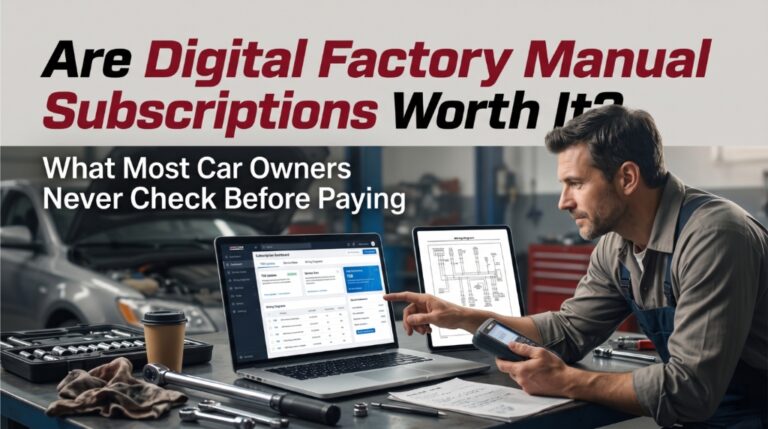
Digital factory manual subscriptions often drain car owners who overlook their actual value. Many DIYers pay recurring fees without questioning if the subscription is worth it.
Subscriptions are ideal for managing multiple vehicles, accessing live TSB updates, or repairing new models with evolving data. Conversely, a one-time digital factory manual PDF is usually better for single-vehicle owners. While OEM subscriptions offer professional, up-to-date data, they may be unnecessary for casual repairs and require technical skill.
This guide compares cost, depth, offline access, and long-term value to help you choose the right model for your needs.
Are Digital Factory Manual Subscriptions Worth It: The Real Numbers Behind the Decision
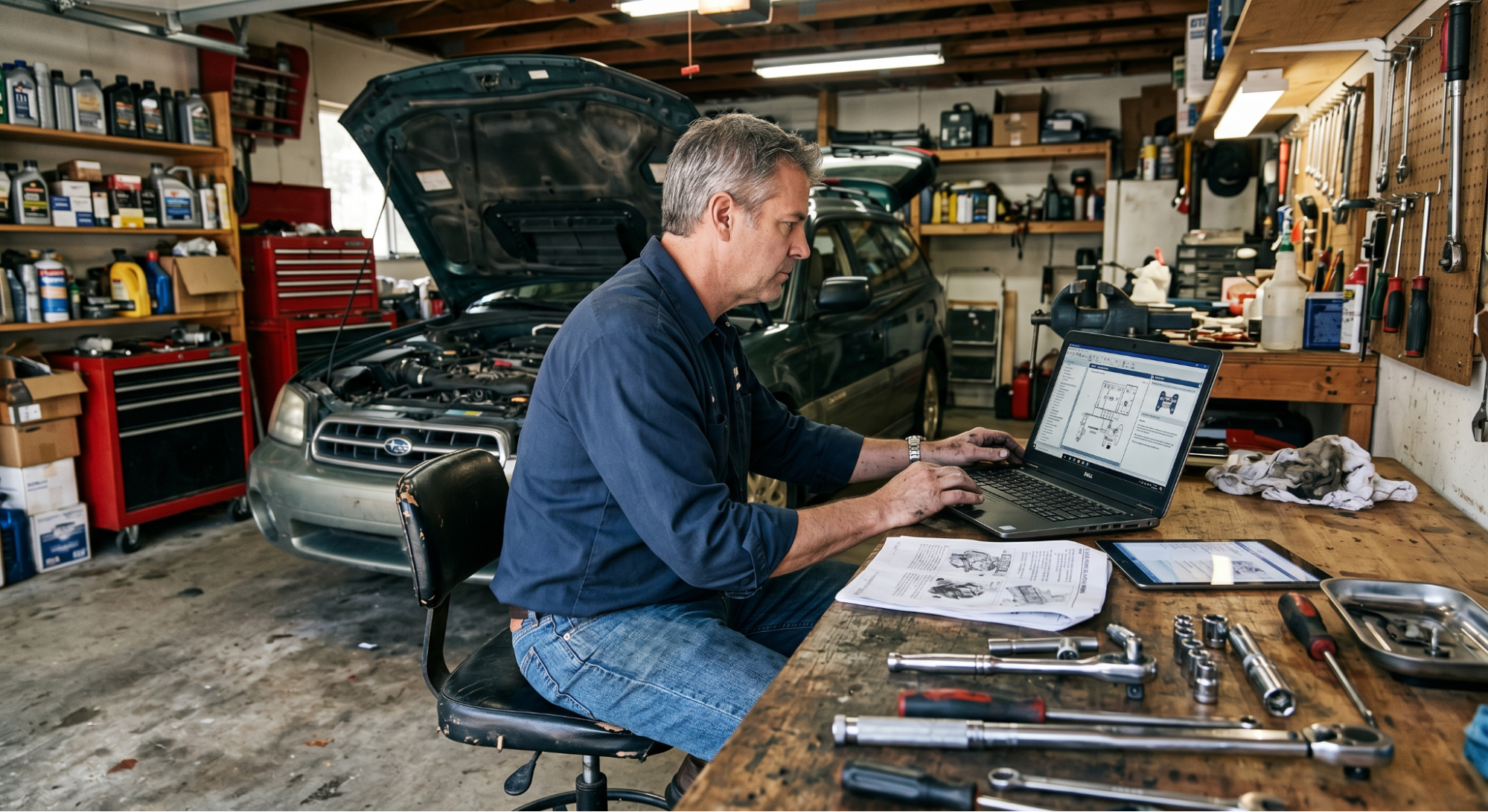
Most people Google this question after a price hike surprises them at renewal. The answer depends on three things: how many vehicles you own, how often you repair them, and whether you need data that updates in real time. Let’s walk through the factors that actually matter.
What a Factory Manual Subscription Actually Covers
Before calling it worth it or not, you need to know what you’re paying for. A digital factory manual subscription from platforms like ALLDATA DIY or Mitchell1 gives you cloud-based access to OEM repair data. That includes wiring diagrams, torque specs, step-by-step procedures, and Technical Service Bulletins (TSBs).
The big selling point is that the data updates automatically. If a manufacturer issues a revised repair procedure or a new TSB for your vehicle, you’ll see it automatically. That matters more for newer vehicles that are still receiving active updates.
What subscriptions typically include:
- Full OEM repair and maintenance procedures specific to your vehicle’s year, make, and model
- Live-updated Technical Service Bulletins (TSBs) and recall notices
- Complete wiring diagrams with interactive hyperlinking (on premium platforms)
- OEM part numbers and labor time estimates
- Diagnostic trouble codes with vehicle-specific testing procedures
The information is dealer-grade. That’s not marketing speak. It is literally the same data your dealership tech uses. The question is whether you use it enough to justify the recurring cost.
Subscription Costs vs. One-Time PDF: A Side-by-Side Look
This is where the debate gets concrete. Subscription pricing has climbed sharply in recent years. ALLDATA DIY, which used to cost around $20 per year per vehicle, now charges up to $60 per year per vehicle. Mitchell1 DIY sits at around $29.95 per year, with a 4-year plan at $44.95.
|
Option |
Cost Model |
Price Range |
Access Type |
Updates |
|
ALLDATA DIY |
Annual subscription |
$60/yr per vehicle |
Cloud only |
Live |
|
Mitchell1 DIY |
Annual/multi-year |
$29.95/yr or $44.95/4yr |
Cloud only |
Live |
|
OEM Manufacturer Portal |
Short-term access |
$22–$37 / 3 days |
Cloud only |
Live |
|
One-time PDF (e.g., Factory-Manuals.com) |
Single purchase |
$50–$169 per vehicle |
Permanent download |
Snapshot at purchase |
|
Physical FSM (used market) |
One-time |
$60–$250+ per vehicle |
Paper/offline |
None |
Run those numbers over five years. ALLDATA at $60/year per vehicle costs $300 over 5 years for just one car. If you have two vehicles, that’s $600. A one-time PDF for each might run $80–$170 total, permanently owned.
The math tilts toward subscriptions only when you’re using live data consistently or managing a fleet. For most DIY mechanics working on one or two personal vehicles, the recurring fee rarely justifies itself.
3 Situations Where a Subscription Is Genuinely Worth It
There are real use cases where paying monthly or annually makes total sense. Understanding them stops you from overspending or under-resourcing yourself.
Situation 1: You own or work on multiple vehicles regularly
If you’re pulling repairs on three or more vehicles of different makes, a subscription library with broad coverage beats buying individual PDFs every time a new model enters the garage. ALLDATA covers over 30,000 vehicles from the 1980s onward.
Situation 2: You work on newer models, still receiving active TSBs
A 2023 truck with live software-related TSBs is not the same as a 2009 sedan with a fully documented history. For vehicles under five years old, subscription data stays fresher and more accurate than a static PDF snapshot.
Situation 3: You run a small independent repair shop
Professional platforms like ALLDATA Repair or Mitchell1 ProDemand are built for shop workflows. The cost per vehicle drops when spread across multiple technicians and dozens of repair jobs per month. For home DIYers, the math is inverted.
When a One-Time Digital Factory Manual Beats Subscriptions

Most casual owners and home mechanics fall into this camp. If you’re working on one or two vehicles you plan to keep for years, buying the digital factory manual outright offers permanent access with no auto-renewal surprises.
A one-time PDF purchase makes the most sense when your car is past its active update window. An older model won’t receive new TSBs, so paying for subscription updates adds zero value.
If you’re unsure about the right time to make that call, understanding when to upgrade to a factory service manual can help clarify the decision.
Key advantages of one-time digital manual ownership:
- No internet required once downloaded, full offline access on any device
- No credit card on file, no unexpected renewal charges
- Content is identical to OEM data used by dealers at the time of print
- Cost-effective for single-vehicle owners over a 3–5 year horizon
- Searchable text, bookmarked sections, and portable across devices
Hidden Problems With Digital Manual Subscriptions
Subscriptions have friction points that rarely get mentioned upfront. Knowing them before signing up saves frustration later.
First, access dies the moment you stop paying. Years of repair history, saved notes, and bookmarked sections disappear when a subscription lapses. You own nothing. That’s a real problem mid-repair when a credit card renewal quietly fails.
Second, many platforms are internet-dependent. Working in a garage with poor WiFi, or in a rural area, means unreliable access when you need it most. A downloaded PDF file remains on your tablet even without a signal.
Third, pricing is not locked in. ALLDATA tripled its per-vehicle price over the past few years. Users who budgeted for $20/year suddenly faced $60/year at renewal with no warning. Subscription costs are entirely at the provider’s discretion.
Offline Access: Subscriptions vs. Downloaded Manuals
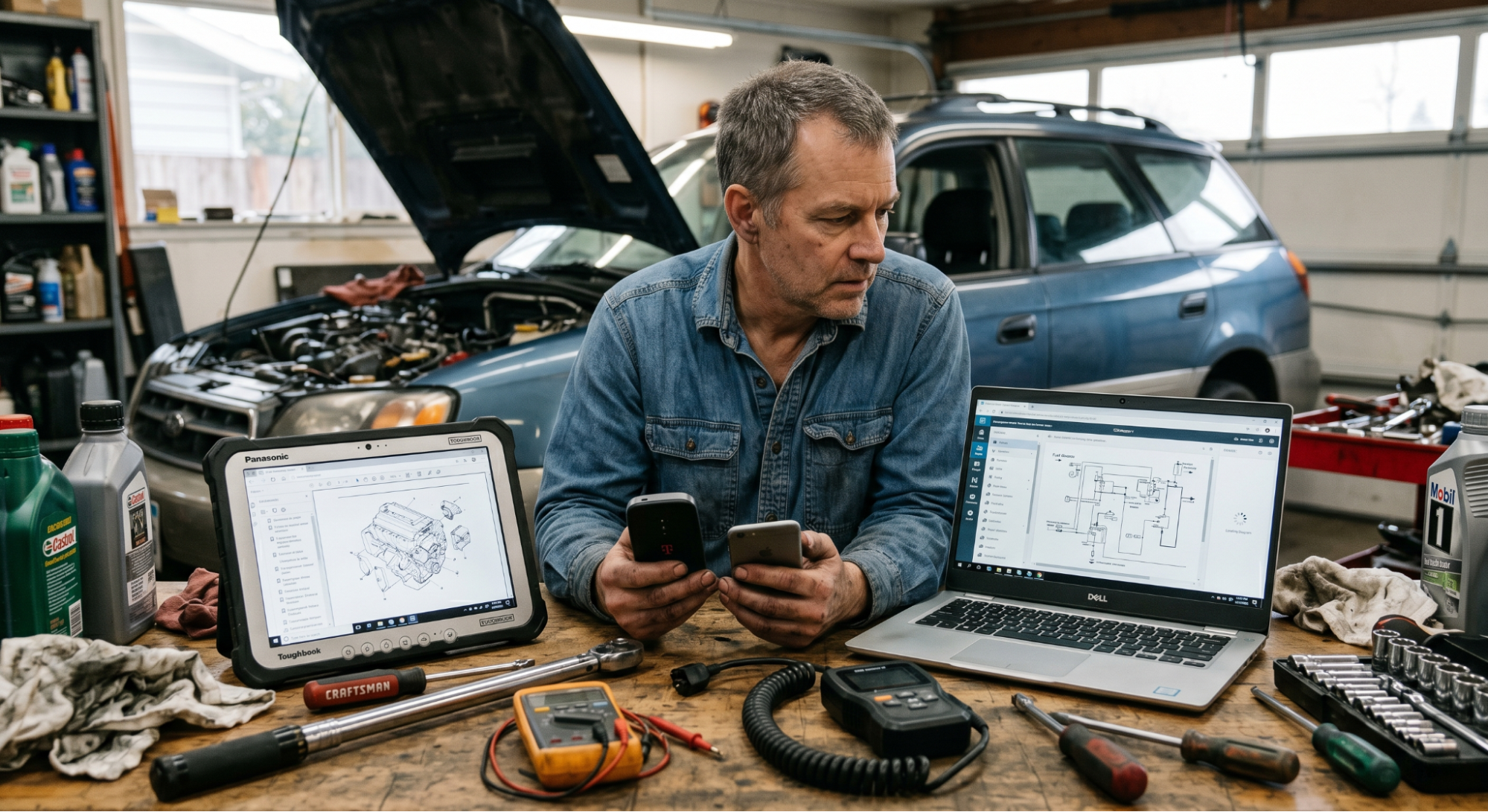
This is one of the most underrated factors. Cloud-based subscriptions require a stable internet connection. PDF manual files work anywhere, anytime. A $150 tablet loaded with your vehicle’s factory service manual PDF is a self-contained repair station that needs nothing else.
The subscription advantage here is hyperlinked navigation within the platform. Cross-referencing a wiring diagram on a subscription portal is faster than scrolling through a 22,000-page PDF. However, familiarity with bookmarks and search tools in PDF readers largely closes that gap over time.
The Short-Term OEM Portal Strategy Worth Knowing
There’s a third option most people miss entirely. Many manufacturers offer direct short-term subscription access to their proprietary repair portals for as little as $22 for 72 hours. Ford’s Motorcraft service portal, Toyota TIS, and GM’s ACDelco TDS all work this way.
The approach: buy a 3-day access window, download or print to PDF every section relevant to your repair, and you get the exact same content your dealer uses at a fraction of the annual cost. It’s the smartest workaround for infrequent DIY use on newer vehicles.
|
User Type |
Best Option |
Reason |
|
Single-vehicle home DIYer |
One-time PDF download |
Lower lifetime cost, offline use |
|
Owner of 3+ vehicles |
Annual subscription |
Broad coverage justifies cost |
|
Professional shop |
Subscription (ALLDATA/Mitchell1) |
Volume usage and live updates |
|
Older vehicle owner (10+ yrs) |
One-time PDF or OEM short-term |
No active TSBs needed |
|
Newer vehicle (under 5 yrs) |
OEM short-term portal or subscription |
Active TSBs and software updates |
5 Things to Check Before You Subscribe to Any Manual Service
A bit of research upfront saves you from locking into the wrong plan. Run through these before entering any payment details.
- Coverage check: Verify your exact year, make, and model are listed in the platform’s vehicle library before paying.
- TSB frequency: Check if your vehicle still receives active manufacturer updates. Older models rarely do.
- Access method: Confirm the platform works on your device phone, tablet, or laptop, especially if you work in an area with unreliable internet.
- Cancellation terms: Understand exactly when and how the subscription auto-renews, and whether you get a refund window.
- Data legitimacy: Stick to recognized platforms or OEM portals. Free PDFs from unknown sources carry real risks of compromised data, scam charges, or incomplete content.
That last point matters more than most realize. Before downloading anything from an unfamiliar site, it’s worth understanding whether free online car repair manuals are actually safe. The risks go beyond just incomplete data. [Link: Are Free Online Car Repair Manuals Safe]
The Bottom Line on Digital Factory Manual Subscriptions
Digital factory manual subscriptions are worth it for specific situations, and genuinely wasteful in others. The decision is not about which platform has better marketing; it’s about how you actually use repair information.
If you own one vehicle and work on it a few times a year, a one-time digital factory manual PDF covers your needs for a fraction of the recurring cost. If you manage multiple vehicles, a small shop, or a newer model with active software updates, the right subscription plan pays for itself quickly.
The real mistake is defaulting to a subscription out of habit without running the math. Check what you actually use, verify your vehicle’s coverage, and match the access model to your real repair frequency. That’s it.
Still unsure how much a manual can realistically replace professional help? The comparison of digital car manuals vs. mechanic advice gives a practical breakdown of where each fits.
Frequently Asked Questions
For a single-vehicle owner who repairs their car once or twice a year, ALLDATA DIY is often not cost-effective. At $60 per year for one vehicle, you could buy a high-quality one-time PDF for roughly the same price and keep it permanently.
ALLDATA makes more sense when you need live TSB data for a newer model or when you’re managing multiple vehicles. The platform’s depth is excellent, but the value equation tilts toward subscriptions only with higher usage volume.
Most cloud-based subscription platforms do not allow direct file downloads. The most practical workaround is printing pages to PDF during your subscription window.
Some OEM manufacturer portals, like Ford’s Motorcraft service or GM’s ACDelco TDS, offer 72-hour access for roughly $22–$37, which gives enough time to systematically save the sections most relevant to your repairs.
Once the subscription expires, any unsaved content becomes inaccessible.
Yes, with one important caveat. A factory manual PDF purchased at a point in time contains OEM-accurate data as of that date. It does not update.
If your vehicle continues receiving manufacturer Technical Service Bulletins after that date, the PDF will miss them. For vehicles older than 5–7 years, active TSBs become rare, and the PDF remains fully relevant.
For newer models, check whether live updates are actually needed before paying subscription prices.
When a digital factory manual subscription lapses, access to all data is immediately revoked. Any repair notes, bookmarks, or saved searches hosted on the platform’s servers are no longer reachable.
This is a key practical difference versus owning a PDF outright. For this reason, many experienced DIYers recommend saving the most-used procedures as PDFs during an active subscription so you retain the data you’ve invested time in finding and organizing.
Several legitimate options exist. Manufacturer tech portals offer short-term access (72 hours to 30 days) at a low cost. Trusted third-party services compile OEM data into downloadable PDFs for a one-time fee.
For verified sources and what to look for, the guide on where to download genuine OEM workshop manuals covers the landscape in detail. Always avoid unknown sites offering free downloads, as compromised files and fraudulent billing are documented risks in this space.