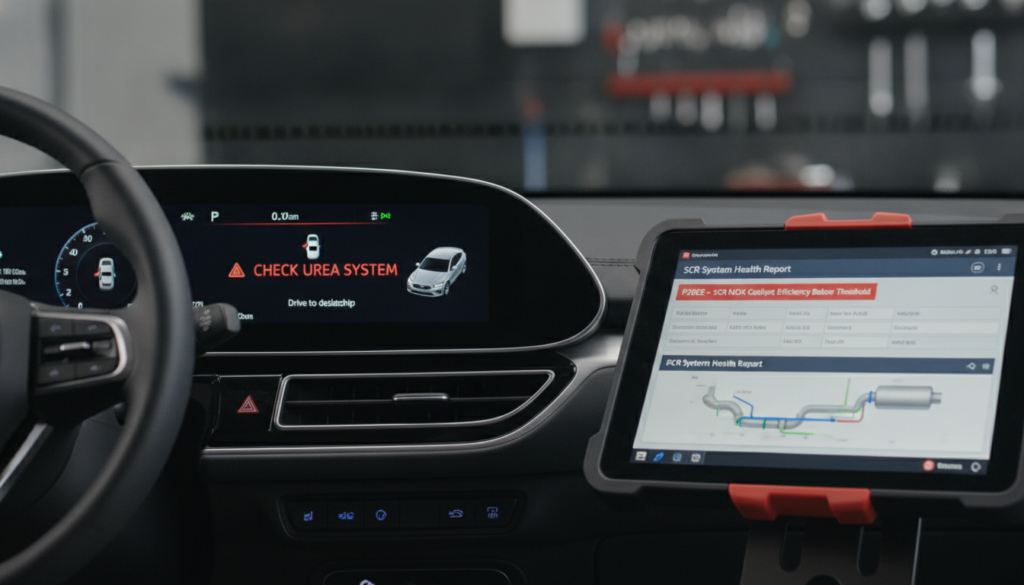
A Hyundai AdBlue warning can turn a normal drive into a no-start risk. The message may say Low urea, Check Urea System, or Vehicle will not start. That wording matters because each warning points to a different fault path.
Refilling the tank is only the first check. A full tank can still trigger an SCR system fault if the pump, injector, level sensor, NOx sensor, or wiring fails. The smart move is to verify the warning before replacing parts.
This guide shows a practical diagnostic route for Hyundai diesel owners. You’ll learn how to separate a simple refill issue from a real urea dosing fault. You’ll also see where a factory manual helps prevent wrong guesses.
Hyundai AdBlue Problem Troubleshooting: Stop the Countdown Before It Strands You
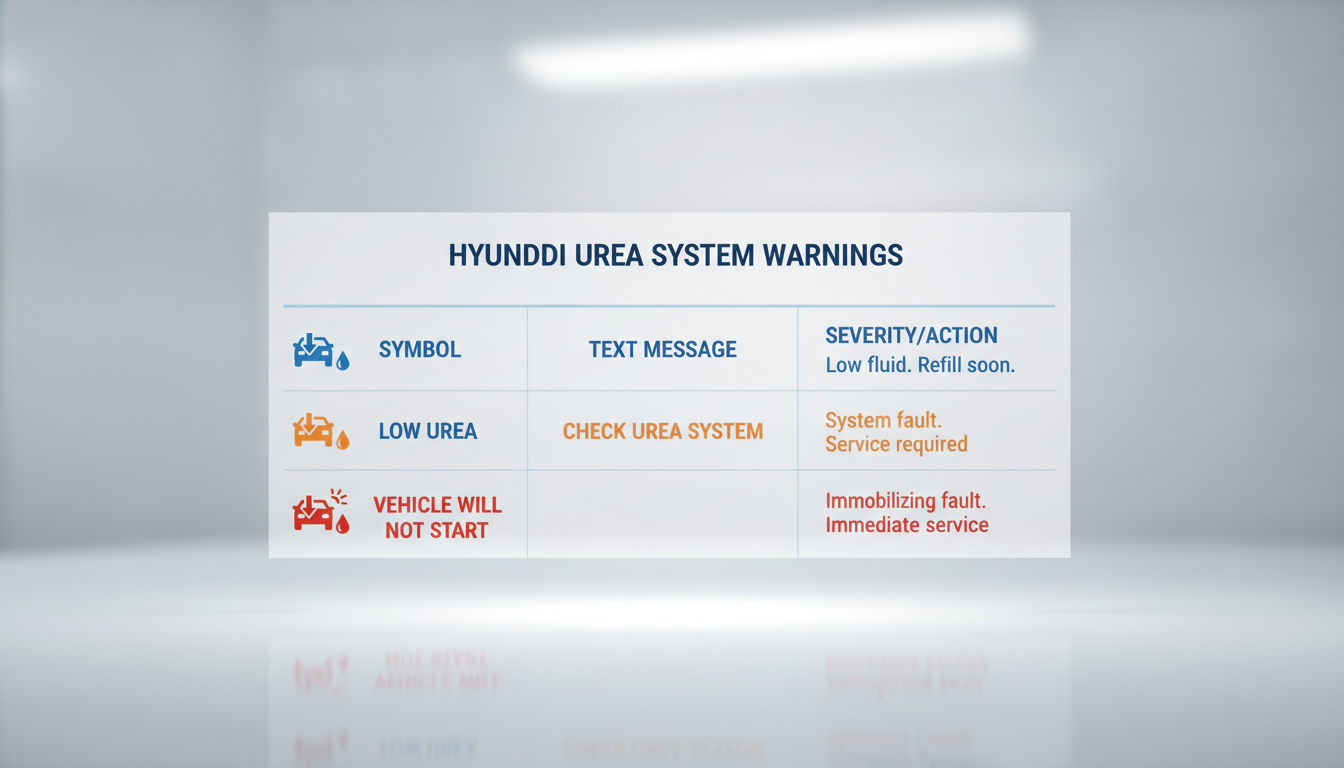
Alter Tag: A comparative chart of Hyundai AdBlue dashboard warnings and their corresponding diagnostic meanings for SCR troubleshooting.
A Hyundai AdBlue problem starts with one clear rule. Treat the dashboard message as diagnostic data, not background noise. For deeper model guidance, NXT Motors’ Hyundai repair manual coverage helps owners match warnings to the correct factory-style procedures.
|
Warning or Symptom |
Likely Direction |
First Check |
Next Action |
|
Low urea |
Low fluid level |
Confirm tank level |
Add correct AdBlue |
|
Refill urea in 000 km |
Countdown from low level |
Refill promptly |
Wait for message to clear |
|
Check Urea System |
SCR malfunction |
Scan for codes |
Follow code flowchart |
|
Tank full but warning on |
Sensor or dosing issue |
Check live data |
Test pump, sensor, wiring |
|
P20EE / P204F / P20E8 |
SCR efficiency or pressure fault |
Read freeze frame |
Inspect dosing system |
|
White crystals near injector |
Dried AdBlue deposit |
Inspect nozzle area |
Clean or replace parts |
Read the exact warning first
The wording on the cluster gives the first clue. A Low Urea message is different from Check Urea System. A countdown warning needs faster action because restart may become restricted.
Do not clear the warning before recording it. Write down the exact text, mileage countdown, fuel level, urea level, and driving conditions. This record helps you compare the dash message with the manual flowchart in the Hyundai workshop manual hub.
A low-level warning usually means the system wants more fluid. A system warning means the vehicle sees a fault in dosing, quality, pressure, electrical feedback, or emissions performance. That’s why a full tank can still show a warning.
Check the instrument cluster menu for DEF level or urea level. If the gauge shows empty after filling, suspect a level sensor, tank unit, wiring issue, or communication fault. If the gauge reads correctly but the warning remains, move to a code scan.
Avoid guessing from the warning light color alone. Hyundai warnings may combine the SCR lamp, check engine light, and text message. The text is the part that tells you where to begin.
Refill smart, not blindly
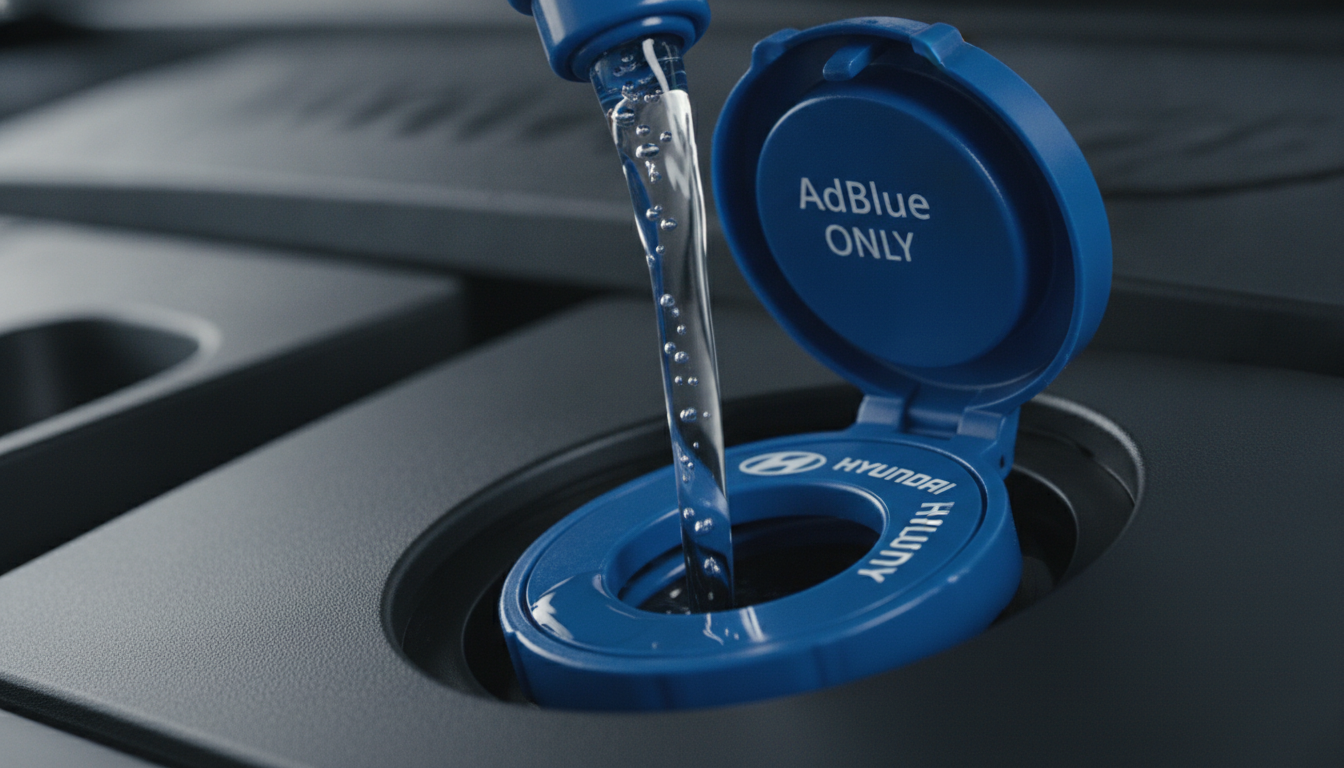
Alter Tag: Close-up of a professional AdBlue refill into a Hyundai DEF tank filler neck with blue cap.
A correct refill can solve a simple AdBlue warning light. It will not solve a failed sensor, a blocked injector, a weak pump, a contaminated tank, or a broken pipe. That distinction saves money and avoids repeat visits.
Use only proper AdBlue or DEF that meets the required quality standard. Do not pour diesel, water, additives, screen wash, or unknown fluid into the urea tank. If you suspect the wrong fluid, stop and inspect before cycling the system again.
Add enough fluid to register clearly. Small top-ups can fail to trigger the level logic on some vehicles. After filling, close the cap, switch the ignition on, and let the system recheck before judging the repair.
If the tank was completely empty, air may enter the dosing side. That can produce pressure faults such as P20E8 even after refill. A scan tool and service procedure may be needed to prime or confirm system pressure.
Model fitment matters because not every Hyundai page points to the same engine or emissions system. Start with Tucson SCR service data, Santa Fe diesel manual lookup, Grand Santa Fe emissions references, ix35 urea system guidance, and ix55 diesel repair notes. Older or non-SCR models still need correct manual matching, including Atos service manual details, Azera repair information, Centennial workshop references, Coupe diagnostic manuals, and Equus factory service data. For smaller and legacy models, confirm coverage through Excel wiring resources, Genesis repair manuals, Getz service references, i10 workshop data, and i20 diagnostic resources.
Scan codes before parts
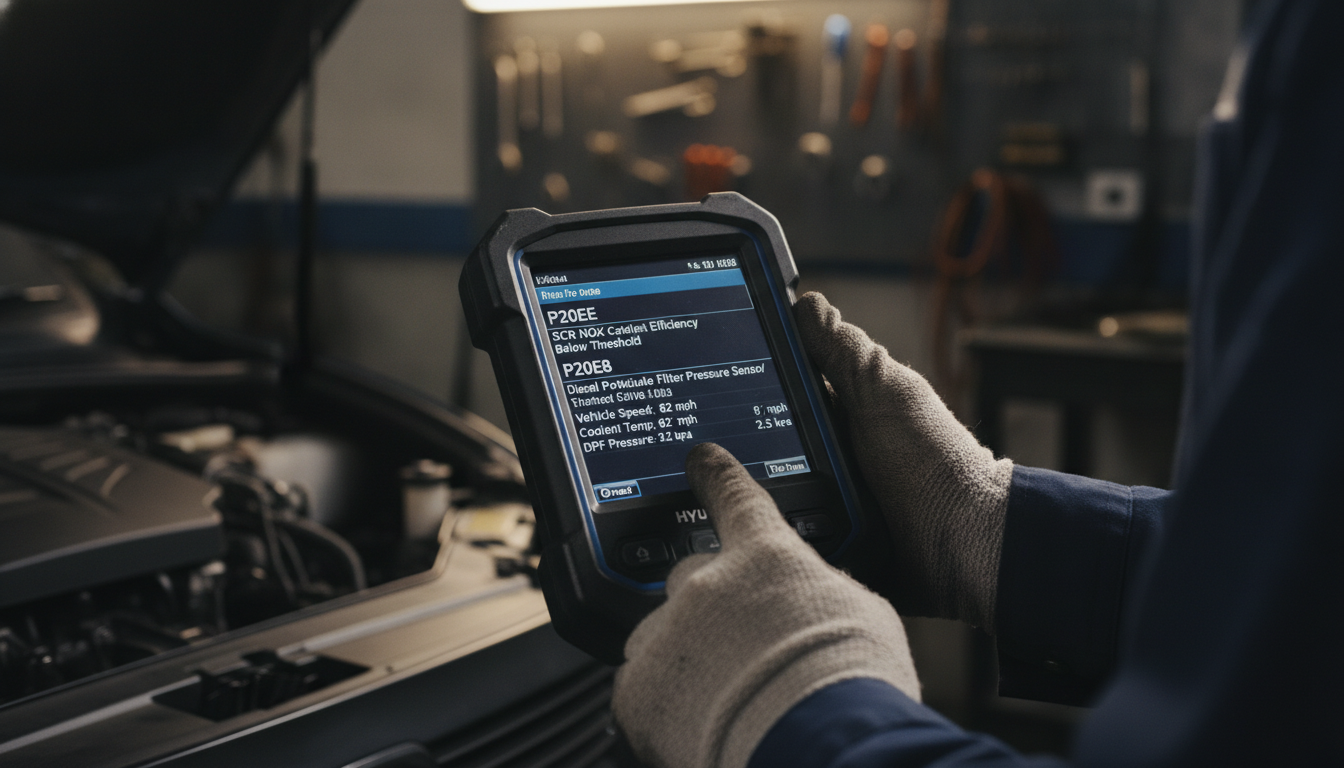
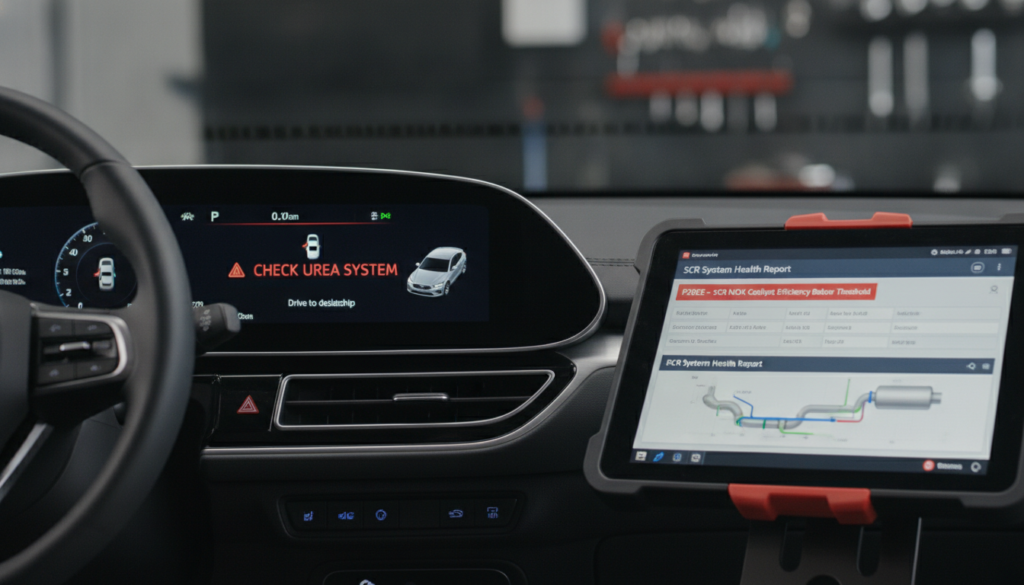
Alter Tag: Diagnostic scanner screen showing Hyundai SCR fault codes P20EE and P20E8 for urea system troubleshooting.
A proper scan separates a refill problem from an SCR fault code. The most useful data includes stored codes, pending codes, freeze frame data, and live values. A generic scanner may miss Hyundai-specific details of the urea module.
Look for code families, not just one number. P20EE often points toward SCR efficiency or NOx conversion. P204F suggests broader issues with the reductant system's performance, while P20E8 can point to pressure or dosing delivery issues.
Do not replace the tank only because one code appears. Check the related conditions first, including temperature, speed, mileage since refill, urea level, NOx readings, and dosing command. Use manual-based OBD-II code flowcharts before committing to expensive parts.
Clear codes only after recording them. If you erase data first, you may lose the freeze frame that explains when the fault set. That can make intermittent NOx sensor or wiring problems harder to prove.
A return-after-50-km pattern often means the system fails a monitor after a drive cycle. That’s different from an instant electrical fault. The repair path should follow the monitor logic, not the driver’s frustration.
Inspect leaks and crystals
Physical inspection can reveal what scan data cannot. AdBlue crystallization leaves white deposits when fluid dries around caps, lines, injectors, or connectors. Small residue near the filler may be normal, but heavy build-up near dosing parts needs attention.
Inspect the filler neck, tank area, pump lines, injector, underbody pipes, and connectors. Look for wetness, white crust, broken clips, stretched harnesses, and heat damage. A cracked pipe can trigger the same panic as an expensive module failure.
The dosing injector is a common inspection point. If crystals block the spray path, the SCR catalyst may not receive correct fluid. That can cause efficiency faults even when the tank is full.
Clean only where safe and accessible. Do not force brittle plastic fittings or soak electrical connectors. If the manual calls for a gasket, a sealing washer, or a torque value, replace it and tighten it correctly.
This is where factory diagrams matter. A Hyundai emission layout can show the exact routing of urea lines, shields, connectors, and underbody clips. For related tracing skills, use automotive wiring diagram short-tracing methods when the visual inspection points toward harness damage.
Test NOx data carefully
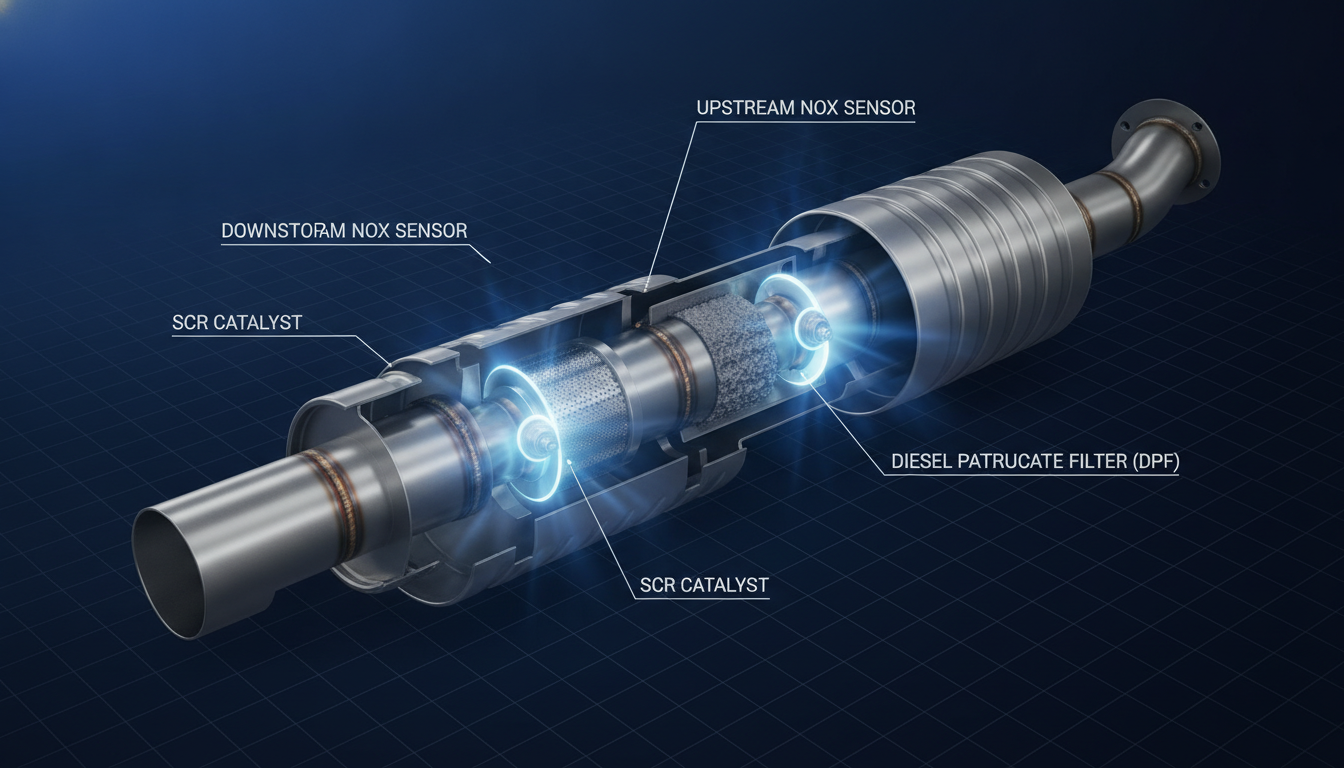
Alter Tag: Technical diagram showing the location and layout of NOx sensors on a Hyundai diesel exhaust system.
A NOx sensor fault can look like an AdBlue problem. The SCR system uses upstream and downstream exhaust feedback to judge conversion. If the readings are incorrect, the vehicle may blame dosing even when the injector is working.
Watch live NOx values during the right operating conditions. Cold idle readings alone may not prove much. You need the engine temperature, exhaust temperature, dosing command, and sensor response to make sense of them together.
A downstream NOx value that never reacts can suggest sensor, catalyst, wiring, or dosing problems. A sensor that drops offline points more toward electrical or module communication issues. A sensor that reads unrealistically can mislead the ECU into setting P20EE.
Use pinout charts before back-probing. Wrong probing can damage a connector or module. NXT Motors’ Hyundai service manual library is useful when you need circuit views, connector IDs, and testing order.
Do not assume every full-tank warning is a tank failure. A faulty NOx sensor, broken pipe, pump pressure loss, or contaminated fluid can produce similar dashboard behavior. A good diagnosis identifies the cause before parts are ordered.
Use manuals for pinouts
The hardest step in troubleshooting Hyundai AdBlue problems is electrical confirmation. Sensors, heaters, pumps, and dosing valves depend on clean power, ground, signal, and communication. Guessing with a test light can create new faults.
Use the manual to identify the right connector face, terminal number, wire color, and expected value. Then test voltage drop, continuity, resistance, and signal behavior under the correct conditions. For a stronger foundation, review ECU pinout chart interpretation before testing the urea control circuits.
A multimeter can confirm many basic faults. You can test power supply, ground integrity, heater continuity, and connector corrosion. Use sensor testing with a multimeter when the manual gives values and conditions.
Do not pierce wires unless the procedure allows it. Pierced insulation invites corrosion, especially near underbody emission components. Use proper back-probe pins and reseal anything disturbed.
Manuals also help with reset procedures after repair. Some faults clear after a drive cycle, while others need a scan tool reset or service function. That is why manual-guided diagnostics beat random code clearing.
Decide DIY or workshop
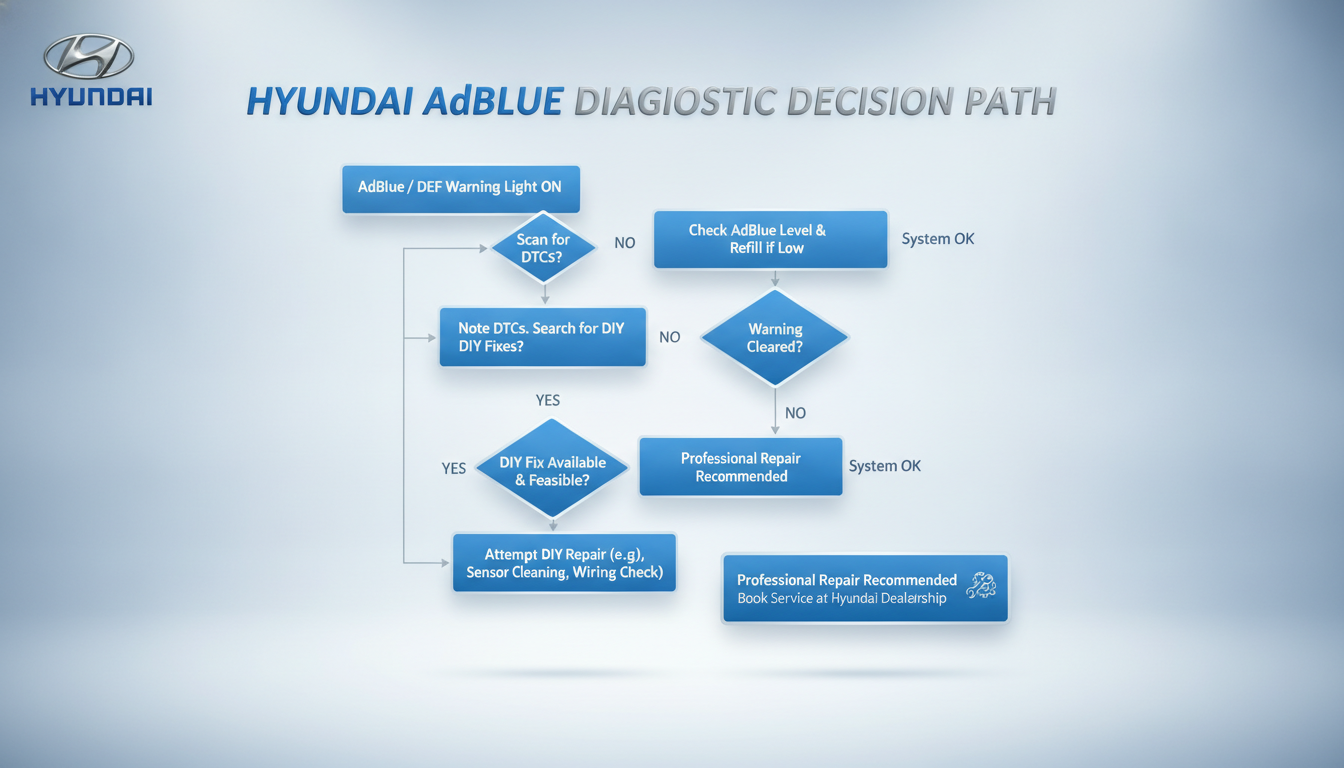
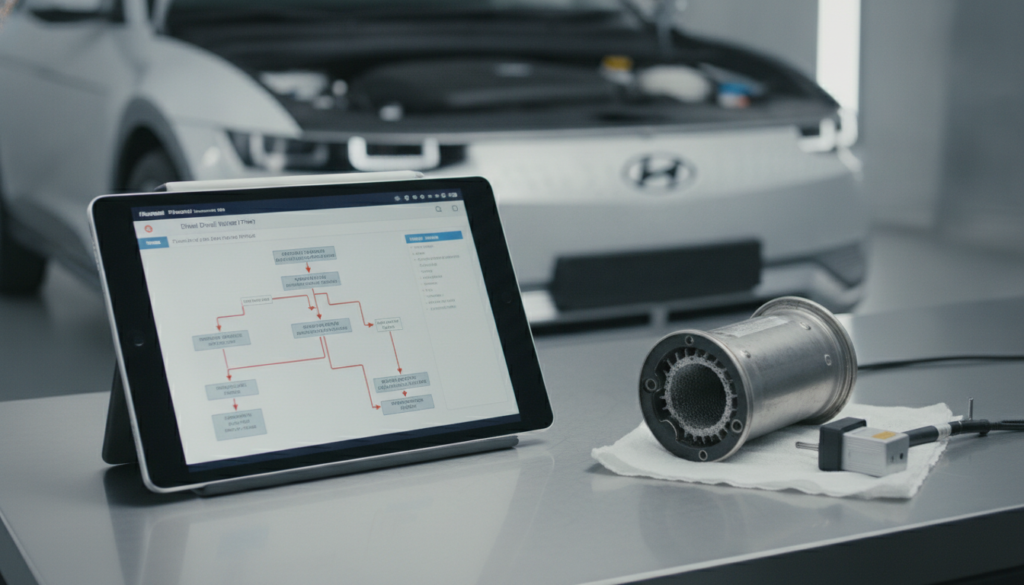
Alter Tag: A diagnostic flowchart for Hyundai owners to decide between DIY AdBlue repair or professional workshop service.
A DIY owner can safely handle basic checks. You can confirm the warning text, refill the correct fluid, inspect for visible leaks, record codes, and check for obvious crystals. You can also use the manual to determine which parts of the system require professional testing.
Stop DIY work when the countdown gets low. Also stop when you find wiring damage, the wrong fluid, repeated P20EE codes, pump pressure faults, or NOx data problems. At that stage, a wrong move can create a no-start situation.
Avoid any suggestion to disable the emissions system. A delete may hide the warning, but it can create legal, inspection, resale, and engine-management problems. The better route is to diagnose the cause and repair the system correctly.
Use model pages to match your vehicle before buying a manual. Useful branches include Sonata service procedures, Tiburon manual resources, Veloster workshop references, Veracruz repair data, and XG 350 diagnostic information. European and legacy branches also include Accent X3 service references, Galloper repair manuals, H-1 diesel service data, Trajet workshop manuals, and Terracan diagnostic resources.
Finish the decision with a practical rule. If the refill fixes the warning and no codes return, monitor the system. If the warning returns, use the factory path before buying a tank, pump, injector, or sensor.
For older Hyundai coverage, confirm pages such as Santamo service information, S-Coupe manual references, Pony repair resources, Matrix workshop data, Lantra service manuals, ix20 diagnostic references, and i30cw repair information. These pages help owners avoid buying the wrong manual for a similar nameplate. The right document keeps Hyundai AdBlue problem troubleshooting focused, fast, and less expensive.
Common Asked Questions About the Hyundai AdBlue Problem Troubleshooting
Why is my Hyundai AdBlue warning still on after filling the tank?
Your Hyundai may still show an AdBlue warning because the system is not only checking fluid quantity. It may also be checking urea quality, dosing pressure, pump operation, level sensor feedback, NOx sensor readings, and stored fault codes from the SCR module.
Start by confirming that you added enough correct AdBlue, then cycle the ignition and drive long enough for the system to recheck.
If the message remains after a proper refill and drive cycle, scan the vehicle before adding more fluid. A full tank with a warning often points to a sensor, pump, injector, contamination, or wiring issue.
Can I drive with a Hyundai Check Urea System message?
You may be able to drive for a limited distance, but you should treat Check Urea System as urgent. The message can escalate to a countdown, during which the vehicle may not restart once the remaining distance expires.
Record the exact warning, check the urea level, and scan the system as soon as possible. Do not rely on code clearing as a repair, as the message may return after the next monitor cycle.
If the countdown is low, avoid unnecessary trips and arrange diagnosis before shutting the vehicle off in an inconvenient place.
What does P20EE mean on a Hyundai diesel?
P20EE usually means the SCR system is not reducing NOx as expected. That does not automatically prove the SCR catalyst is bad, because the fault can come from poor dosing, contaminated AdBlue, a blocked injector, failing NOx sensors, exhaust leaks, or wiring issues.
Read freeze-frame data and compare upstream and downstream NOx behavior under proper operating conditions. Then inspect the AdBlue injector, pump pressure, and fluid quality before replacing expensive parts.
A factory manual helps because it gives the test order, connector views, and expected readings for your exact Hyundai diesel.
Do I need a scan tool to reset a Hyundai AdBlue fault?
A scan tool is not always needed after a simple low-fluid refill. Some warnings clear after correct AdBlue is added, the ignition is cycled, and the vehicle completes a short drive cycle. A scan tool becomes important when the warning remains, the tank reads incorrectly, the check engine light is on, or codes like P20EE, P204F, or P20E8 are stored.
In those cases, resetting without diagnosis only hides the symptom briefly. Use the scan tool to read codes, live data, and service functions, then clear faults only after the repair is complete.
Is an AdBlue delete a good way to stop Hyundai SCR warnings?
An AdBlue delete is not a recommended repair path for a road vehicle. It can create legal, inspection, resale, insurance, and emissions-compliance problems, and it may also mask faults that affect DPF regeneration or the engine control strategy.
A proper repair starts by identifying why the system set off the warning, such as low fluid, poor-quality fluid, a failed NOx sensor, a weak pump, a blocked injector, or damaged wiring.
The safer path is to use diagnostic data and the correct manual procedure. Fix the root cause instead of disabling the system.