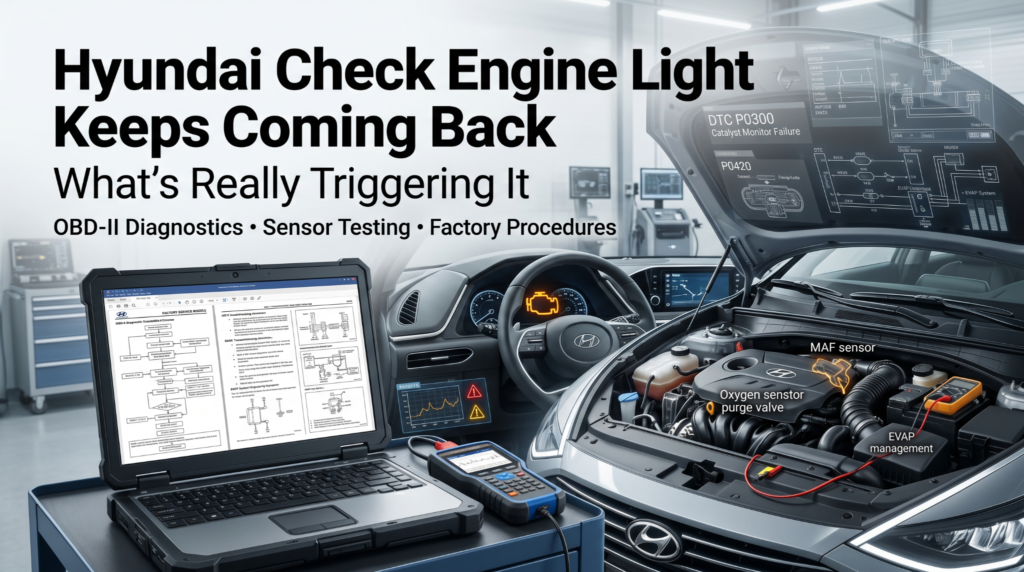
That Hyundai check engine light keeps coming back, and resetting it without a real check is only making things worse. Ignoring a recurring engine warning can turn a $50 sensor fix into a $2,000 repair.
Clearing codes is only a temporary fix. To stop the light from returning, you must diagnose the specific OBD-II codes. Common Hyundai triggers include EVAP leaks, failing O2 or MAF sensors, and knock sensor or air flap system faults.
This article covers the most common triggers behind a recurring check engine light in Hyundai vehicles, how to diagnose them step by step, and when a reset is never enough.
Hyundai Check Engine Light Keeps Coming Back: The Real Reasons Behind It
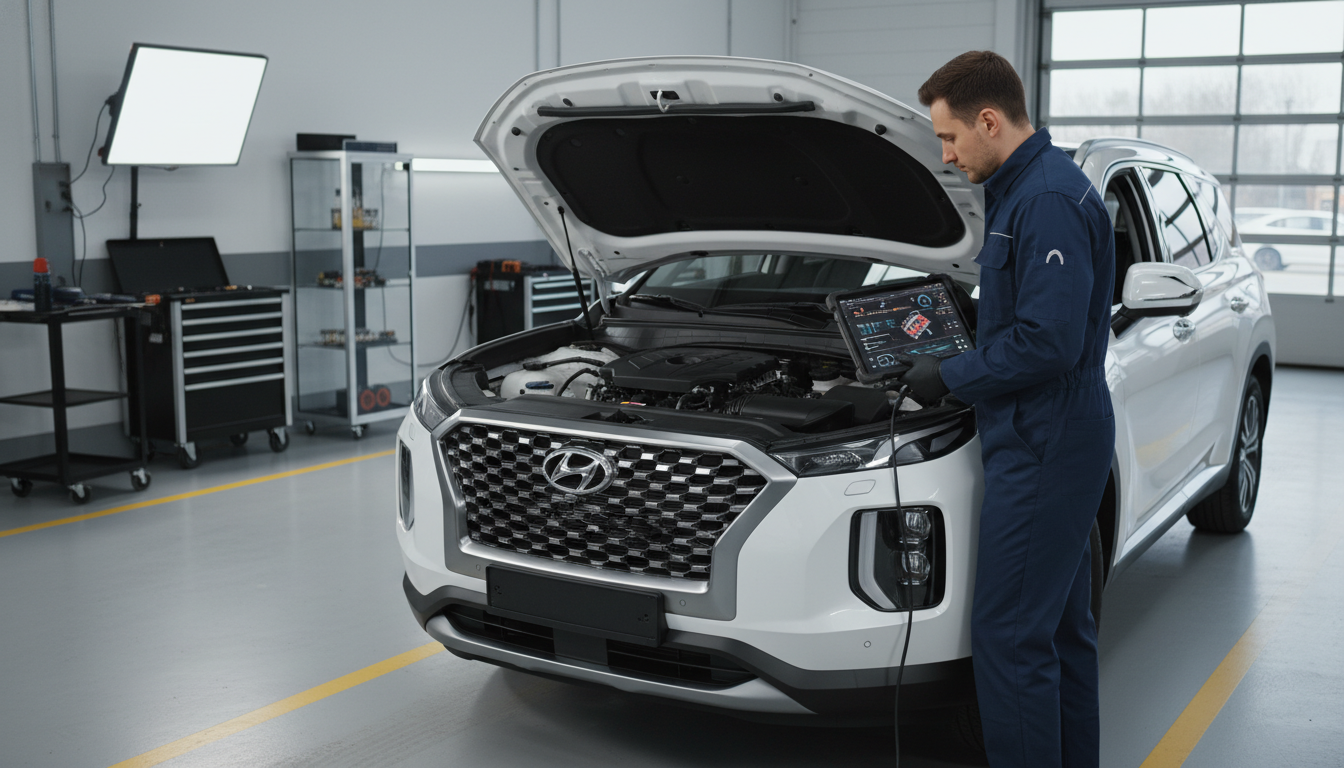
Alter Tag: A technician using a professional diagnostic tool on a Hyundai vehicle.
Most drivers assume clearing the code solves the problem. It doesn't. If your Hyundai check engine light keeps coming back, the underlying system fault is still active, and the ECM (Engine Control Module) will re-flag it within a few driving cycles.
This section breaks down the exact causes, organized from most to least common. Each one includes what to look for, what code it triggers, and what a proper fix actually involves. Read every section skipping one could mean misdiagnosing the vehicle entirely.
Why Resetting the Code Is Never Enough
Before jumping to causes, you need to understand why the check engine light keeps returning in the first place. Many owners clear codes using an OBD-II scanner or by disconnecting the battery. The light goes off. Then it comes back.
Here's why: The ECM stores fault codes when a sensor or system falls outside normal operating parameters. Clearing the code removes the stored data, not the fault. After a set number of driving cycles, the onboard diagnostic system re-runs the same checks and re-flags the same fault.
What you should do instead:
- Connect a quality OBD-II scanner to the diagnostic port (under the dash, driver's side)
- Read all stored and pending fault codes, not just the active ones
- Cross-reference codes using a proper OBD-II code diagnosis guide before attempting any repair
- Fix the root cause first, then clear the code
Simply resetting without diagnosis is the single most common reason the Hyundai check engine light keeps coming back again and again.
Loose or Damaged Gas Cap (Most Overlooked Trigger)
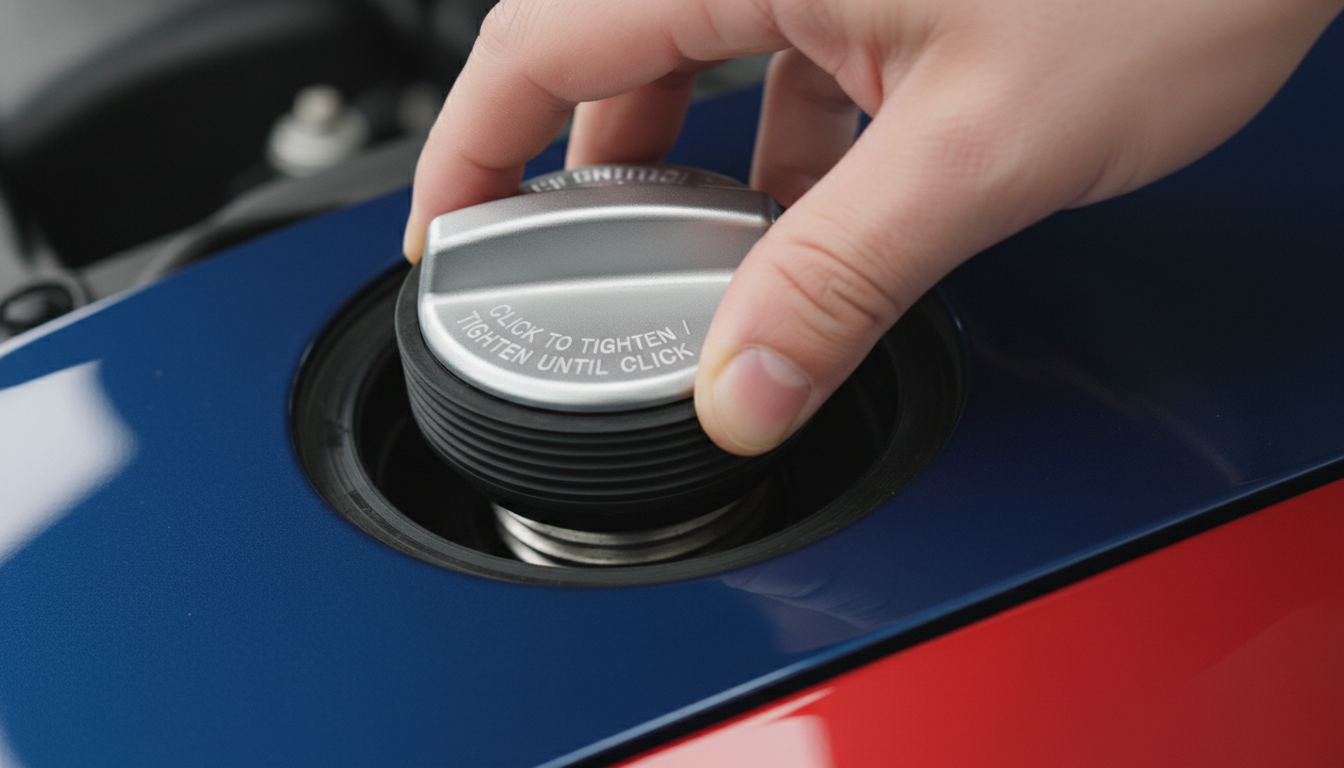
Alter Tag: Close-up of a hand tightening a Hyundai gas cap to ensure a proper seal.
A loose gas cap is one of the first things to inspect when the check engine light comes on in your Hyundai. It's also one of the most underestimated. A cap that isn't sealed properly allows fuel vapors to escape the evaporative emissions control system (EVAP), and the ECM detects this immediately.
Typical fault code: P0440, P0455, P0457
This one is more common than most people expect. The cap might look fine but have a cracked rubber seal or a worn locking thread. After refueling, many drivers don't fully click it shut, and that's enough to trip the light.
How to confirm and fix it:
- Remove the gas cap completely and inspect the rubber gasket for cracks or deformation
- Reinstall it firmly, it should click 3 to 4 times
- Drive 2 to 3 cycles and monitor if the light returns
- If the code is still active after a proper seal, replace the gas cap (typically under $20)
If the check engine light keeps coming back after replacing the cap, the fault lies deeper in the EVAP system purge valve, vent valve, or canister.
Faulty Oxygen Sensor (Top Recurring Code Trigger)
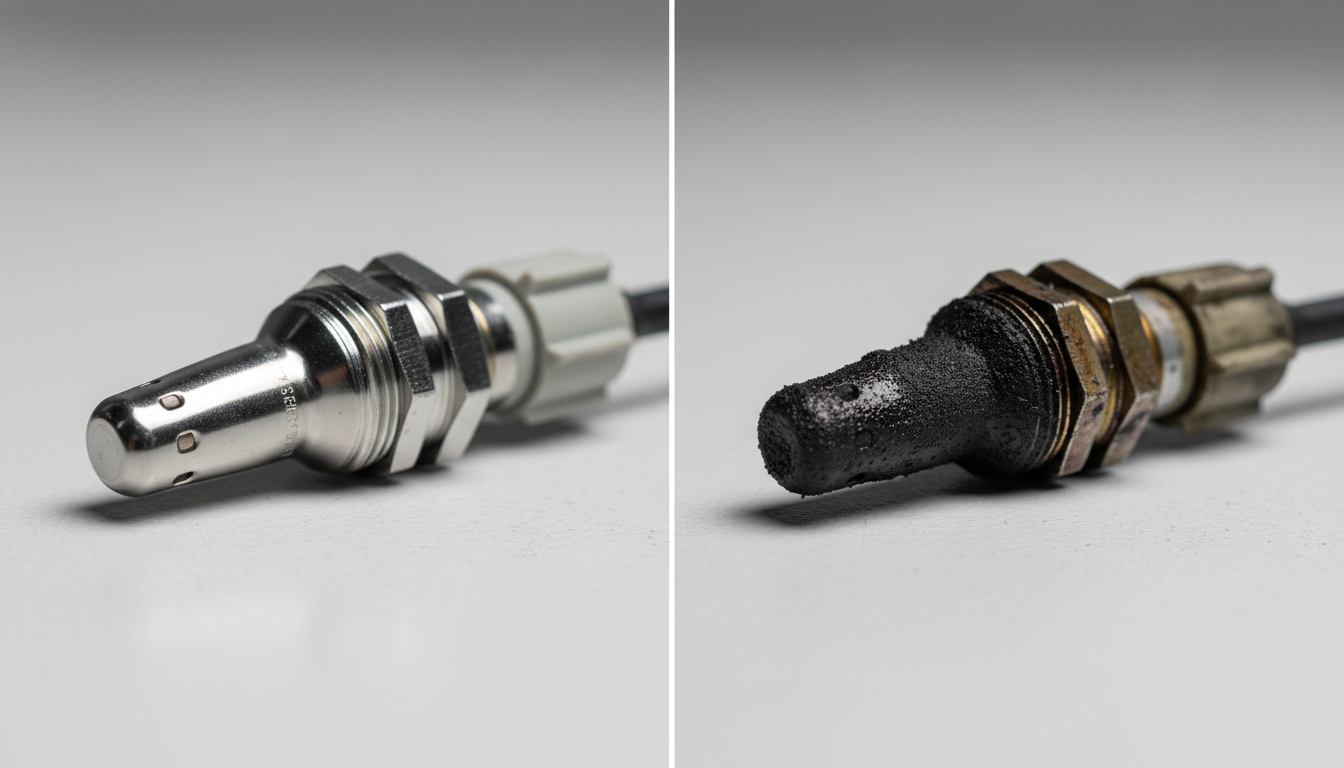
Alter Tag: A comparison between a new and a carbon-fouled oxygen sensor.
The oxygen sensor monitors unburned oxygen levels in the exhaust stream. It sends real-time data to the ECM to regulate the air-fuel mixture. When it fails or reads erratically, the check engine light in your Hyundai will come on and keep returning until the sensor is replaced.
Typical fault codes: P0136, P0141, P0300, P0171
Most Hyundai models have two or more oxygen sensors upstream (before the catalytic converter) and downstream (after the catalytic converter). Both can fail independently.
A partially functional sensor may pass a cold-start check but fail once the engine reaches operating temperature, which is why the light appears intermittently at first, then stays on.
|
Symptom |
What It Indicates |
|
Increased fuel consumption |
Sensor reading lean; ECM over-fueling |
|
Rough idle |
Air-fuel imbalance from faulty O2 data |
|
Failed emissions test |
Incorrect combustion output reported |
|
Light returns after reset |
Sensor still sending bad signal to ECM |
Diagnosis steps:
- Use a scanner with live data to monitor O2 sensor voltage in real-time
- A healthy upstream sensor should oscillate between 0.1V and 0.9V
- A flatlined or stuck reading confirms sensor failure
- Replacement is recommended over cleaning for accurate long-term results
For proper check engine light fault isolation steps, the fault isolation guide here walks through sensor testing systematically.
EVAP System Faults (Most Frequently Misdiagnosed)
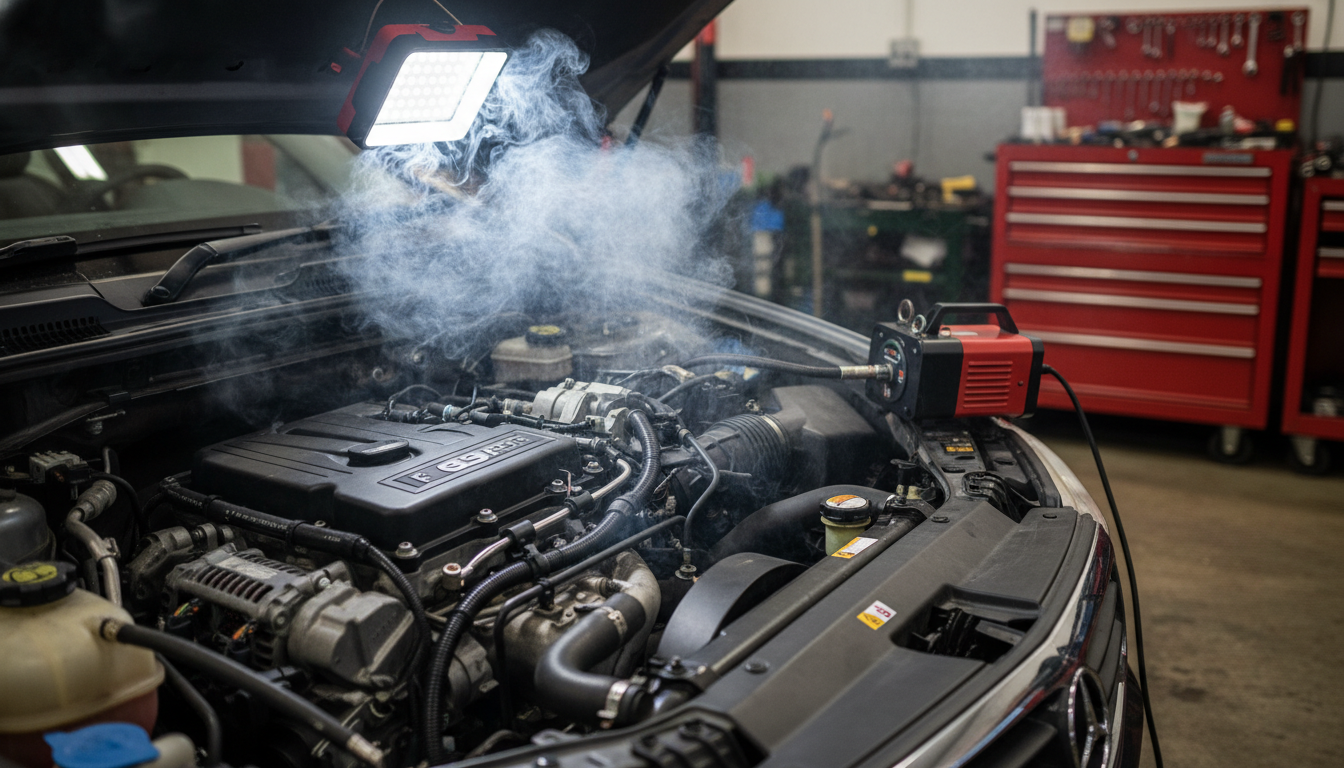
Alter Tag: A smoke machine used to detect leaks in a vehicle's EVAP system.
The Evaporative Emission Control System (EVAP) captures fuel vapors and routes them back into the engine rather than releasing them into the atmosphere. It's one of the most common sources of recurring Check Engine light issues in Hyundai vehicles, and one of the hardest to pin down without proper tools.
Typical fault codes: P0440, P0441, P0442, P0446, P0455
The EVAP system contains several components that degrade over time: the purge valve, vent solenoid, charcoal canister, and associated vacuum lines. Any small leak in the system will set a code. The tricky part is that visual inspection rarely reveals the problem.
Common EVAP failure points in Hyundai:
- Purge valve stuck open or closed (most common after 60,000 miles)
- Vent solenoid failure prevents proper vapor routing
- Cracked charcoal canister from heat cycling
- Deteriorated vacuum lines causing vapor loss between components
A proper EVAP diagnosis typically requires a smoke machine test, where pressurized smoke is pumped into the system to visually locate leaks. Without this, you're guessing. Refer to model-specific procedures in the Hyundai service information guide for component locations by year.
Catalytic Converter Degradation (Costliest Recurring Cause)
A failing catalytic converter is one of the most serious causes of the Hyundai check engine light coming back on. It doesn't fail overnight it degrades gradually, and the light may come and go for weeks before triggering a permanent fault.
Typical fault codes: P0420, P0421, P0430
The catalytic converter uses chemical reactions to reduce harmful exhaust emissions. Over time, the internal substrate wears down, and the downstream oxygen sensor detects that the converter is no longer reducing emissions efficiently. This is exactly what triggers code P0420 in most Hyundai Sonata, Elantra, and Tucson models.
What accelerates converter failure:
- Prolonged misfires: unburned fuel enters the converter and damages the substrate
- Coolant leaks into the combustion chamber (blown head gasket)
- Oil-burning byproducts coat and destroy the catalyst material
- Poor fuel quality over extended periods
|
Cause |
Effect on Converter |
|
Engine misfire |
Unburned fuel overheats substrate |
|
Oil consumption |
Ash deposits clog the catalyst |
|
Coolant leak |
Chemical contamination of catalyst |
|
Age + mileage |
Normal catalyst depletion after ~100K miles |
Replacing the converter without fixing the upstream issue (misfire, oil burning) will result in the new unit failing within months and the Check Engine light coming back on again. Fix the cause first.
Mass Airflow Sensor Failure (Underdiagnosed but Common)
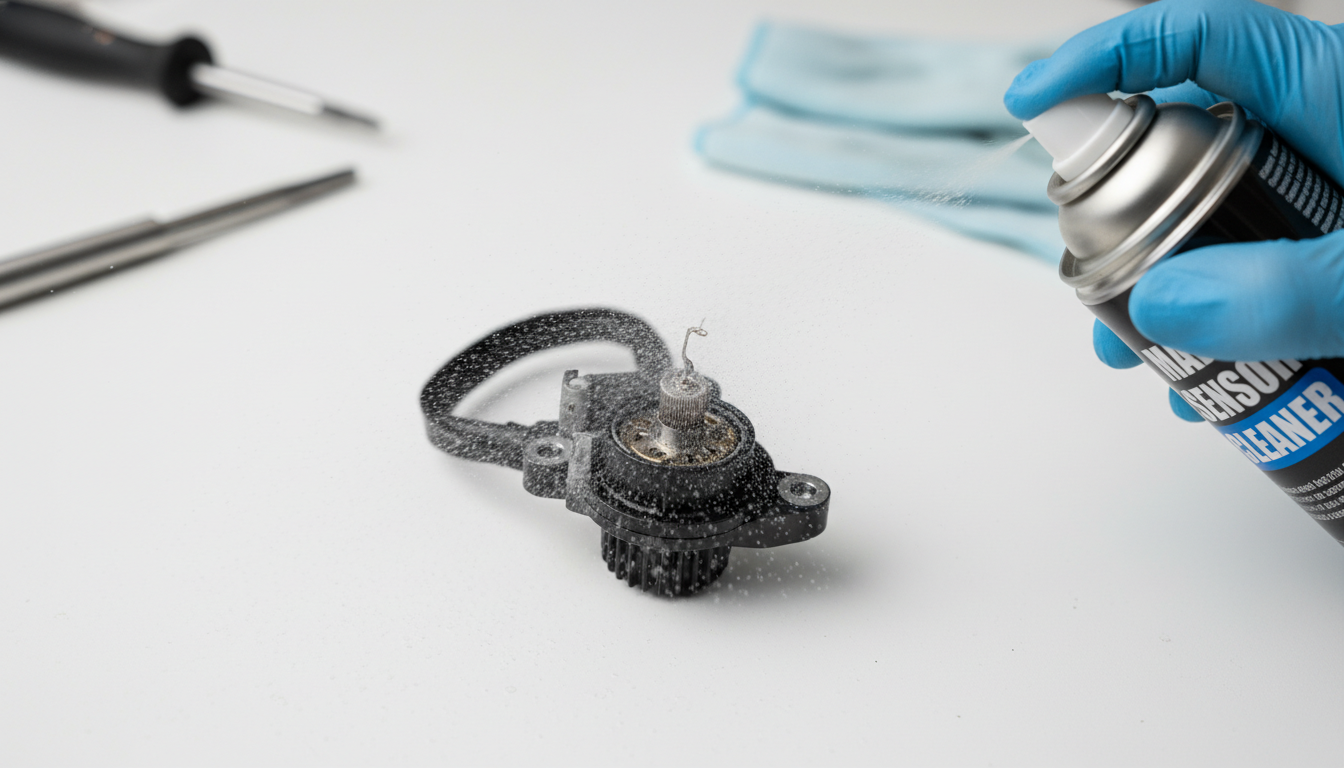
Alter Tag: A technician cleaning a mass airflow sensor with dedicated cleaner spray.
The Mass Airflow (MAF) sensor measures the volume of air entering the engine so the ECM can calculate the correct fuel delivery. When it malfunctions, often due to contamination from a dirty air filter, the entire fuel management system runs on bad data.
Typical fault codes: P0100, P0101, P0102, P0103
This issue is particularly common in higher-mileage Hyundai models. The MAF sensor sits in the intake air path and picks up oil residue, dust, and debris over time. In many cases, a careful clean with MAF sensor cleaner resolves the problem. In others, replacement is required.
Symptoms specific to MAF failure in Hyundai:
- Engine hesitation under acceleration
- Stalling at idle or low speed
- Significantly reduced fuel economy
- Black smoke from exhaust (rich mixture from incorrect air readings)
Step-by-step MAF check:
- Locate the MAF sensor in the intake tube between the air filter housing and throttle body
- Remove and inspect the sensing wire for contamination or deposits
- Spray with dedicated MAF cleaner let dry fully before reinstalling
- Clear the code and complete 2 full driving cycles
- If the code returns, replace the sensor
Always replace the air filter at the same time. A clogged filter is often the direct cause of MAF contamination and can quickly damage a new sensor.
Spark Plug and Ignition Coil Misfires (Light Comes Back Fast)
Engine misfires are one of the quickest ways to trigger a recurring Check Engine light in any Hyundai. When a spark plug fails, or an ignition coil weakens, the affected cylinder misfires, meaning fuel doesn't combust properly, and the ECM flags the anomaly immediately.
Typical fault codes: P0300 (random misfire), P0301–P0308 (cylinder-specific misfires)
The light may flash during the actual misfire event, then go solid or turn off temporarily. But the code stays stored, and the next driving cycle will reactivate the light if the misfire recurs.
What to check:
- Spark plugs: Inspect for wear, fouling, or carbon buildup. Replace every 30,000 miles for standard plugs, every 60,000–100,000 for iridium/platinum
- Ignition coils: Test each coil's resistance with a multimeter, or swap coils between cylinders to identify the faulty one
- Fuel injectors: A clogged injector on the misfiring cylinder will also produce a P030X code
Replacing only the affected plug or coil without checking the others is a common mistake. If one has failed, the others are likely at similar wear replacing one at a time leads to the check engine light returning on a different cylinder shortly after. For vehicle-specific torque specs and ignition system data, pulling the vehicle repair data by VIN is the most reliable approach.
How Many Driving Cycles Before the Light Returns?

Alter Tag: A Hyundai car driving on the road to complete its internal diagnostic cycles.
This is a detail most repair guides skip, but it's critical for understanding recurring check engine light behavior in Hyundai vehicles.
After a code is cleared, the ECM runs a set of readiness monitors across multiple driving cycles. Each monitor tests a specific system (EVAP, oxygen sensors, catalytic converter efficiency, etc.). If the fault condition remains, the monitor fails, and the code is set again.
|
System |
Typical Cycles to Re-trigger |
|
Gas cap / EVAP leak |
2 to 3 cold-start cycles |
|
Oxygen sensor |
1 to 2 warm-up cycles |
|
Catalytic converter |
2 to 5 drive cycles |
|
Misfire detection |
Immediate (within current cycle) |
|
MAF sensor |
1 to 2 cycles at full operating temp |
This is why the check engine light keeps coming back even a day or two after resetting the monitor ran, found the fault still active, and re-flagged it. The only real solution is to fix the root cause. Finding an authentic workshop manual source for your specific Hyundai model provides the exact monitor completion criteria manufacturers specify.
Conclusion
A Hyundai check engine light that keeps coming back is not a glitch it's the vehicle's diagnostic system doing exactly what it's designed to do. Clearing the code without addressing the actual fault only delays the light's return by a few driving cycles.
The most reliable path is straightforward: read the specific fault code, trace it to the actual component, properly repair or replace that component, and then clear the code.
Whether it's a $15 gas cap or a degraded catalytic converter, every recurring check engine fault has a specific source. Find it, fix it right the first time, and the light stays off.
Common Asked Questions About Hyundai Check Engine Light Keeps Coming Back
Can a Hyundai check engine light come back after an oil change?
Yes, it can, and this confuses many owners. An oil change doesn't clear stored fault codes. If the check engine light came on temporarily after the oil change, it likely coincided with the ECM completing a driving cycle during which the fault wasn't detected.
The underlying issue (oxygen sensor, EVAP fault, or MAF contamination from residual old oil) remains. The light will return within 1 to 3 driving cycles if the root fault is still active. Always scan for codes after an oil change if the light was previously on.
Does a flashing check engine light in a Hyundai mean something different from a solid one?
Absolutely, and the distinction matters. A solid check engine light indicates a stored fault that needs attention but doesn't require you to stop immediately.
A flashing or blinking check engine light signals an active engine misfire severe enough to damage the catalytic converter if driving continues.
In Hyundai vehicles, a flashing light typically corresponds to the P0300-P0308 codes. Stop driving as soon as it's safe and have the vehicle diagnosed right away to avoid costly converter damage.
Will a Hyundai check engine light reset itself eventually?
In limited cases, yes. If the original fault was minor and intermittent, such as a brief sensor glitch or a momentarily loose gas cap, the ECM may turn off the light after three consecutive clean driving cycles where the fault doesn't recur.
However, if the underlying problem remains, the ECM will detect it again and re-illuminate the light.
Waiting for it to self-reset without investigating the cause is a gamble you could be masking a serious issue that worsens over time and becomes significantly more expensive.
Is it safe to drive my Hyundai with the check engine light on for several days?
It depends entirely on the cause and whether the light is solid or flashing. A solid light with no other symptoms (no rough idle, no power loss, no unusual smells) generally means you can drive short distances for a few days without catastrophic damage.
However, some underlying issues, such as an ongoing rich-fuel condition or a partially failed oxygen sensor, will silently reduce fuel efficiency and increase emissions throughout. A flashing light means stop immediately. In either case, getting the code read within 24 to 48 hours is the responsible approach.
Why does my Hyundai check engine light come on only in cold weather?
Cold weather significantly affects sensor behavior and fuel system performance. Oxygen sensors, MAF sensors, and EVAP components all have wider performance tolerances in low temperatures.
A sensor that performs within spec when warm may fall outside acceptable parameters during a cold start. EVAP systems are particularly sensitive to temperature-related pressure changes, which can trigger vapor leak codes in winter that don't appear in summer.
If the light appears only in cold conditions and disappears after the engine warms up, first suspect a temperature-sensitive sensor fault or an EVAP pressure issue.