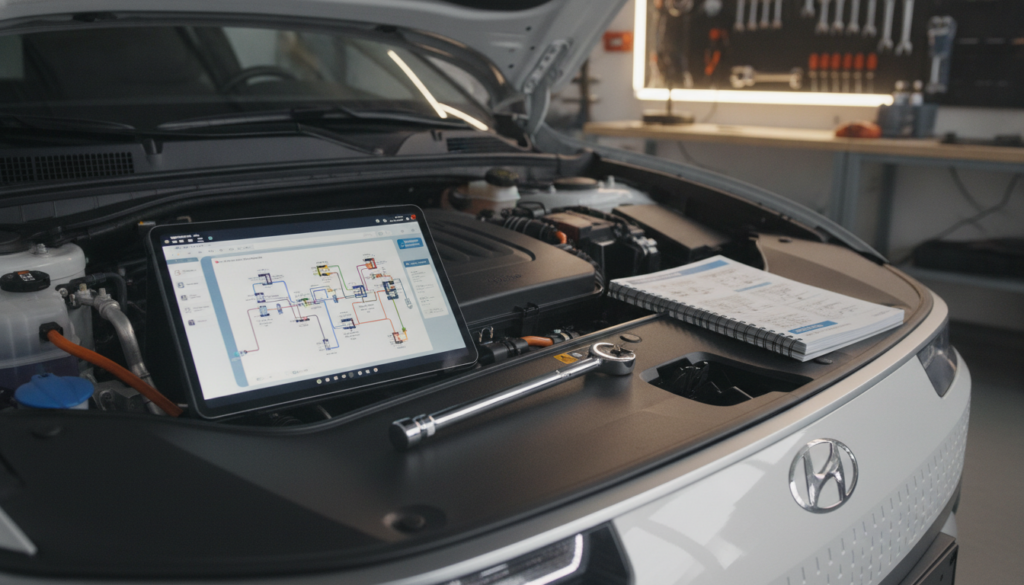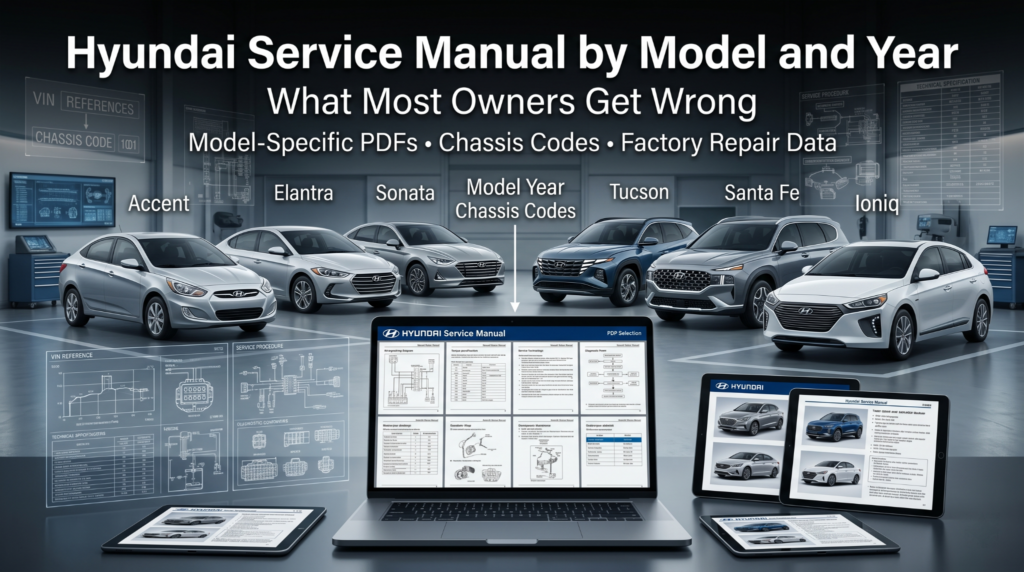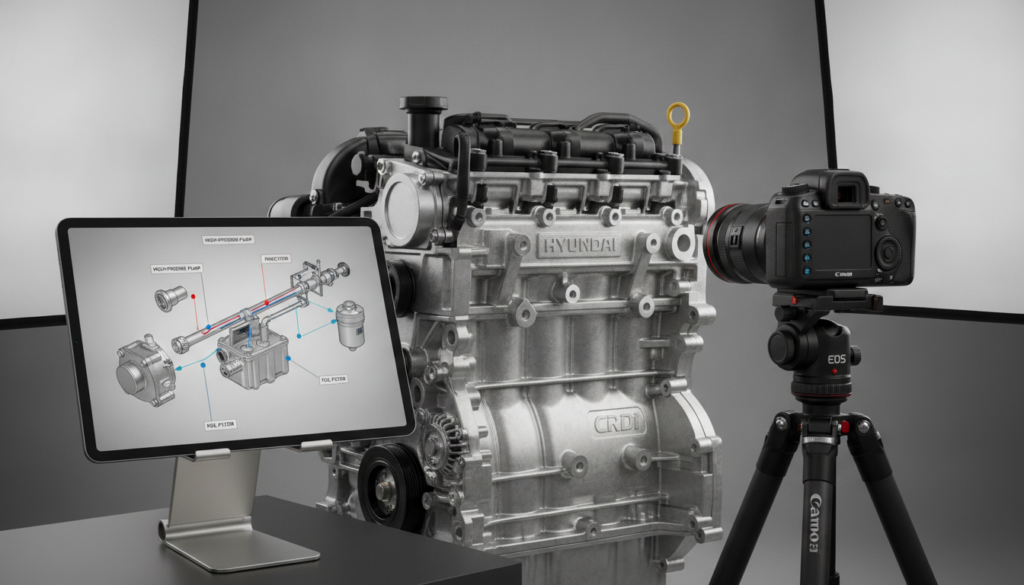
A Hyundai diesel repair can go wrong fast. One wrong torque value can damage parts. One wrong wiring diagram can waste hours.
Start by matching your manual to the diesel engine code, then verify the repair section. Official Hyundai service manuals and parts catalogs for engines like the D4EA or D4FA are available online for digital troubleshooting and repair.
This guide shows the practical path. You’ll learn how to check Hyundai workshop manual details. You’ll also see when to use NXT Motors for model-specific manual support.
Hyundai Diesel Service Manual Guide: Avoid Costly Guesswork
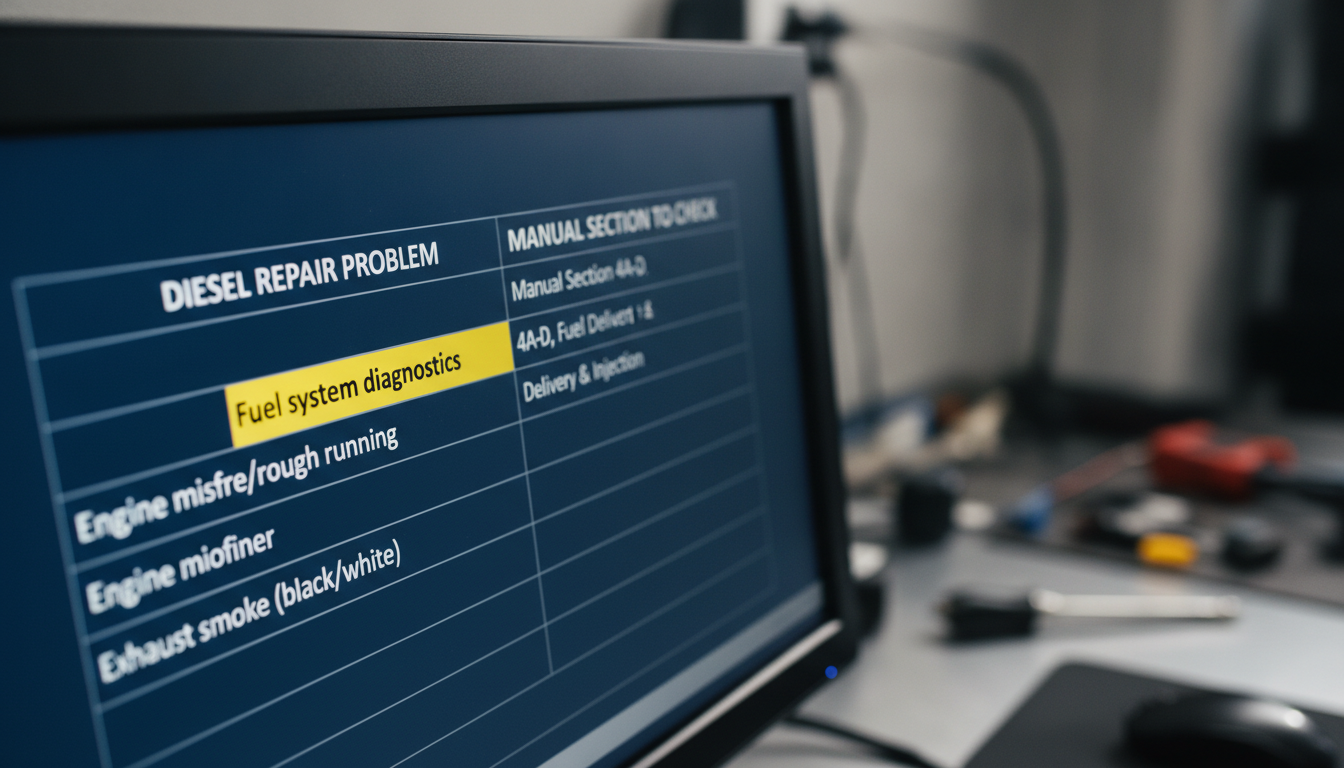
Alter Tag: Hyundai diesel workshop manual diagnostic table showing fuel system and timing procedure sections for accurate repairs.
A Hyundai Diesel Service Manual should help you identify the correct engine, procedure, wiring path, and tightening value before repair begins. Start with the Hyundai diesel manual catalog for a model-based entry point to Hyundai manuals. Then use the manual as a diagnostic tool, not as a random PDF.
|
Diesel Repair Problem |
Manual Section to Check |
Why It Matters |
|
Hard start or no start |
Fuel system diagnostics |
Confirms pressure, injectors, sensors, and relay paths |
|
Timing noise or belt work |
Timing procedure |
Prevents valve damage and misalignment |
|
Limp mode |
DTC flowchart |
Links scan codes to test steps |
|
Electrical fault |
Wiring diagram |
Shows connectors, grounds, and power feeds |
|
Reassembly work |
Torque specifications |
Prevents stripped threads, leaks, and repeat failures |
Verify the Engine Code First
The fastest way to ruin a diesel repair is to use a manual for the wrong engine. Hyundai diesel platforms can share body names while using different CRDi engine codes. Confirm the engine code before you trust any procedure.
Check the VIN plate, engine stamp, emissions label, and registration data before opening a manual. A D4EA, D4EB, or D4CB procedure may look similar at first, but timing layout, fuel system detail, and torque values can differ. This matters most on models like the Hyundai Santa Fe diesel manual, Hyundai Tucson diesel reference, Hyundai H-1 diesel manual, and Hyundai Terracan diesel specs.
Use the manual’s identification pages before you read removal steps. Those pages usually clarify the engine family, market, displacement, production range, and fuel system type. This protects you from using a petrol manual, a different regional manual, or a manual written for a related Kia platform.
Match the repair section to the exact job after the engine code is confirmed. For timing work, open the timing section before ordering parts. For fuel work, open the common rail or injection section before disconnecting anything.
Use OEM Pages Before Free PDFs
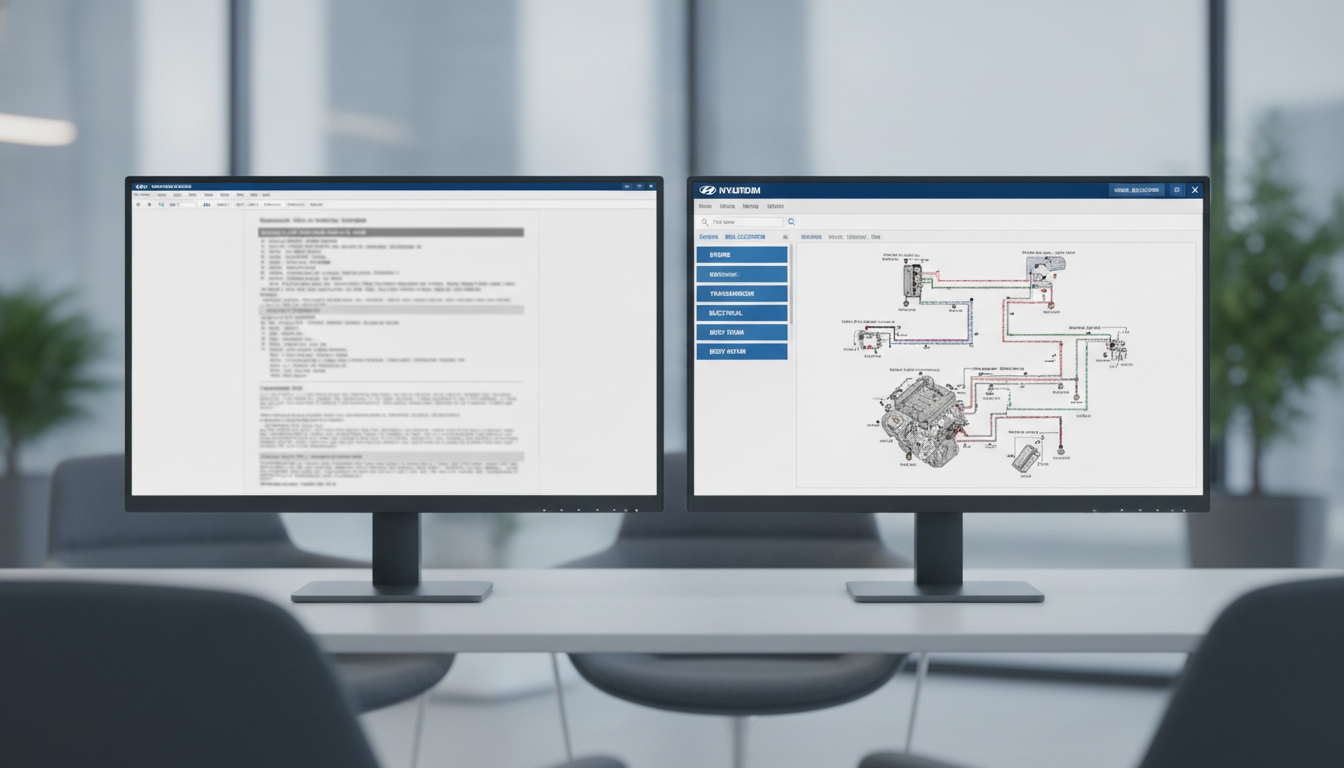
Alter Tag: Comparison between a high-quality OEM Hyundai service manual interface and a poor-quality generic PDF.
Free PDFs can help with orientation, but they shouldn’t be your first point of trust. A diesel manual must match the repair, engine, and model year. Use official or organized sources before downloading files from unknown mirrors.
Start from the Hyundai workshop manual catalog when you want a model-first path instead of a scattered file search. Then compare your manual need with manual lookup by VIN and the genuine OEM workshop manual download path. This helps you avoid a manual that looks professional but covers the wrong year, trim, or market.
A true service manual should include more than basic maintenance. Look for wiring diagrams, component locations, tightening torque tables, diagnostic flowcharts, removal steps, inspection limits, and special tool notes. If a PDF only gives broad maintenance intervals, it is closer to an owner's guide than a repair manual.
Treat manual quality like a repair tool. A cheap tool can work, but the wrong tool can damage parts. The wrong diesel manual can lead to broken connectors, stripped bolts, and unnecessary part replacements.
Read Diesel Schematics Before Testing
Diesel electrical faults can look mechanical at first. A weak ground, an open relay feed, or a sensor signal fault can cause rough running, no start, or limp mode. Read the diesel wiring diagram before replacing parts.
Open the electrical troubleshooting section and identify the circuit path from fuse to relay, ECU, sensor, and ground. Then mark the connector number, wire color, and test condition before using a multimeter. This approach pairs well with the Hyundai Sonata wiring guide, Hyundai i30cw workshop manual, Hyundai i20 repair reference, and Hyundai i10 service guide pages.
A good schematic prevents random testing. It tells you where voltage should appear, when a circuit should be active, and which connector pin matters. That saves time when a scan code points to a sensor, but the true problem sits in a ground splice.
Use the manual with diagnostic tools, not instead of them. Scan the code, read freeze-frame data, then follow the flowchart. If the manual calls for a resistance or voltage test, perform it before buying a sensor.
Confirm Torque Specs Before Reassembly
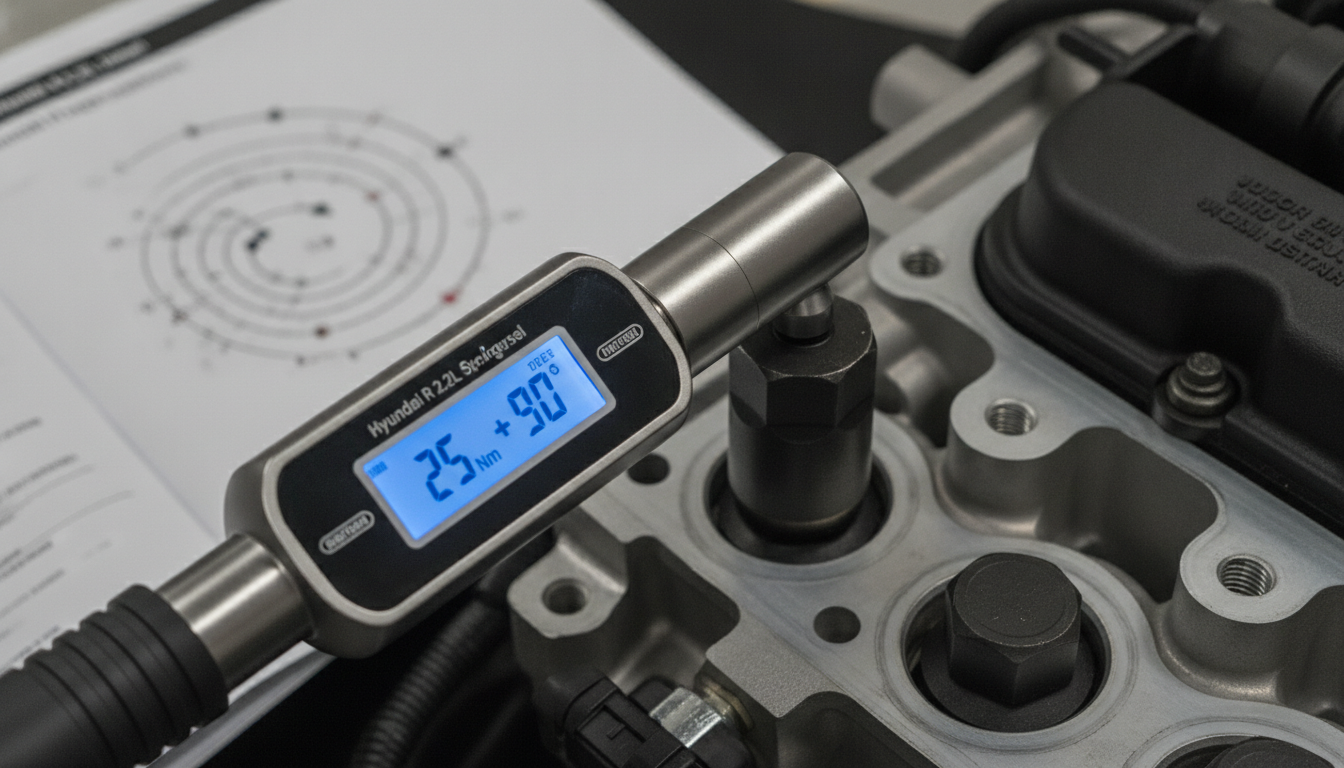
Alter Tag: Digital torque wrench showing exact specifications from a Hyundai diesel service manual during engine reassembly.
Diesel engines put heavy loads on fasteners. Guessing torque on injectors, brackets, pulleys, covers, or engine mounts can cause leaks and repeat failures. Always confirm torque specifications before reassembly begins.
Use the torque table for the exact component, not a generic bolt-size chart. A bolt may have a standard torque, but the repair section can change the value due to the gasket material, thread-locking compound, sealant, or tightening sequence. Use engine torque specification lookup, timing belt assembly sequencing, and OEM coolant bleeding steps when the job touches engine assembly.
Torque matters even on smaller or older Hyundai platforms. Check model resources like Hyundai Atos service references, Hyundai Accent X3 manual, Hyundai Excel repair manual, and Hyundai Getz manual page when the repair crosses chassis or trim differences.
Write the torque values before you start reassembly. Include units, sequence, angle steps, sealant notes, and replacement fastener warnings. That small preparatory step prevents confusion when parts have already been removed.
Match Model Pages to Manual Sections
Model matching is more than choosing “Hyundai.” You need body, generation, region, engine, drivetrain, and year. This step narrows the manual down before you rely on a single repair page.
Use model pages as a map to find the right section faster. Luxury and larger models may point you toward Hyundai Azera workshop data, Hyundai Centennial repair guide, Hyundai Equus service data, Hyundai Genesis workshop files, and Hyundai XG 350 service guide.
Sport and coupe-style pages still matter when users need body, electrical, or chassis procedures. Use Hyundai Coupe manual notes, Hyundai Tiburon service notes, Hyundai Veloster manual support, and Hyundai S-Coupe service file for model-specific direction.
European and older Hyundai pages also help when a manual name differs by market. Check Hyundai Galloper diesel page, Hyundai Grand Santa Fe workshop, Hyundai Trajet service manual, and Hyundai Veracruz diesel files when market naming creates confusion.
Avoid Unsafe Download Traps

Alter Tag: Verifying a safe Hyundai service manual download by checking official watermarks and detailed tables of contents.
A PDF can look official and still be unsafe. Bad manual files may miss pages, mix models, hide wrong wiring, or push risky downloads. Treat every unknown file like an unverified part.
Before using a free manual, check the cover page, contents, engine section, publication date, market, and sample procedure. Compare the file against free repair manual safety checks and OEM versus aftermarket manual choice. If the procedure lacks torque values, safety warnings, connector locations, and diagnostic tests, don’t use it for a diesel repair.
A suspicious manual often fails in small ways. It may show a different dashboard, different engine bay, wrong steering side, or missing diesel injection pages. Those clues matter because Hyundai model names can vary across regions.
Use PDF tools wisely when the file is legitimate. Search the exact engine code, connector number, and procedure title. If the manual is interactive, use interactive PDF manual navigation before jumping between pages.
Turn Manual Data Into a Repair Plan
A service manual works best when it becomes a written repair plan. Don’t just read the removal steps. Convert the section into checks, tools, parts, safety steps, and final verification.
Build your plan in this order: symptom, code, manual section, diagnostic test, part access, torque values, fluid needs, and post-repair checks. Use OBD-II flowchart diagnostics, ECU pinout chart reading, automotive wiring diagram tracing, and relay pinout testing steps when the fault involves electronics.
Plan for diesel-specific safety before opening the fuel system. Review the manual’s depressurizing steps, fuel cleanliness notes, high-pressure warnings, and priming process. The fuel system depressurizing procedure can support that planning step.
Finish with a verification checklist. Confirm leak checks, scan code status, road-test conditions, coolant level, fluid level, and any relearn procedure. When you need a model route, return to the NXT Motors Hyundai repair library before choosing the next manual.
Choose the Right Manual Source

Alter Tag: A library of Hyundai regional service manuals for models including the ix35 and Trajet.
The right manual source depends on the repair risk. Basic maintenance may need an owner guide, but diesel diagnostics need shop-level detail. Engine, fuel, timing, and wiring work require a real Hyundai diesel service manual.
Use older and regional model pages when the vehicle name changes across markets. Good examples include Hyundai Santamo repair page, Hyundai Pony manual archive, Hyundai Matrix workshop guide, Hyundai Lantra repair data, Hyundai ix55 diesel manual, Hyundai ix35 diesel notes, and Hyundai ix20 service page.
Choose the manual that directly answers your repair question. If the job is a diesel injector test, don’t settle for a body manual. If the job is a wiring fault, don’t settle for a maintenance booklet.
The best manual makes the next step clear. It tells you what to test, where to test, what value to expect, and what to do if the value is wrong. That is the difference between repair information and repair guesswork.
Common Asked Questions About the Hyundai Diesel Service Manual
Can I use a free PDF of the Hyundai diesel service manual?
Yes, but only after you have carefully verified the file. Check the cover page, model year, engine code, region, table of contents, and the specific repair section before trusting it.
A free PDF can be useful for learning the layout, but it may also omit diesel pages, torque tables, wiring diagrams, or safety warnings. For serious jobs, compare the file with a trusted manual source and your vehicle identification details.
If the manual doesn’t show CRDi fuel procedures, connector views, timing marks, and torque specifications, don’t use it for repair work. Treat it as reference material, not final repair authority.
How do I know which Hyundai diesel engine manual I need?
Start with the engine code, not the model name. Hyundai models can vary by market, year, trim, and engine family, so a badge like Santa Fe or H-1 isn’t enough. Look for the engine code on the vehicle label, engine stamp, VIN data, emissions label, or service records.
Then match that code to the manual section for D4EA, D4EB, D4CB, or another diesel family. Once matched, confirm the fuel system, timing layout, and drivetrain.
This prevents using a manual that looks close but gives the wrong connector, torque value, or procedure.
Why do Hyundai diesel wiring diagrams matter so much?
Modern Hyundai diesel faults often involve electrical control, not only mechanical wear. A no-start, limp mode, sensor code, or injector fault can come from power supply, ground, relay, connector, or ECU signal issues.
The wiring diagram shows the circuit path, wire colors, connector pins, splice points, and grounds. Without it, you may replace expensive diesel parts without confirming the fault. Use the diagram with a scan tool and multimeter.
Test the circuit under the manual’s stated conditions, then compare the value against the listed specification before deciding what to repair.
What should a good Hyundai diesel repair manual include?
A useful Hyundai diesel repair manual should include engine identification, diesel fuel-system diagnostics, wiring diagrams, DTC flowcharts, component locations, connector views, timing procedures, special tool notes, torque specifications, and inspection limits.
Basic maintenance tables are not enough for repair-level work. The manual should also explain the steps for removal, inspection, installation, and verification. For diesel repairs, fuel cleanliness and pressure safety notes are especially important.
If the manual only gives oil change intervals or general maintenance reminders, it is closer to an owner's manual. Use it for ownership guidance, not advanced repair.
Should I buy a manual before diagnosing the Hyundai diesel fault?
Buy or access the right manual before replacing parts when the job involves diesel fuel, timing, wiring, ECU signals, or engine teardown. A manual can show a simple test to prevent unnecessary replacement of an injector, pump, relay, or sensor.
It also gives you torque values, tool notes, and safety steps before disassembly. For minor maintenance, an owner guide may be enough, but repair decisions need shop-level information.
The cost of a wrong part, broken connector, or repeated labor can exceed the cost of proper manual access. Use the manual to diagnose first, then buy parts.