A Hyundai DPF warning light can turn a normal drive into an expensive question. The problem gets worse when the message stays on after a long drive. Guessing can waste fuel, damage the filter, or hide a sensor fault.
Diagnosis requires more than just the light; check the message, driving habits, fault codes, and DPF regeneration status. To clear a Hyundai DPF warning, drive at 70–80 km/h in 3rd or 4th gear (2,000–2,500 RPM) for 20–30 minutes to burn off soot.
This guide explains how to use a Hyundai DPF Troubleshooting Manual approach. You’ll learn when to drive, scan, test, or stop. You’ll also see how the right manual helps prevent wrong repairs.
Hyundai DPF Troubleshooting Manual: Stop Guessing Before Costs Rise
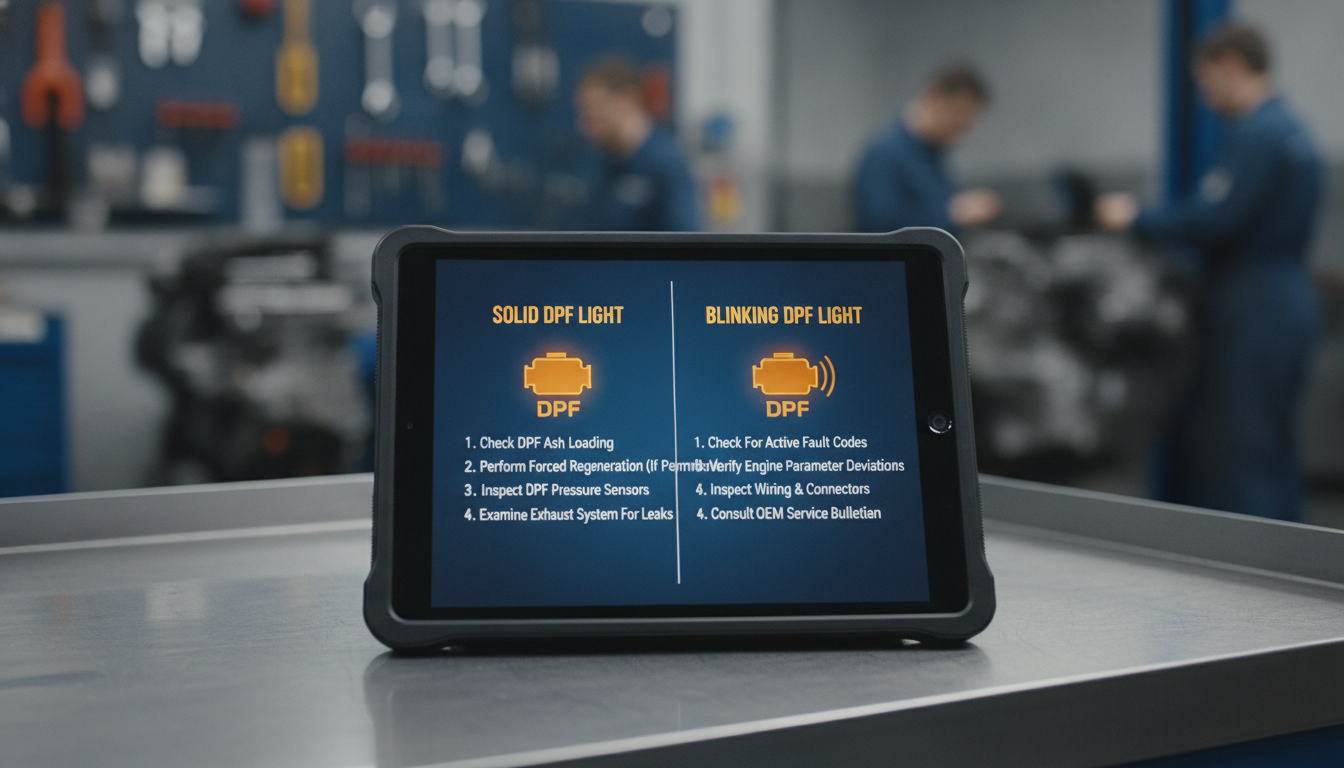
Alter Tag: Hyundai DPF manual diagnostic chart comparing solid and blinking warning lights for diesel engine repair.
A Hyundai DPF Troubleshooting Manual helps you move from dashboard panic to controlled diagnosis. It connects the DPF warning light, soot load, pressure readings, fault codes, wiring tests, and regeneration rules. That matters because a blocked filter, a bad sensor, an interrupted regen, or an exhaust leak can look similar.
|
Warning or Symptom |
Likely Direction |
Manual Check |
Smart Next Action |
|
Solid DPF light |
Soot not clearing |
Regeneration conditions |
Try the correct regen drive |
|
Blinking DPF light |
Higher risk fault |
Warning logic and code path |
Scan before more driving |
|
P2002 Hyundai |
Efficiency concern |
Exhaust and filter checks |
Inspect for soot bypass |
|
P2463 soot accumulation |
Excess soot load |
Soot value and regen limits |
Avoid random forced regen |
|
P2452 or P0470 |
Pressure signal issue |
Sensor circuit and hose tests |
Test sensor data first |
|
Limp mode |
Protection strategy |
Engine control fault tree |
Stop guessing and diagnose |
Decode the DPF Light First
The light is only the starting clue. The real answer comes from the message. Treat every warning as a diagnostic branch.
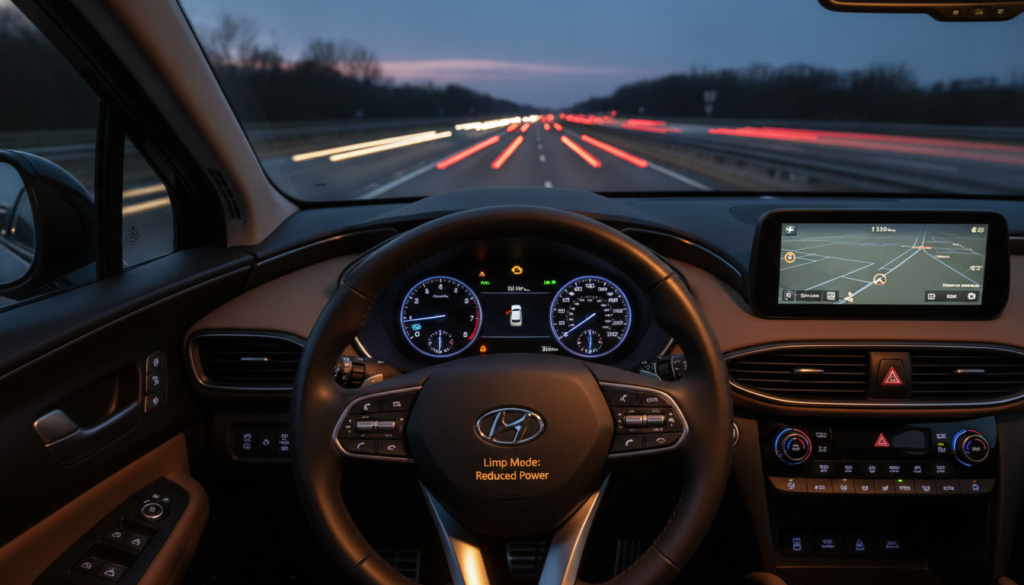
A Hyundai diesel may show a DPF warning light, a "diesel filter regeneration required" message, a "check exhaust system" message, or a check engine light with reduced power. Each one points to a different risk level. The mistake is treating every warning as a simple highway-driving request.
Start by recording the exact wording of the dash before you clear anything. Note if the light is solid, blinking, paired with the MIL, or followed by limp mode. Then check when it appeared, because repeated short trips and low-speed driving often stop exhaust heat from reaching the needed level.
Use the Hyundai PDF repair manual library before replacing parts. A manual helps you confirm the model-specific warning logic, inspection order, and related fault code branches. It also keeps you from forcing regeneration when the engine control module wants a sensor or exhaust inspection first.
Focus on these first details:
- Light status
- Exact dashboard message
- Recent driving pattern
- Fuel level
- Engine temperature
- Any limp mode
- OBD-II codes
- Previous repair attempts
Do not erase codes before saving them. Cleared codes remove freeze-frame clues that show temperature, speed, load, and sensor values at the moment of the fault. Those details often reveal if the DPF failed to regenerate or if a sensor lied to the ECU.
Run the Regen Drive the Right Way
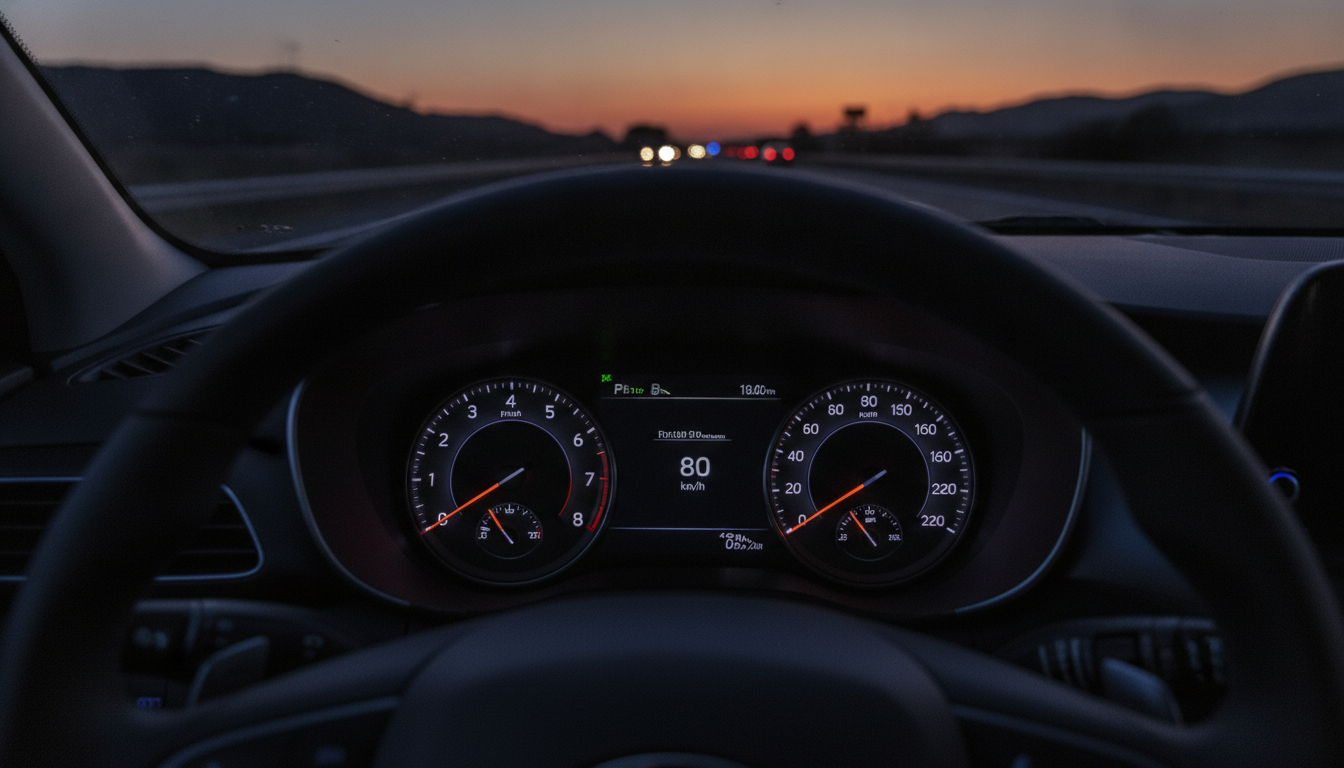
Alter Tag: Proper Hyundai DPF regeneration drive showing 80 km/h speed and 2500 RPM on the instrument cluster.
A regen drive needs stable conditions. Random speeding does not help much. The manual tells you what counts.
When the DPF light appears without severe drivability issues, the first action may be a controlled DPF regeneration drive. The goal is steady exhaust heat, not aggressive acceleration. Short bursts, stop-start traffic, and repeated shutdowns often interrupt the burn cycle.
Use the manual’s model-specific guidance before choosing the route. Many Hyundai diesel owners search for a simple rule, but the safest rule is to maintain a steady speed, use the correct gear, keep the engine warm, and allow enough uninterrupted time. If the warning clears, you still need to prevent the same driving pattern from causing the fault to return.
A practical regeneration drive should follow a checklist. Warm the engine first, choose a safe road, keep speed steady, and avoid stopping halfway through the cycle. If the light blinks, the MIL appears, or power drops, stop treating it like a normal regen request.
This is where a Hyundai workshop manual hub becomes useful. It helps you confirm which warning messages allow continued driving and which require inspection. It also shows the difference between owner-level regeneration advice and workshop-level diagnostic action.
Avoid these common mistakes:
- Turning the engine off during active regen
- Driving too slowly for too long
- Trying repeated regen attempts
- Ignoring low fuel warnings
- Forcing regen with unknown soot load
- Assuming every warning means a blocked filter
If the light returns quickly after a successful drive, look deeper. The root cause may be an EGR problem, an exhaust pressure issue, a thermostat problem, or a faulty DPF differential pressure sensor. A manual-based path turns that repeat failure into a test sequence.
Read Codes Before Buying Parts
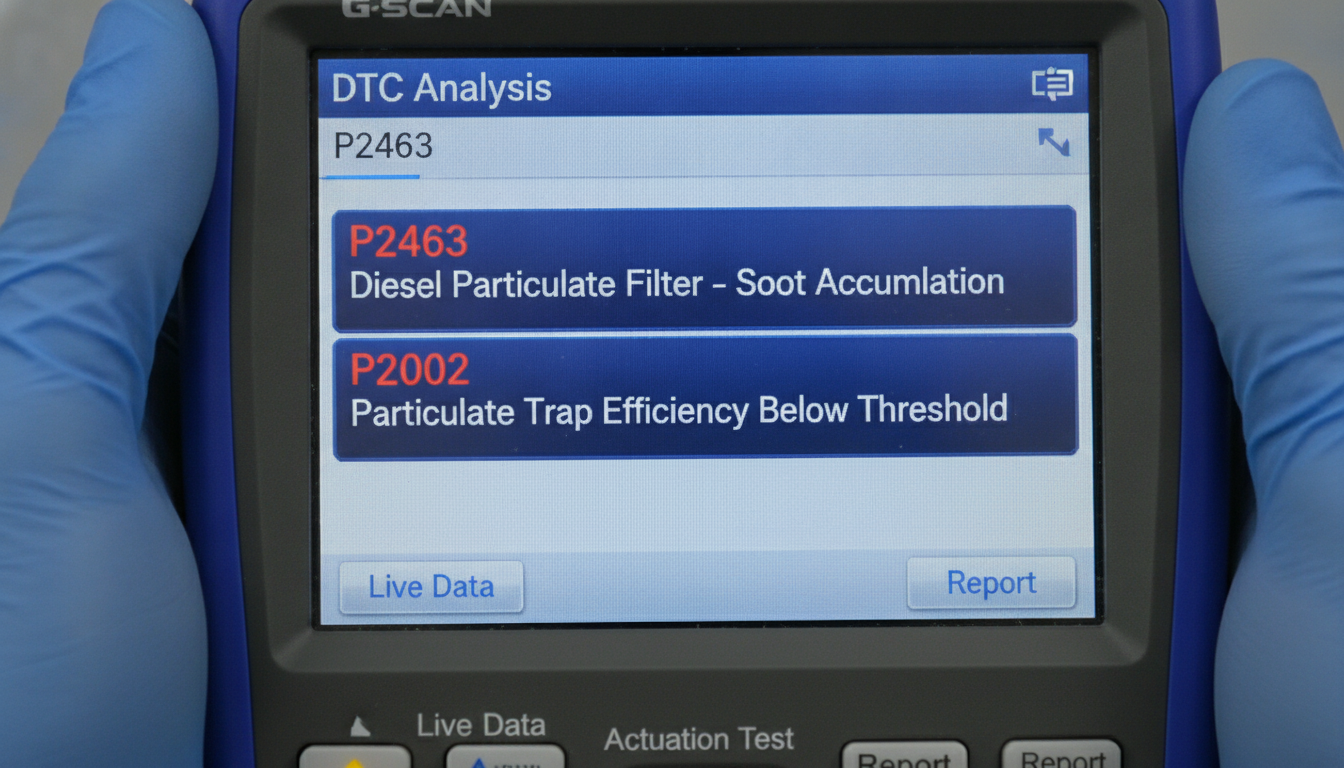
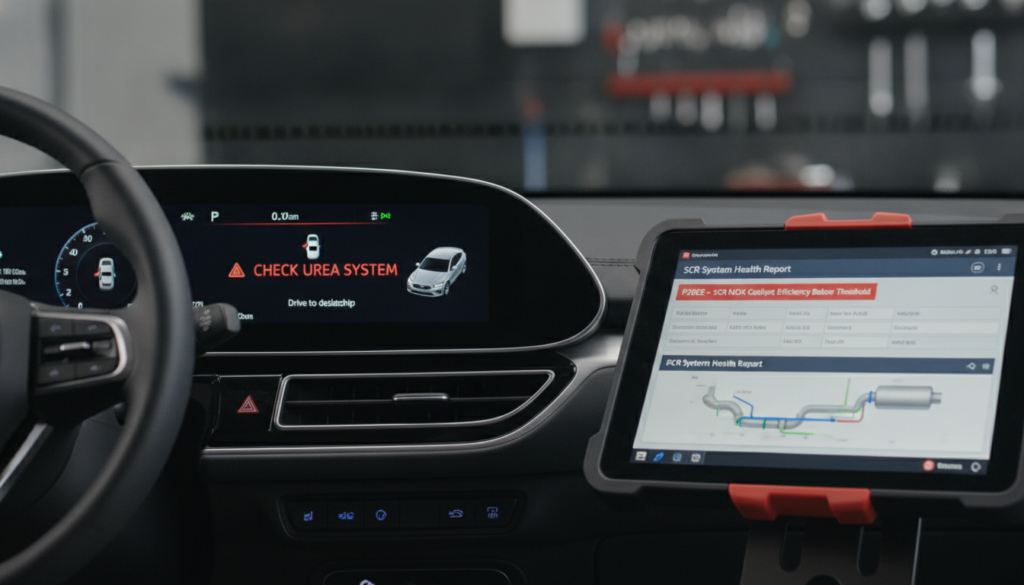
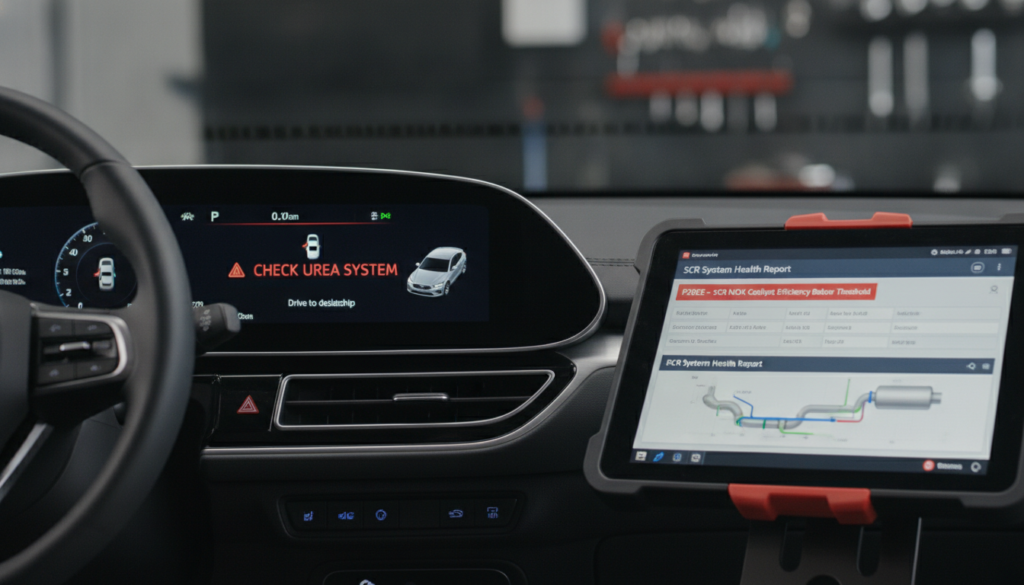
Alter Tag: Diagnostic scanner displaying Hyundai fault codes P2463 and P2002 for DPF soot accumulation.
Fault codes narrow the problem fast. They do not name every bad part. Use them as direction, not verdict.
A P2002 Hyundai code often sends owners straight toward a DPF replacement. That can be expensive and premature. The code may point to filter efficiency, but the surrounding data determines whether the issue is soot bypass, an exhaust leak, a sensor error, or a failed regeneration history.
P2463 soot accumulation usually points toward soot loading. P2452 and P0470 push attention toward pressure sensing and exhaust pressure signals. P2458 can indicate a regeneration duration problem, which may mean the vehicle could not complete the burn cycle.
Scan the car before cleaning the DPF. Record pending codes, confirmed codes, freeze-frame data, soot load, differential pressure, exhaust temperature, and regeneration status. Then compare those values against the model’s manual steps.
Useful supporting guides include manual OBD-II flowchart reading, factory fault isolation steps, and multimeter sensor testing. Those resources help when the code points to a circuit rather than a clogged filter. They also support DIY users who want proof before parts.
A scan should answer these questions:
- Is the soot load high, or only estimated to be high?
- Is pressure high at idle?
- Does pressure rise logically with rpm?
- Are exhaust temperature sensors plausible?
- Did the last regen finish?
- Are EGR codes also present?
- Is limp mode active?
Do not rely on a cheap code reader alone for final decisions. Basic readers often miss live DPF values and manufacturer-specific service functions. A factory manual plus capable scan data gives a much safer repair direction.
Test Sensors Before Blaming the Filter
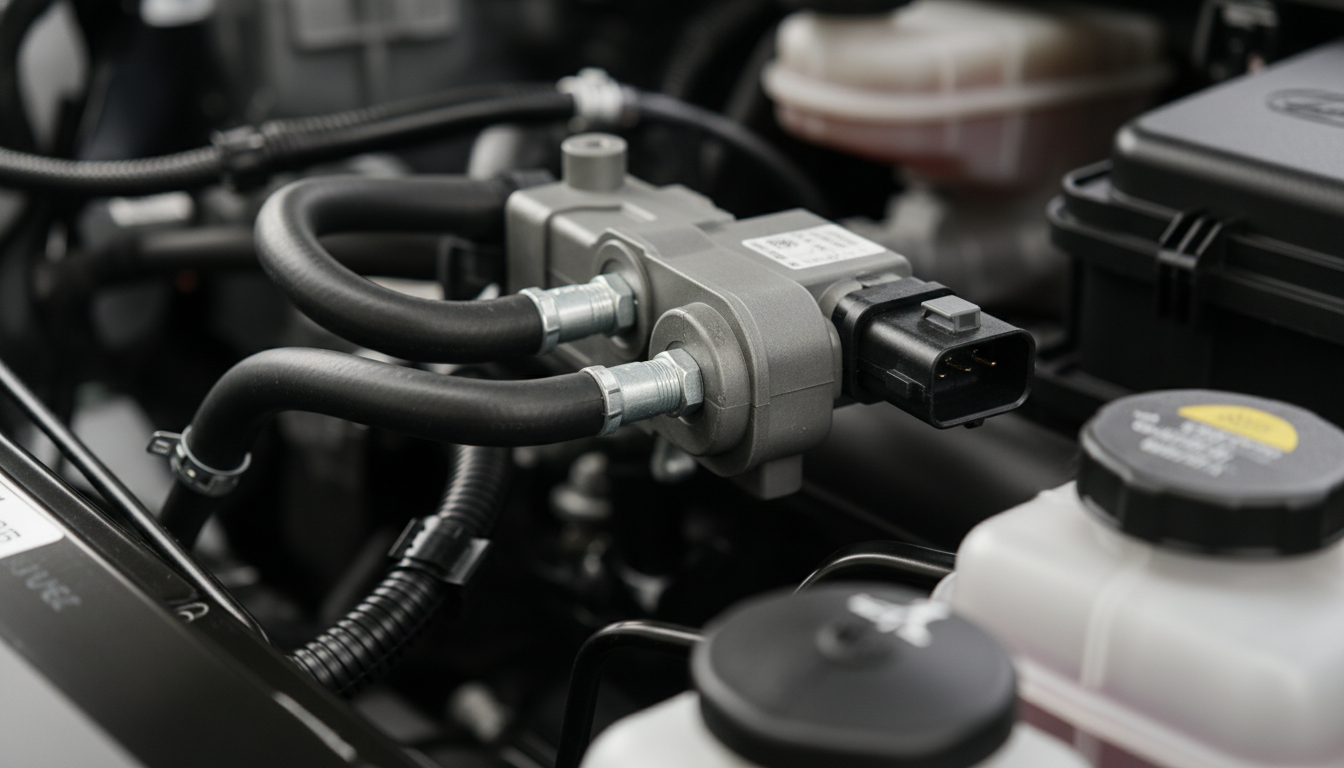
Alter Tag: Hyundai DPF differential pressure sensor inspection showing vacuum hoses and electrical connector pins.
A sensor fault can mimic blockage. A hose fault can do the same. Testing protects the budget.
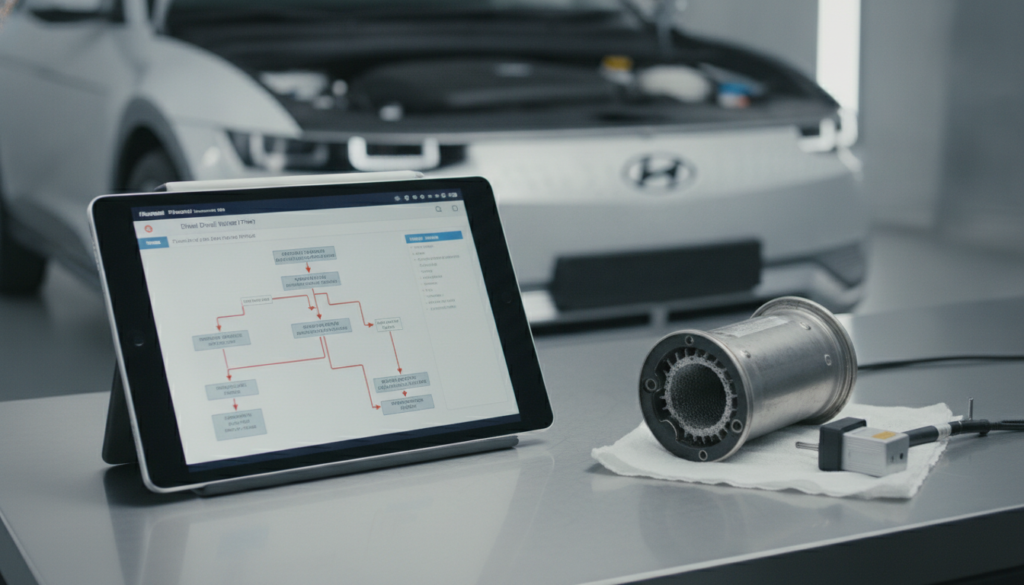
The DPF differential pressure sensor compares pressure before and after the filter. If its hoses clog, melt, split, or fill with condensation, the ECU may see false restriction. A bad signal can trigger regeneration warnings even when the filter is not the root cause.
Start with inspection before replacement. Look for cracked pressure hoses, loose connectors, melted insulation, corrosion, damaged pins, and soot around exhaust joints. Then compare live pressure readings at key engine speeds against the manual’s diagnostic path.
Wiring matters because DPF sensors live in harsh heat and vibration. Use ECU pinout chart guidance and short-tracing wiring diagrams when a sensor circuit code appears. Add hidden chassis ground checks if readings look unstable.
A strong sensor test sequence looks like this:
- Check connector seating.
- Inspect pressure pipes and hoses.
- Compare live pressure at idle.
- Raise rpm and watch response.
- Test reference voltage.
- Test signal voltage.
- Check ground integrity.
- Confirm exhaust leaks.
- Recheck codes after repair.
Do not clean or replace the filter until the pressure signal makes sense. A blocked filter creates a pattern, and a faulty sensor creates another. The manual helps separate those patterns without guessing.
Match the Manual to Your Hyundai
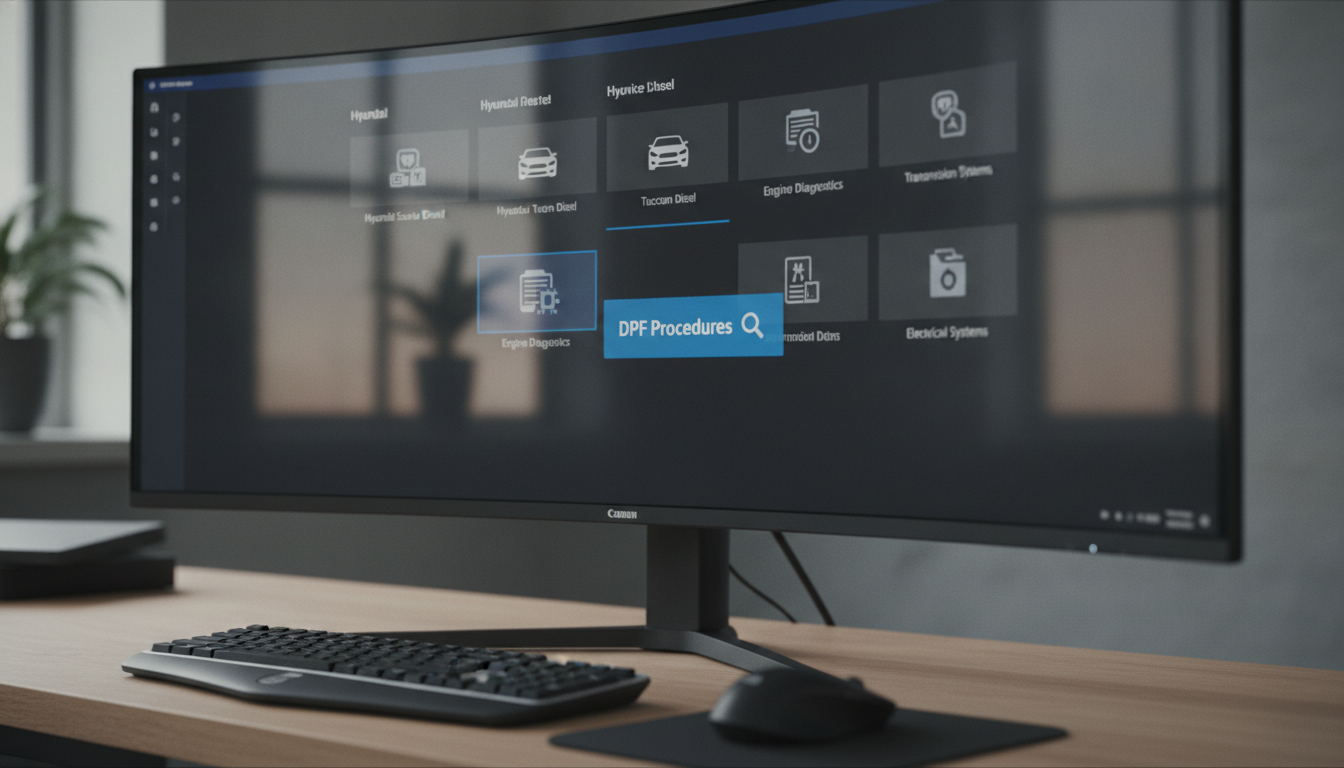
Alter Tag: Hyundai service manual catalog for diesel models including Tucson and Santa Fe DPF repair guides.
Hyundai model fitment matters here. Diesel emissions layouts change by market. The wrong manual can mislead every test.
Start with the correct model, generation, engine, and market before following a DPF procedure. A Hyundai sold in Europe may not match a North American page, and an older petrol model may not have a diesel particulate filter at all. That is why manual selection belongs inside the diagnostic workflow.
Use the Hyundai service manual catalog as the central path, then narrow to the exact model page. For quick matching, compare the VIN, engine code, emissions label, and dashboard message language. If the model page does not match the engine, do not use its DPF steps.
Model-specific manual routes:
- Atos manual emissions lookup
- Azera repair guide path
- Centennial workshop reference
- Coupe diagnostic manual route
- Equus service procedure guide
- Excel repair manual access
- Genesis workshop manual page
- Getz service data route
- i10 manual troubleshooting page
- i20 diesel manual support
- Santa Fe DPF manual route
- Sonata service manual access
- Tiburon repair reference
- Tucson diesel manual page
- Veloster workshop guide
- Veracruz manual procedure path
- XG 350 service guide
- Accent X3 manual archive
- Galloper diesel reference
- Grand Santa Fe workshop path
- H-1 diesel service manual
- Trajet repair manual route
- Terracan diesel workshop data
- Santamo manual reference
- S-Coupe repair archive
- Pony service manual archive
- Matrix workshop manual route
- Lantra repair guide access
- ix55 diesel manual path
- ix35 DPF manual support
- ix20 service manual route
- i30cw workshop manual access
If you are unsure which document fits, use a VIN-based process. The guide on finding a factory service manual by VIN supports that step. It prevents incorrect wiring diagrams, incorrect sensor values, and incorrect regeneration instructions.
Decide the Repair Without Guesswork
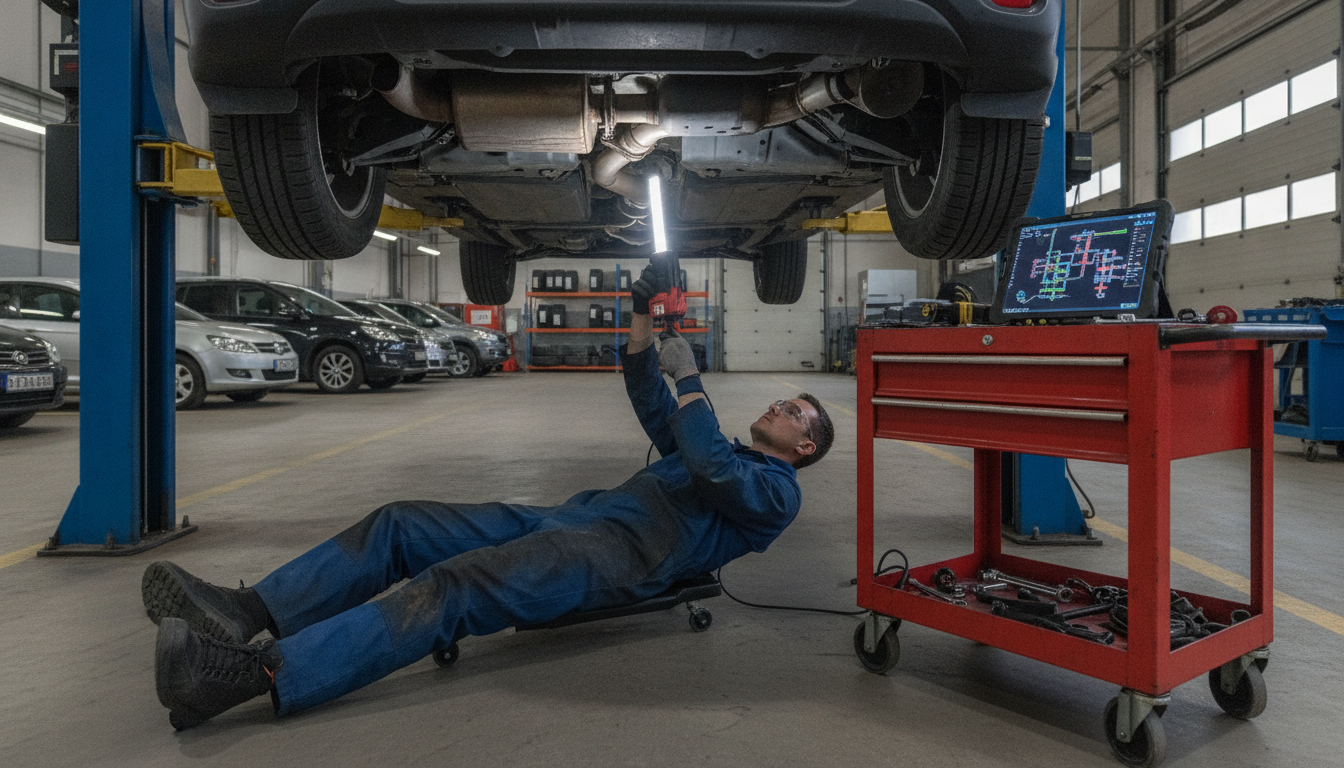
Alter Tag: Technician inspecting a Hyundai DPF exhaust system to decide on cleaning or replacement repairs.
The best repair is evidence-led. DPF work gets costly fast. Make the manual prove the next step.
After warning checks, regen attempt, scan data, and sensor testing, the repair decision becomes clearer. A light that clears and stays off points to driving-pattern prevention. A light that returns with pressure faults points toward hoses, sensors, wiring, or exhaust leaks.
A high soot value with valid pressure readings may require workshop-level forced regeneration. A very high load, melted substrate, cracked filter, or soot bypass may require cleaning or replacement. A manual helps identify when regeneration is unsafe or unlikely to work.
Use decision logic, not hope. If the car drives normally and only shows a solid DPF light, follow the permitted regeneration drive. If the light blinks, the MIL appears, or limp mode starts, move to scan and manual diagnostics.
A conversion-focused repair path looks like this:
- Confirm the warning.
- Save all codes.
- Perform the correct drive only if allowed.
- Check live DPF data.
- Inspect hoses and wiring.
- Test pressure and temperature sensors.
- Verify EGR-related faults.
- Decide on forced regen, cleaning, or replacement.
- Confirm the repair with a road test.
This is where the value of an OEM workshop manual becomes obvious. You are not buying pages for background reading. You are buying the exact diagnostic order that prevents a DPF warning from turning into a parts lottery.
Common Asked Questions About the Hyundai DPF Troubleshooting Manual
Why does my Hyundai DPF light come back after a highway drive?
A recurring Hyundai DPF warning light usually means the initial drive did not resolve the root cause. The car may have failed to reach the correct exhaust temperature, the regeneration cycle may have been interrupted, or the ECU may still be reading pressure outside the expected range.
It can also happen when the DPF differential pressure sensor, hoses, EGR system, thermostat, or exhaust temperature sensor gives bad data.
Do not keep repeating highway drives without scanning the car. Save fault codes, check live soot and pressure values, then follow the correct manual flowchart.
Is P2002 always a bad DPF on a Hyundai?
P2002 Hyundai does not automatically mean the filter must be replaced. It means the system sees DPF efficiency below its expected threshold, but the cause still needs proof.
A cracked filter, an exhaust leak, a failed sensor, a faulty pressure hose, or an incorrect regeneration history can all influence the code. Start with freeze-frame data, soot load, differential pressure, exhaust leaks, and tailpipe soot checks.
If pressure readings and sensor signals are logical, the filter itself becomes more suspect. If sensor data looks wrong, test the circuit before buying parts.
Can I keep driving with a Hyundai DPF warning light?
You can sometimes drive briefly when the DPF light is solid, and the vehicle behaves normally, but you should treat it as a timed warning.
The safe next step is to follow the approved regeneration drive conditions in the correct manual. If the light blinks, the check engine light appears, power drops, or a check exhaust system message shows, stop treating it like a normal drive request.
Continued driving can increase soot load and may push the vehicle into limp mode. Scan the car and follow the manual before the repair gets larger.
What scan data matters most for Hyundai DPF diagnosis?
The most useful data includes soot load, differential pressure, exhaust temperature, regeneration status, engine coolant temperature, vehicle speed during the fault, and freeze-frame conditions.
Basic code readers often show only P-codes, which is not enough for a confident DPF decision. A capable scan tool should show pressure changes from idle to raised rpm. It should also show if a regeneration completed, failed, or was blocked by another condition.
Combine this data with the factory manual, as acceptable values and steps can vary by model, engine, and market.
Do I need a factory manual for Hyundai DPF repair?
A factory-style manual is strongly recommended when the warning returns, codes stack together, or a forced regeneration is being considered. DPF systems connect with fuel control, EGR, exhaust sensors, pressure sensors, wiring, and ECU logic.
That makes random repair expensive. A Hyundai DPF Troubleshooting Manual gives the correct order for checking messages, codes, live data, circuits, and mechanical restrictions.
It also helps you avoid using the wrong procedure for a different engine or market. For DIY users and workshops, the manual often saves more than it costs.