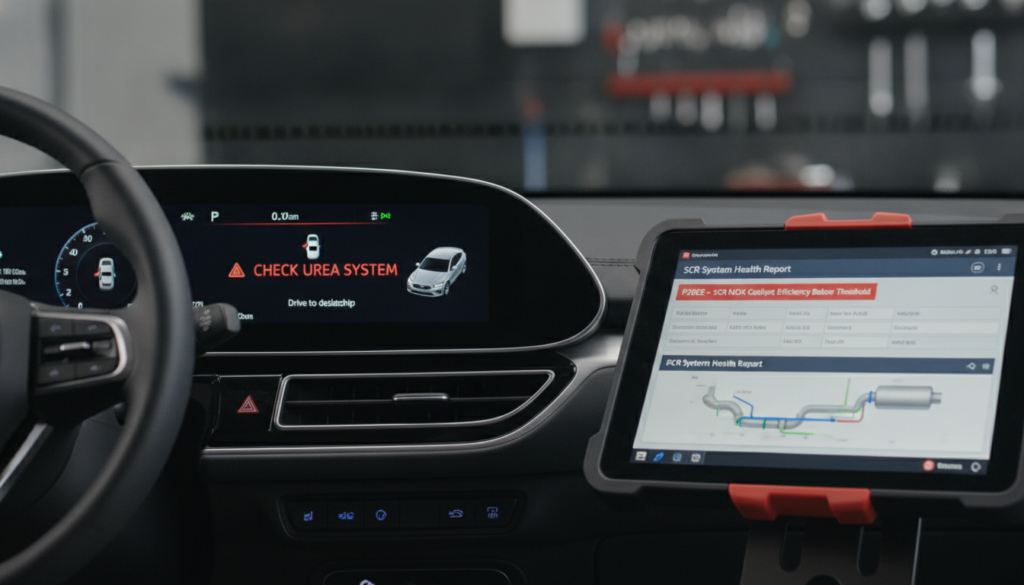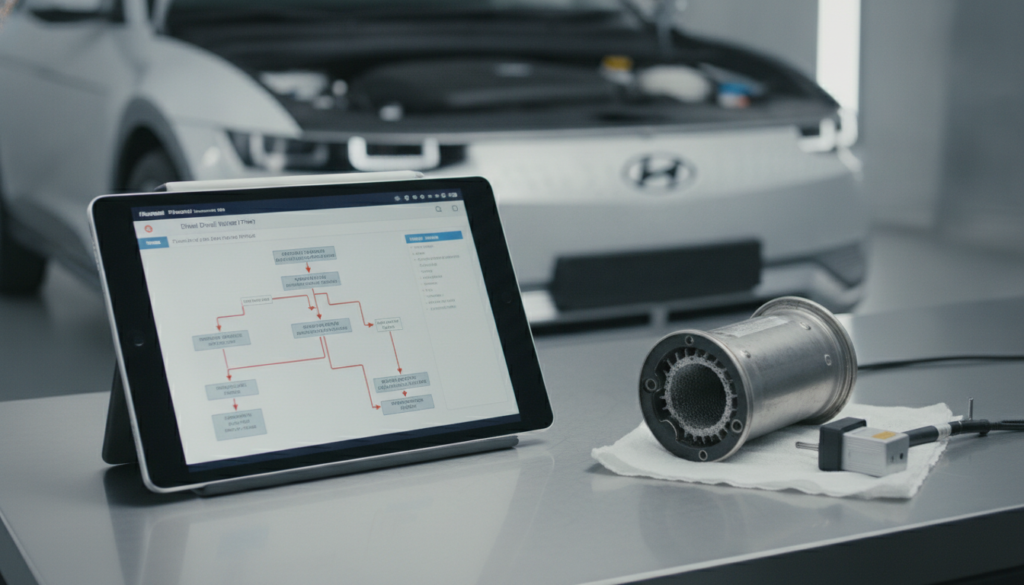
A Hyundai that will not start can turn a normal day into a repair gamble. The problem feels worse when the dash lights work, the engine clicks, or the starter cranks but doesn't fire. Guessing parts can waste money fast.
Identify the symptom first. A no-crank condition requires a different diagnostic path than a crank-no-start. When attempting to start the vehicle, listen to determine if the engine is cranking, not cranking (clicking or silent), or if there is a total loss of electrical power. This initial step saves time and prevents unnecessary sensor replacement.
This guide shows a practical diagnostic path. You will compare sounds, power clues, fuel signs, spark behavior, and immobilizer warning light clues. You will also see when a factory-style manual from NXT Motors becomes the smarter next step.
Hyundai No Start Troubleshooting: Find the Fault Before Replacing Parts
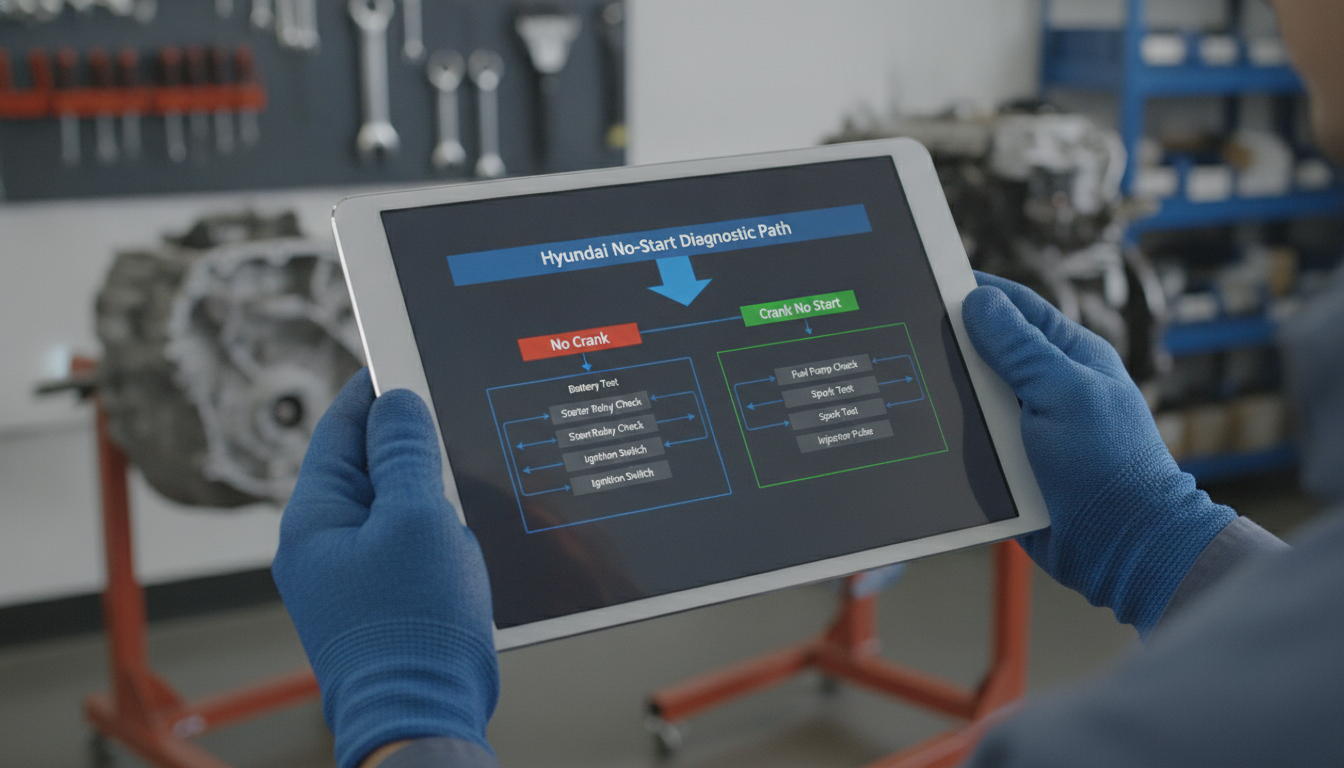
Alter Tag: Technical diagnostic flowchart for Hyundai no-start symptoms showing the path between fuel, spark, and starter motor faults.
Good Hyundai No Start Troubleshooting starts with one question: does the engine turn over or stay silent? That answer points toward battery cables, starter control, fuel delivery, spark timing, or smart key recognition. Use this path before buying a starter, pump, sensor, or control module.
Listen Before You Scan
Alter Tag: Close-up of a Hyundai engine start-stop button during a troubleshooting attempt to identify starting sounds.
The first sound tells you which system deserves attention. A rapid click, single click, smooth crank, or total silence points to different failures. Treat the sound as the first diagnostic code.
Do not start with a random scan if the engine does not even crank. A scan tool can miss a loose battery terminal, a worn starter cable, a bad ground, or a failed park signal. First, record the symptom exactly, then check it against the starting system chart in Hyundai factory repair manuals.
A no-sound condition usually means the starter command never reached the motor. That path includes the battery, main fuses, ignition switch, clutch switch, brake switch, park or neutral input, starter relay, and starter solenoid. A clean wiring diagram prevents you from testing the fuel pump when the starter circuit is actually dead.
A cranking engine changes the story. The starter is already turning the engine, so the fault usually points to the fuel pump prime, spark, injector pulse, crankshaft position sensor, or mechanical timing. That is why experienced technicians separate no-crank and crank-no-start before touching parts.
Write down what the dash does during the start attempt. Note whether the interior lamp dims, the security light flashes, and the tachometer moves while cranking. Those small clues often reveal a loss of power, an immobilizer conflict, or a missing engine speed signal.
Test Battery Drop First
A Hyundai can power lights and still fail to start. Radios, lamps, and dashboards need much less current than the starter motor. That is why battery voltage drop matters more than whether accessories turn on.
Start by checking battery terminals for looseness, corrosion, and heat marks. A clamp can look tight but still lose contact under starter load. If the terminal twists by hand, clean and tighten it before testing sensors.
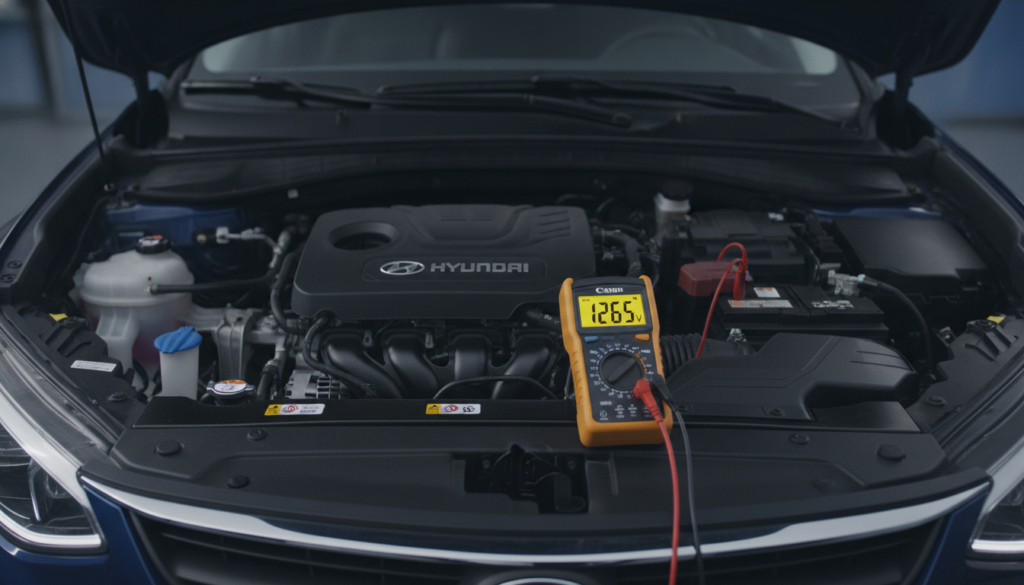
Measure the resting voltage, then measure the voltage during cranking. A healthy battery should not collapse severely during a start attempt. If voltage drops hard and the starter clicks rapidly, charge and load-test the battery before replacing the starter.
Next, test the ground path. Put one meter lead on the battery negative post and the other on the engine block while cranking. A high reading points toward a weak ground strap, dirty mounting point, or cable damage.
Use model guidance when the battery location, fusible links, or ground paths differ. For small models, the i10 battery drain manual and the i20 fuel pump test sheet help narrow down compact-car layouts. For larger platforms, keep the Azera ignition test guide, Equus immobilizer manual, and Grand Santa Fe battery path power checks model-specific.
Split No-Crank From Crank
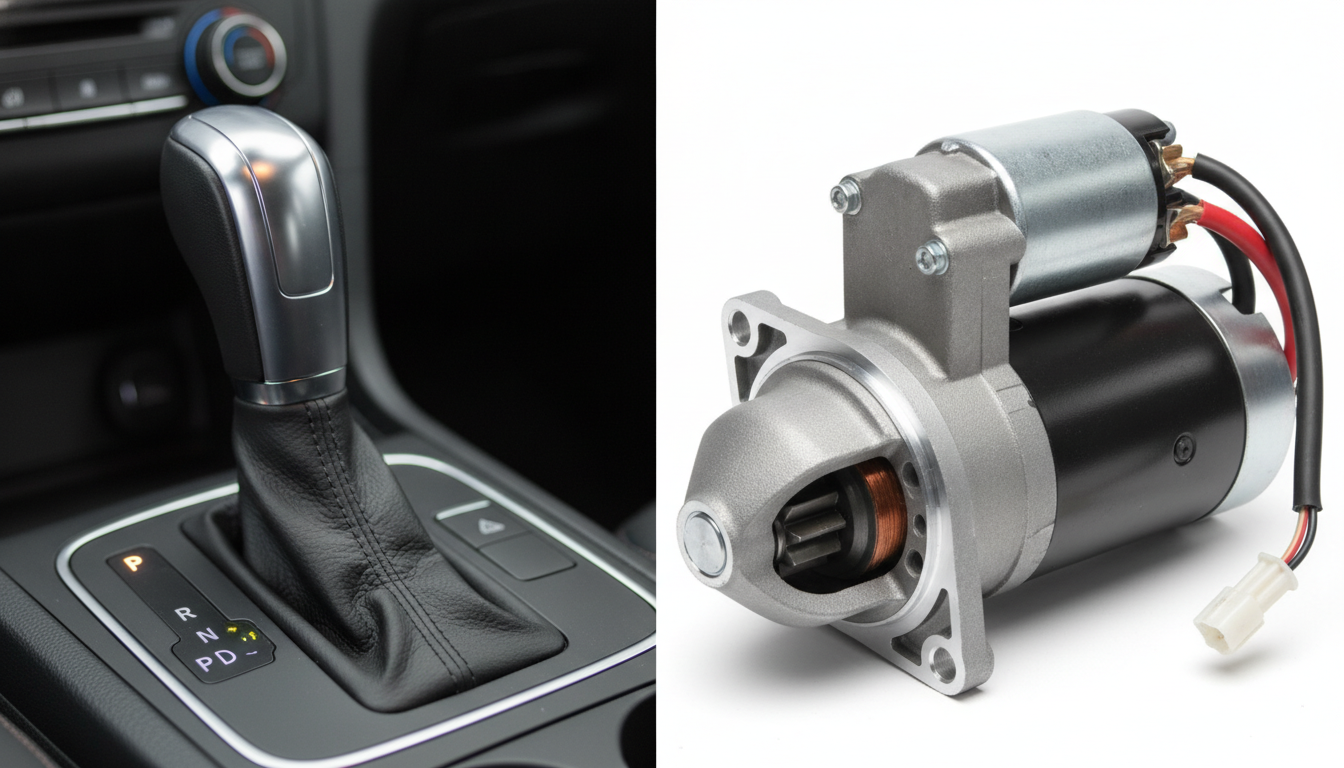
Alter Tag: Comparison of a Hyundai gear selector in park and a starter motor assembly to diagnose no-crank conditions.
A no-crank Hyundai means the starter does not turn the engine over. A crank-no-start Hyundai means the starter spins, but combustion does not begin. Mixing those two paths creates bad diagnoses.
For a no-crank condition, confirm the gear selector is fully in Park or Neutral. Try Neutral if Park doesn't respond. Manual cars need a correct clutch pedal signal before the starter circuit can close.
Then test the starter relay and control wire. If the relay receives a command but the starter does not respond, check the starter power, solenoid, ground, or motor condition. If the relay never receives a command, look upstream at the ignition switch, brake switch, clutch switch, immobilizer approval, or body control input.
Model wiring matters here because Hyundai platforms route starter control differently. Use Genesis starter relay chart, Veloster starter control map, Tucson smart key start guide, and Veracruz no-crank manual when the relay path is not obvious. Older layouts may need the Excel no-start wiring page, XG 350 ignition diagrams, or Pony starting circuit guide instead.
Do not hold the key or button down during repeated failed attempts. Long cranking can overheat cables, stress the starter, and flood a petrol engine. Test in short attempts, then let the system cool.
Confirm Fuel, Spark, Timing
A cranking Hyundai needs fuel, spark, compression, and correct timing. If one of those is missing, the engine may sound normal but never fire. This is where crank-no-start diagnosis becomes more exact.
Turn the key to ON and listen for a short fuel pump prime. No prime can mean a fuse, relay, wiring fault, pump fault, immobilizer action, or control issue. Use the right diagram before dropping a tank or replacing a pump.
Next, check spark with a proper tester. If the spark and injector pulses are both missing, suspect the crankshaft position sensor, sensor wiring, engine control power, or a related reference circuit. If spark exists but fuel is absent, move toward pump power, pressure, injector command, and fuel contamination.
A timing issue can also mimic fuel or spark failure. If the engine cranks faster than normal, check compression and timing belt or chain alignment before chasing electronics. Model references like Getz crank sensor guide, Tiburon fuel relay layout, Santa Fe no-start diagrams, and Sonata ignition switch flowchart help connect symptoms to the correct chart.
Use scan data only after basic checks make sense. Look for engine RPM while cranking, stored codes, fuel trim history, and sensor plausibility. If the scan tool shows no RPM during cranking, the crank signal path deserves immediate attention.
Check Smart Key Clues
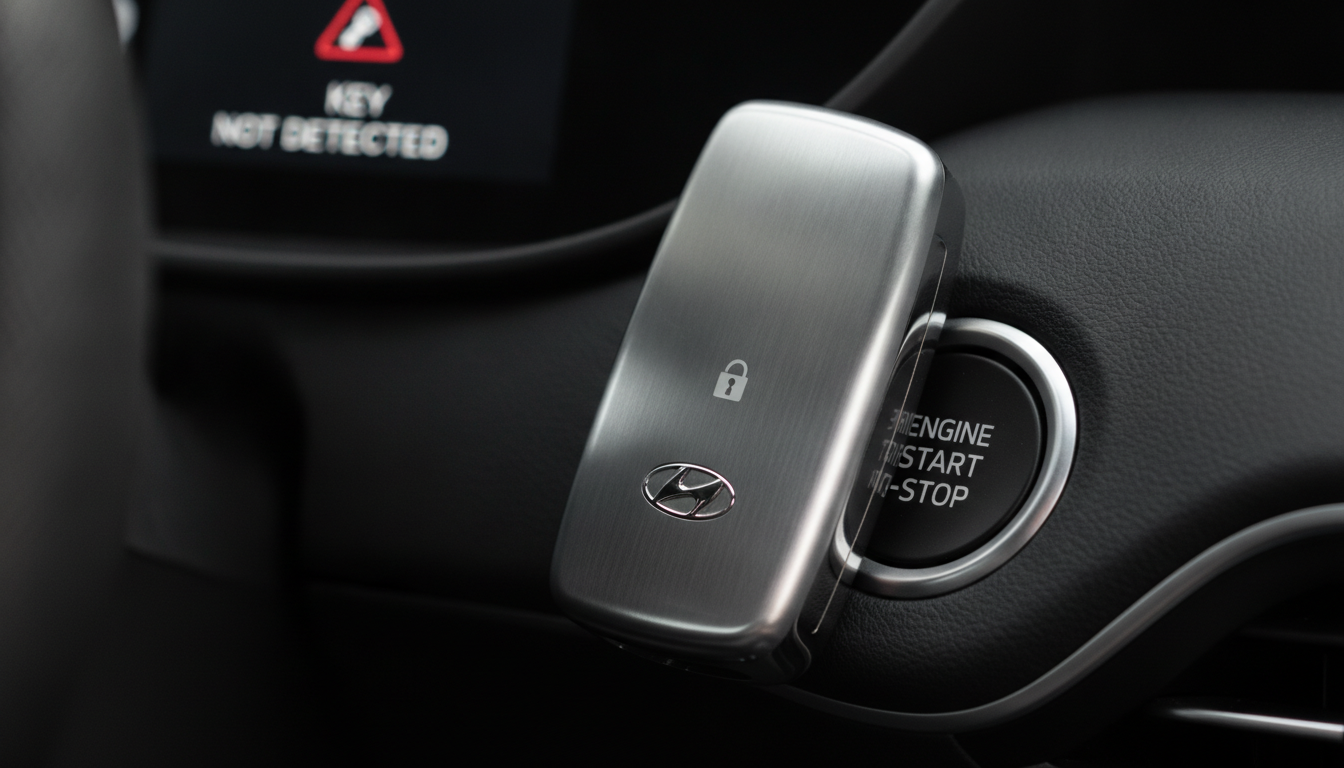
Alter Tag: Using a Hyundai smart key fob override to troubleshoot immobilizer and key recognition start failures.
Modern Hyundai starting systems depend on key recognition. A weak fob battery, poor antenna signal, damaged key chip, or immobilizer fault can block start approval. The clue is often a flashing or unusual security indicator.
First, bring the smart key close to the start button or use the backup start method described for the model. Try the spare key if available. Remove any extra keys, metal tags, or other immobilizer keys from the same ring, as they can interfere with recognition.
A security fault may create different symptoms. Some cars crank and die, some do not crank, and some show a key warning while accessories still work. That is why the immobilizer section should be checked with the exact model manual, not a generic starting guide.
Older and regional models need different pages. Use the Atos starting wiring chart, Accent X3 start circuit page, Lantra crank-no-start sheet, and Matrix immobilizer map when the platform uses older anti-theft logic. For SUVs and vans, the ix35 smart key manual, ix55 starter relay guide, and H-1 starter wiring manual can save time.
Do not assume the immobilizer is bad because the light appears briefly. Many systems illuminate during a normal bulb check. Focus on blinking, staying on, key-not-detected messages, and repeat failures with more than one key.
Use Diagrams Before Parts
Parts swapping works only when luck is stronger than the fault. A better route uses wiring diagrams, connector pinouts, relay charts, and diagnostic flowcharts. That is where a manual becomes a repair tool instead of reading material.
Use the Hyundai diagnostic manual library when basic checks indicate a circuit issue. The manual shows fuse feeds, relay terminals, sensor references, ground points, connector numbers, and test order. That structure prevents replacement of a fuel pump when the fuel pump relay lacks a control signal.
Previous NXT Motors guides also support no-start work. Use OBD-II code flowcharts when codes are present, ECU pinout charts when a control signal is missing, and relay testing pinouts when a relay clicks but does not carry load. Use alternator voltage drop checks if the battery keeps returning to a weak state after charging.
Keep testing safe and measured. Use fused jumpers when required, avoid probing airbag wiring, and never bridge unknown terminals. If fuel pressure, high-current starter testing, or immobilizer programming exceeds your tools, stop at the confirmed fault area and hand the results to a technician.
A good manual does not replace judgment. It gives the right test point, expected value, and next branch. That is exactly what Hyundai No Start Troubleshooting needs when symptoms overlap.
Choose the Right Manual

Alter Tag: A collection of model-specific Hyundai factory repair manuals for accurate no-start troubleshooting.
Choose the manual by model, generation, engine, and market. A starting diagram for one Hyundai may not match another. The wrong diagram can send you to a relay, fuse, or connector that your car does not use.
For coupes and executive models, match the platform before testing. Use the Hyundai Coupe crank diagnosis, the Centennial starter circuit manual, and the Hyundai service manual PDFs when the symptom points to starter control or engine management. For MPV and SUV families, use the Trajet ignition fault chart, the Terracan fuel system page, and the Galloper diesel start guide.
Older Hyundai pages are especially useful when forum advice gets vague. Use Santamo no-start diagrams, S Coupe crank test notes, ix20 fuel pump wiring, and i30cw starting diagnostics to avoid mixing platforms. A model-correct path gives cleaner test results.
The best decision is not always a part purchase. Sometimes the answer is a corroded terminal, a failed relay feed, weak ground, a missing crank signal, or a key recognition issue. With the right manual, your next move becomes a test, not a guess.
Common Asked Questions About the Hyundai No Start Troubleshooting
Why does my Hyundai click but not start?
A clicking Hyundai usually points to a low battery, a loose terminal, a weak ground, a starter relay issue, or a starter motor problem. Rapid clicking often indicates voltage collapse when the starter draws high current, even if the lights still turn on. A single, heavier click usually indicates the test is toward the starter solenoid, starter motor, relay output, or engine ground path.
Start with battery voltage during a crank attempt, not just resting voltage. Then inspect both battery clamps, the starter positive cable, and the ground strap. Use the starter circuit diagram if power reaches the relay but not the starter.
Why does my Hyundai crank but not start after a jump?
If the engine cranks after a jump but does not fire, the battery was not the only issue. The next checks are fuel pump prime, spark, injector pulse, engine RPM data, and immobilizer behavior. A jump can spin the starter, but it will not resolve a missing crank sensor signal, a failed pump command, a blown fuse, or a key recognition fault.
Avoid buying an alternator just because the jump did not work. Alternators matter once the engine is running, whereas crank-no-start diagnosis focuses on combustion inputs. Use a manual flowchart to test fuel, spark, and sensor signals in order.
Can a bad crankshaft sensor stop spark and fuel?
Yes, a failed crankshaft position sensor or damaged crank sensor circuit can stop spark and injector timing because the ECU may not see engine speed. On many systems, the scan tool may show no RPM while the engine is cranking. That clue matters more than guessing from the part name alone.
Do not replace the sensor without checking the wiring, connector condition, sensor power, ground, and signal, as specified in the manual. Heat-related intermittent failure is also possible, especially when the car starts later after cooling. Confirm the signal path before calling the ECU bad.
What should I check if the key light flashes?
A flashing key or immobilizer indicator can mean the car does not recognize the key. First, try the spare key, replace the fob battery if remote operation is weak, and move the key close to the start button using the model’s backup start method. Remove any extra keys or metal objects from the ring, as they can interfere with the transponder signal.
If the warning repeats with more than one key, check the immobilizer diagnostic section. The fault may involve the antenna, key registration, body control module, or wiring. Avoid repeated cranking because the system may never authorize starting.
Do I need a Hyundai manual for a no-start problem?
You can do basic checks without a manual, including battery voltage, terminal tightness, fuel level, and obvious fuse damage. A manual becomes important when the symptom points to relay control, ECU inputs, immobilizer approval, or sensor signals. Those systems need exact connector views, pin numbers, expected voltages, and branch tests.
Generic advice can help you identify the symptom, but it cannot always pinpoint the correct fuse, relay, or wire color for your model. That is where model-specific manuals prevent wrong tests. They are most valuable before replacing expensive starters, pumps, sensors, or modules.