Using the wrong Hyundai service manual is more common than you think, and it can cost you real money. A torque spec that's off by just a few foot-pounds, or a wiring diagram from the wrong model year, can turn a simple repair into a serious mechanical failure.
Always match your service manual to the exact Hyundai model and year using the chassis code, not just the nameplate. Most owners skip this step entirely, and that is where the problems start.
This guide walks you through how to identify the right Hyundai service manual, why year-specific accuracy matters, and what options are available for every major model, from the Accent to the Santa Fe.
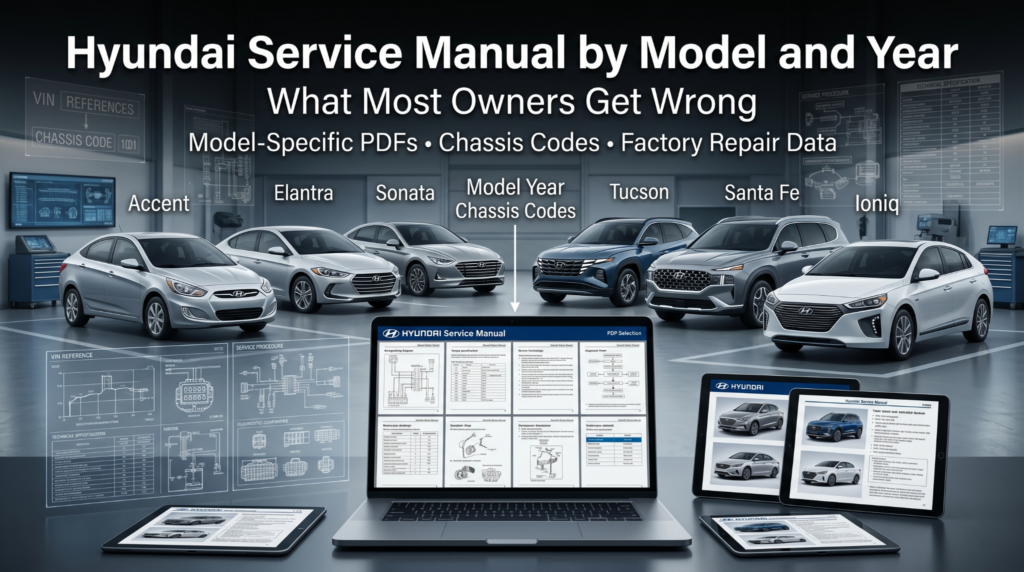
Hyundai Service Manual by Model and Year: The Detail Most Guides Skip
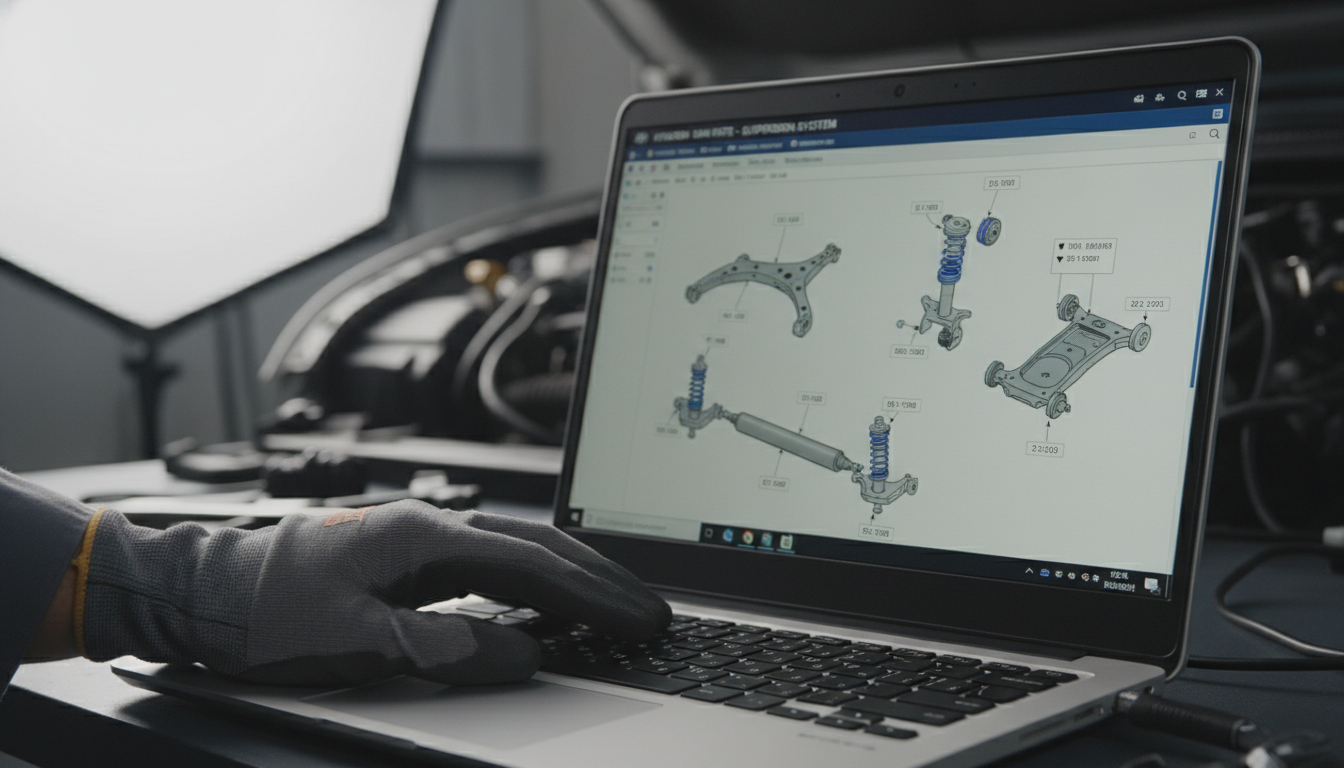
Alter Tag: Close-up of a technician reviewing digital Hyundai service schematics on a laptop.
Finding the right Hyundai service manual by model and year is not as simple as typing your car's name into a search bar. Hyundai uses internal chassis codes that often span multiple calendar years, and a manual written for a 2011 Elantra may technically apply to the 2016 version of the same car.
Knowing exactly which code applies to your trim is the starting point every serious owner needs before pulling a single wrench.
Before jumping into specific models, understand this: Hyundai groups its vehicles by platform generation, not always by the year printed on the registration. That distinction alone separates confident DIY repairs from expensive guesswork.
Know Your Chassis Code Before Anything Else
Most people search by year and model name. That works sometimes, but Hyundai's internal coding system is more precise.
Every Hyundai service manual is organized around a chassis designation, which identifies the engineering platform. The year on your registration is a starting point, but the chassis code determines which factory service manual applies to your car.
Here is a breakdown of the most common models and their chassis codes:
|
Hyundai Model |
Chassis Code |
Model Years Covered |
|
Elantra Sedan |
MD / UD |
2011 to 2016 |
|
Elantra Sedan |
CN7 |
2021 to present |
|
Sonata |
NF |
2006 to 2010 |
|
Sonata |
YF |
2011 to 2014 |
|
Santa Fe |
SM |
2001 to 2006 |
|
Santa Fe |
CM |
2007 to 2012 |
|
Santa Fe |
DM |
2013 to 2018 |
|
Tucson |
JM |
2004 to 2009 |
|
Tucson |
LM / ix35 |
2010 to 2015 |
|
Accent |
MC |
2006 to 2011 |
|
Veloster |
FS |
2011 to 2016 |
Once you confirm your chassis code, finding the correct model-specific service manual becomes a direct lookup rather than a guessing game. Not sure which type of manual you need in the first place? The guide on Hyundai repair manual options breaks that down clearly before you spend anything.
Why the Year Alone Is Not Enough for Accurate Repairs
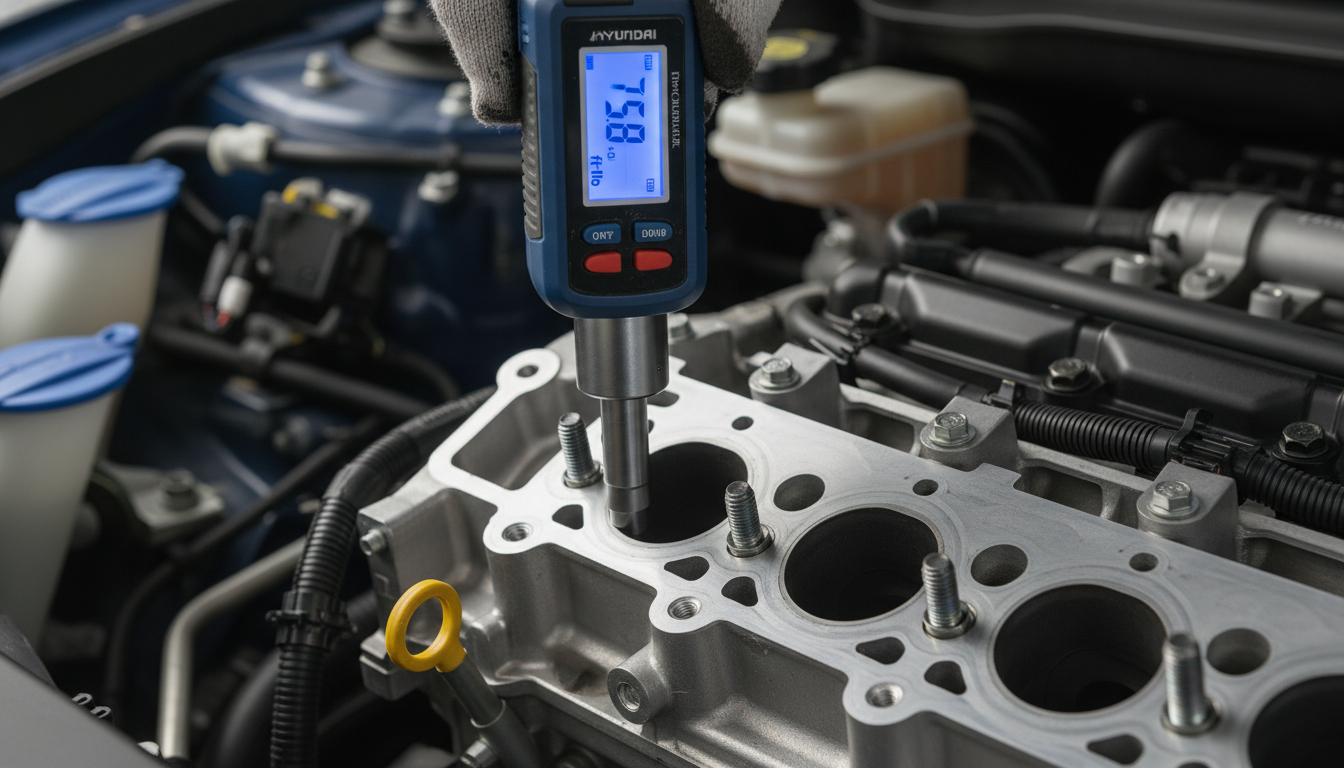
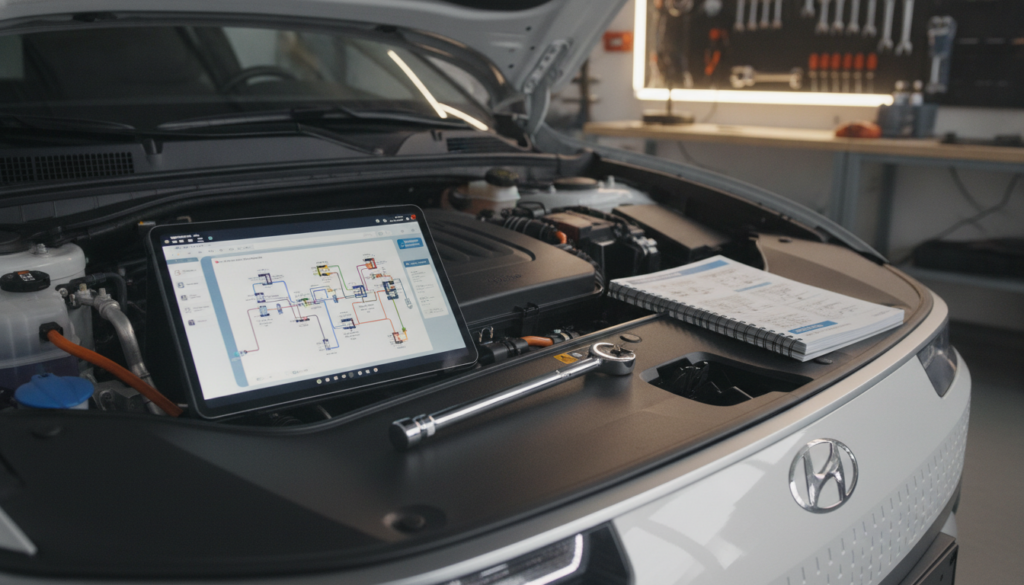
Alter Tag: A digital torque wrench being used on a Hyundai engine to ensure precise factory specifications.
This is where most repair attempts go sideways. Using a manual from the wrong year introduces incorrect torque specifications, mismatched wiring diagrams, and procedures that simply do not match what is under the hood.
Hyundai often makes mid-cycle changes to the same model that are not reflected in the nameplate year.
Key differences that shift between years on the same model:
- Fuel injection calibration settings (changed on the 2013 Sonata mid-cycle)
- ABS sensor connector pinouts (revised across Santa Fe generations CM to DM)
- Suspension geometry specs differ between early and late production years
- Transmission fluid type and interval changed on several Elantra MD variants
- Hybrid battery service procedures are entirely different on Sonata Hybrid post-2013
A manual that is off by even one production year can give you the wrong OEM torque value on a critical fastener. That is not a minor inconvenience; it is a safety issue.
Understand the difference between a generic and factory-level document by reviewing this Hyundai manual type comparison before committing to a source.
How to Match the Right Manual to Your Hyundai
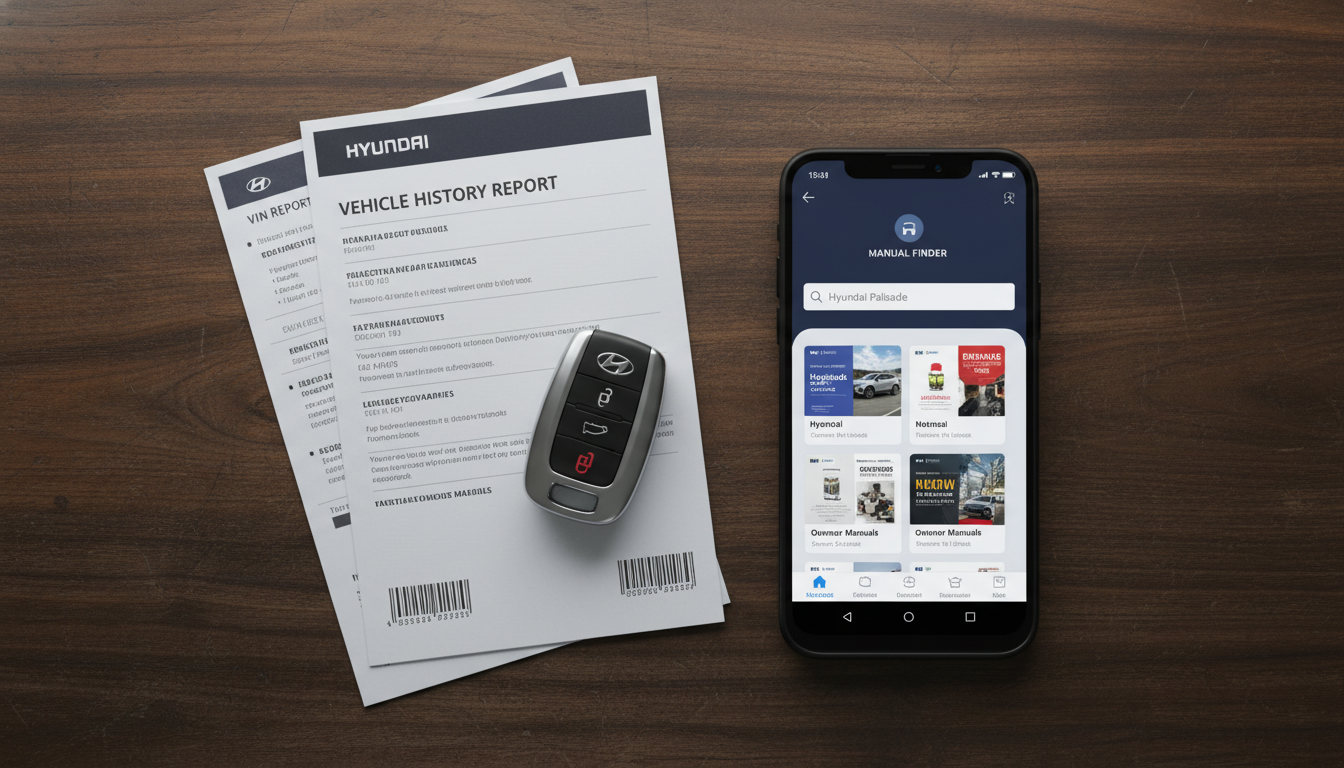
Alter Tag: A flat lay of tools and documents used to match a Hyundai manual to the specific vehicle.
Finding the exact Hyundai factory service manual for your car requires three pieces of information, and skipping any one of them will lead to the wrong document.
Step 1: Locate your VIN. Your 17-character VIN is either on the dashboard (driver's side, visible through the windshield) or on the doorjamb sticker. The 10th character identifies the model year precisely.
Step 2: Decode the model generation. Cross-reference your VIN year code with the chassis code table above. This tells you exactly which service manual edition was written for your specific engineering platform.
Step 3: Choose the right format. Hyundai service documentation is now available through:
- Hyundai's official subscription portal: Used by dealers and professional technicians. Weekly access is available for approximately $40 and monthly access for around $60. This is the most accurate source for current and recent Hyundai models.
- PDF downloads: Available for older platforms, especially pre-2016 models, through third-party manual providers and archives. Quality varies significantly, so check that the manual includes wiring diagrams, connector views, and model-year coverage before purchasing. NXT Motors is one example of a third-party source that offers Hyundai workshop repair manuals and wiring diagrams for specific models.
- USB factory manuals: Compiled from OEM data for specific platforms. Often covers 10,000 or more pages for complex models like the Santa Fe.
For models after 2018, printed or downloadable third-party manuals are largely unavailable. Hyundai moved its technical documentation behind the official subscription wall, making it the primary resource for late-model repairs. You can also locate documents matched to your exact VIN through this guide on vehicle-specific repair documents.
Regional Variants That Change Which Manual You Need
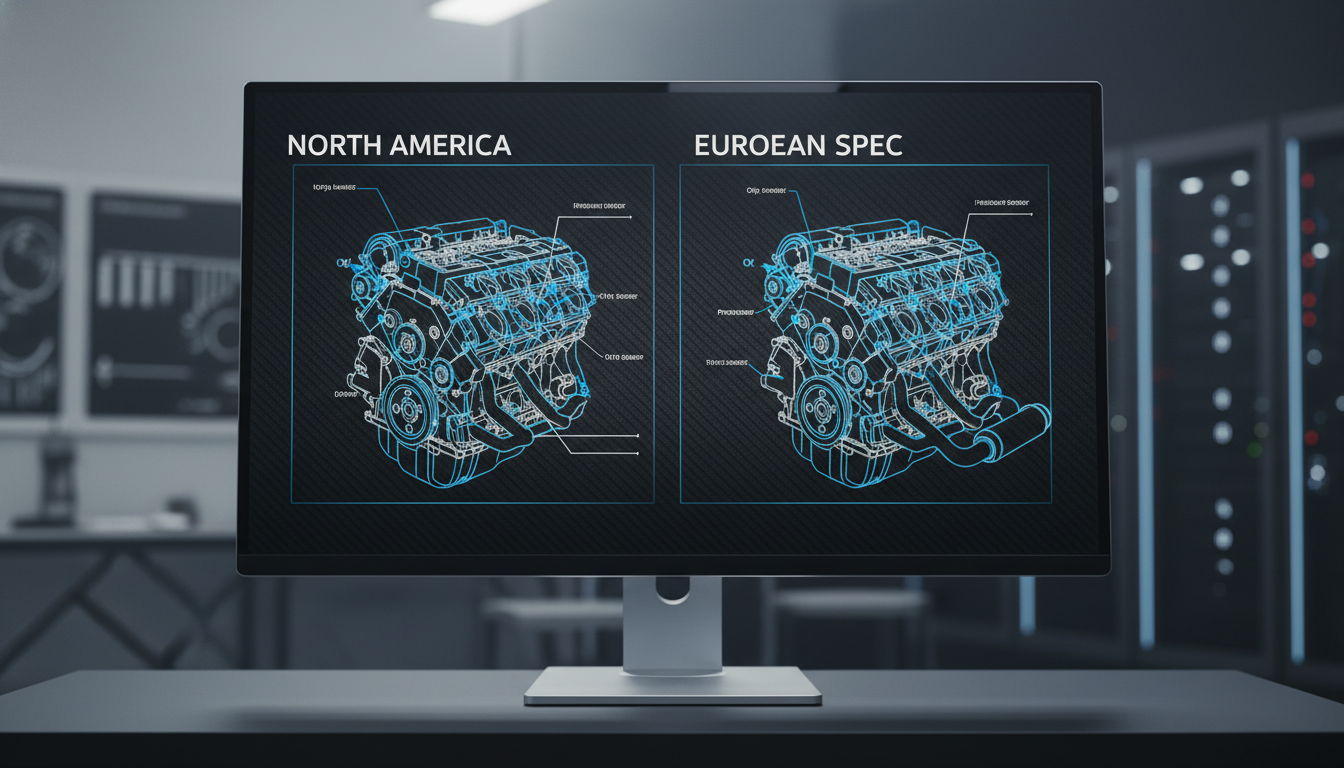
Alter Tag: A comparison of regional service manual diagrams showing differences between vehicle specifications.
This is an underrated issue that trips up owners who import vehicles or purchase used cars across markets.
Hyundai sells the same model under different specifications depending on the country. A Hyundai Tucson sold in South Korea carries different emission controls, suspension tuning, and electrical configurations than the same model year sold in North America or Europe.
What changes between regional variants:
- Engine management software calibration differs between US and Korean-spec models
- Emissions compliance components (EVAP systems, EGR setups) vary by market
- Safety feature wiring (lane-keeping assist, rear cross-traffic alert) may be absent or configured differently
- Fluid specifications sometimes differ due to climate and regional standards
Using a North American service manual on a Korean-spec or Euro-spec vehicle means the diagnostic trees and component locations will not fully match. The Hyundai regional manual details article explains exactly how much these regional differences matter for accurate repairs.
Where to Get Genuine OEM Documentation
Alter Tag: A professional workstation showing official Hyundai service manual sources and digital documents.
Once you know the correct chassis code and model year, sourcing the actual manual matters just as much.
Not all PDF repositories carry authentic OEM workshop documentation. Some compile community uploads, scanned copies with missing pages, or documents that have been edited incorrectly.
Trusted sources for genuine Hyundai service manuals:
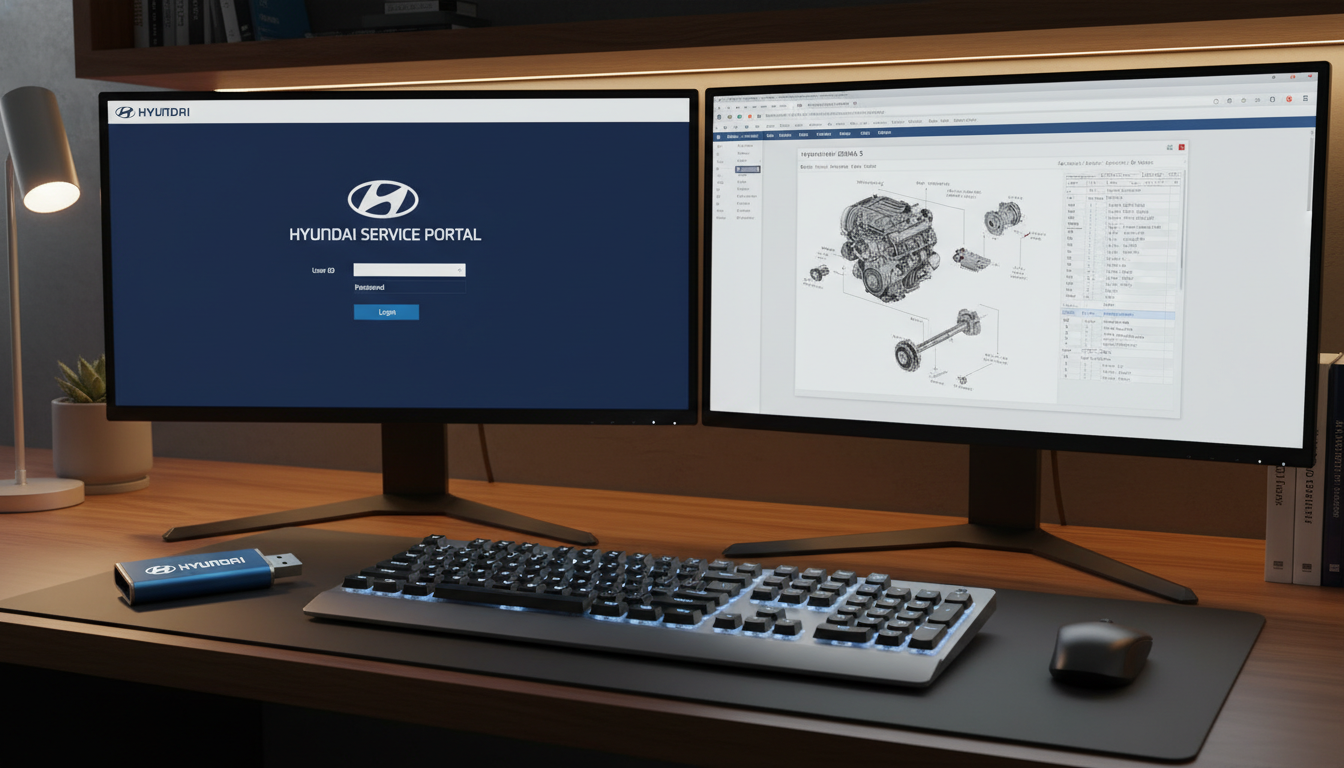
- Direct from Hyundai: Subscription-based access through Hyundai’s official service portal, commonly used by dealers and professional technicians. This is the most accurate option for current and recent models.
- Verified PDF retailers: Several vendors compile full workshop manuals from OEM-style service data for older platforms, with prices often ranging from budget downloads to higher-cost full manual sets. NXT Motors is one example of a third-party PDF retailer that offers Hyundai workshop service and repair manuals, including model-specific documentation and wiring diagrams.
- Dealer parts departments: Older CD-ROM factory manuals sometimes available for discontinued platforms
- Haynes Manuals: Practical DIY-friendly guides for high-volume models like the Sonata, Elantra, and Santa Fe
Avoid uploading PDF files to general file-sharing platforms without clear source attribution. Missing wiring diagrams and incomplete torque tables are common in those files. For a curated overview of trustworthy sources, the OEM workshop documentation sources guide covers each option in detail.
What a Complete Hyundai Service Manual Must Include

Alter Tag: An exploded-view diagram of a transmission from a complete Hyundai factory service manual.
A proper factory service manual is not just a list of steps. It is a structured technical document with specific content that makes it actually usable in a real repair scenario.
Every legitimate Hyundai service manual should contain:
- OEM torque specifications for every fastener, organized by system
- Wiring diagrams and connector views for the full electrical system
- OBD2 diagnostic trouble codes with fault trees and expected sensor values
- Fluid types, capacities, and change intervals specific to the platform
- Exploded part diagrams with OEM part numbers
- Removal and installation sequences with safety notes
- Hybrid/EV-specific procedures (where applicable, e.g., Sonata Hybrid, Ioniq)
If a document is missing any of these sections, it is incomplete, and using it for anything beyond basic maintenance is a risk. A full factory service manual for a complex model like the Hyundai Santa Fe DM can exceed 10,000 pages when all subsystem manuals are included.
Conclusion
Getting the right Hyundai service manual by model and year comes down to one thing: precision. The year on your registration is a starting point, not the whole answer.
Matching your chassis code, confirming the regional specification, and sourcing from a verified OEM-aligned document are the three steps that separate accurate repairs from expensive mistakes.
Use the resources outlined here, start with your VIN, and never rely on a generic manual when your specific platform has known variations. The repair outcome depends entirely on how well the documentation matches the actual vehicle in front of you.
Common Asked Questions About Hyundai Service Manual by Model and Year
Can I use a service manual from a different year if my Hyundai model looks the same?
Not reliably. Even when two model years appear visually identical, Hyundai frequently updates internal components, software calibration, and fastener specs mid-cycle.
A 2012 Elantra manual for a 2015 Elantra of the same body style may include different torque values, revised wiring schematics, and updated diagnostic procedures.
The safest approach is always to confirm the chassis code first and verify whether your production year falls within the same engineering revision. Using mismatched documentation for brake, suspension, or transmission work poses a real risk.
Is the Hyundai Tech Info subscription worth it for a one-time repair?
For most owners doing a single complex job, yes. A one-week subscription to hyundaitechinfo.com costs around $40 and gives full access to all technical documentation for your specific model.
That includes wiring diagrams, connector pinouts, OBD2 fault trees, and removal sequences. Many forum users report downloading everything they need within the first day.
If the repair involves electrical diagnostics, hybrid battery systems, or transmission work, the subscription pays for itself by preventing one incorrect step.
Do Hyundai service manuals cover turbocharged GDI engine variants separately?
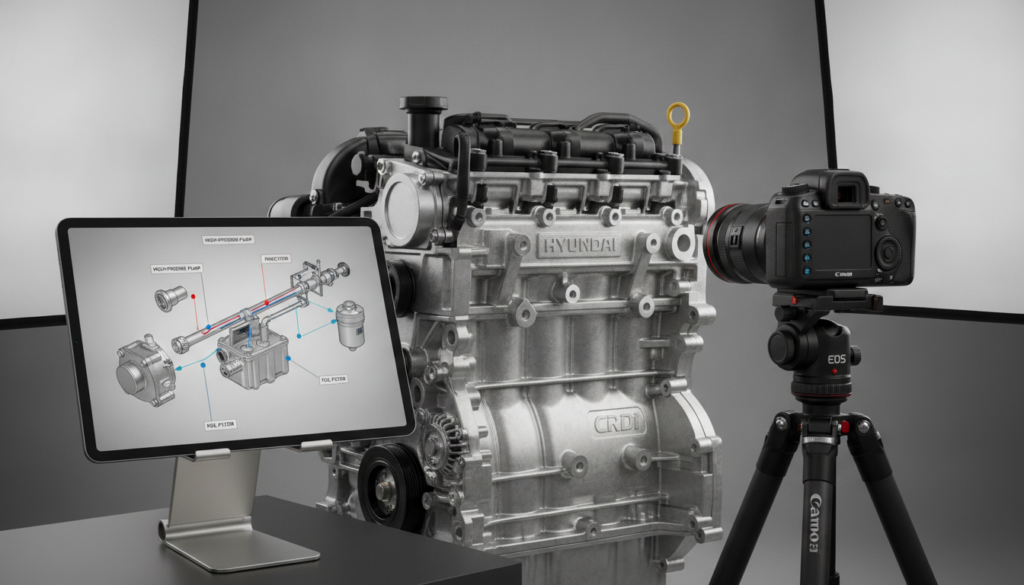
Yes. Turbocharged models such as the Veloster Turbo, Tucson 1.6T, and Sonata 2.0T have dedicated sections in the platform service manual. These sections cover GDI fuel pressure specifications, turbocharger inspection procedures, intercooler maintenance, and high-pressure fuel pump diagnostics.
Some third-party PDF vendors sell these as separate documents, but the official Hyundai Tech Info portal includes them as part of the full model subscription. Always verify turbo-specific sections are present before relying on any downloaded file.
What is the difference between a Hyundai workshop manual and an owner's manual?
An owner's manual covers routine operation, basic maintenance schedules, explanations of warning lights, and instructions for features. It is written for everyday drivers, not technicians.
A workshop or service manual contains comprehensive technical procedures, wiring diagrams, OEM torque specifications, and system-level diagnostic guidance for repair professionals or advanced DIY enthusiasts.
Using an owner's manual for anything beyond checking fluid levels or resetting a trip meter is not appropriate. If you are planning any hands-on repair, only a factory service manual or verified workshop manual carries the precision required.
How do I know if a Hyundai service manual PDF download is legitimate?
Legitimate Hyundai factory service manuals will include a title page with the chassis code, model year range, and Hyundai document number. They will have a complete table of contents organized by system (engine, transmission, braking, electrical, body).
Wiring diagrams should show connector identification numbers, wire color codes, and component location references.
If a PDF is missing connector views, has incomplete torque tables, or lacks system-specific diagnostic sections, it is likely a partial or unofficial document. Cross-check the document code against your chassis code before relying on it for any critical repair.