Using the wrong torque setting on a Hyundai fastener can cause real damage. A stripped oil drain plug or a warped cylinder head can turn a simple repair into an expensive rebuild. Many DIYers and independent shops use generic charts that do not match the vehicle's actual engine code or production year.
Successful repairs require verified factory data to prevent damage. For precise values, consult official resources like the Hyundai Motor America portal or the Hyundai Engine Torque Specifications Guide.
This post covers how to read Hyundai torque specifications correctly, which systems carry the highest risk of being done wrong, and where to find accurate data before any repair job begins.
Hyundai Torque Specs Before Repair: Why Factory Data Is Non-Negotiable
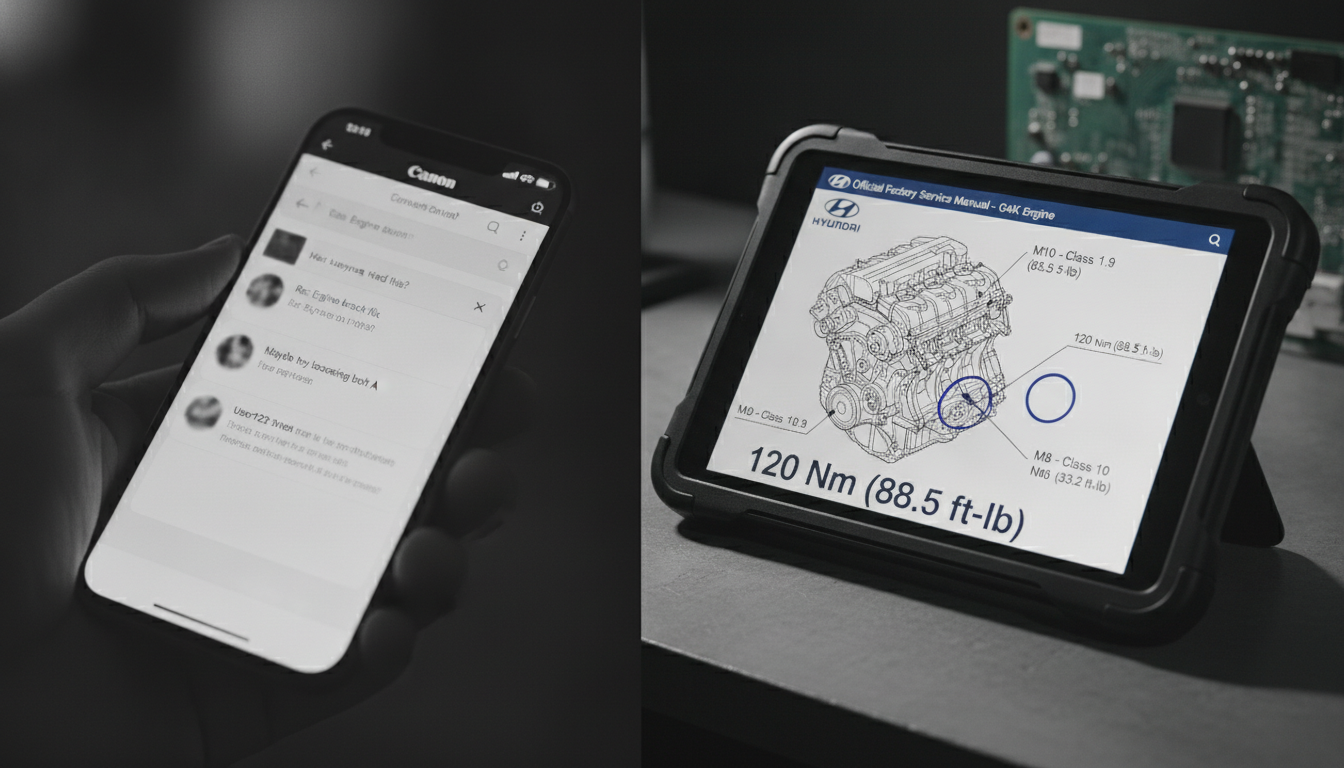
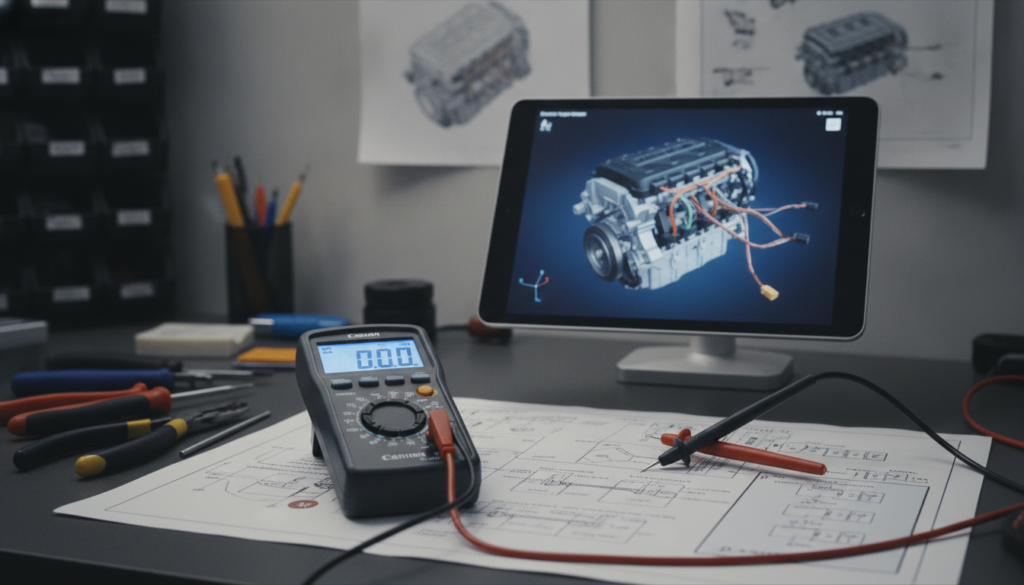
Alter Tag: Official Hyundai factory service manual documentation compared to generic online data for precise torque specification lookup.
Factory documentation is the only source that accounts for your exact engine code, transmission type, and model year. Generic torque values shared across forums may come from a different displacement, bolt grade, or platform.
Getting Hyundai torque specs before repair means pulling the number that was engineered for your specific car, not a close approximation.
Explore the full range of Hyundai Europe models and documentation available through NXT Motors to start with the right vehicle reference before every job.
Hyundai Torque Reference by System
|
System |
Typical Range |
Bolt Type |
Torque Method |
|
Cylinder head bolts |
20 Nm + 60-90° angle |
TTY (single-use) |
Multi-stage angle |
|
Main bearing caps |
15 Nm + 45-60° angle |
TTY |
Multi-stage angle |
|
Camshaft cap bolts |
10 to 12 Nm |
Standard |
Even sequence |
|
Intake manifold bolts |
15 to 20 Nm |
Standard |
Cross pattern |
|
Exhaust manifold bolts |
30 to 35 Nm |
Standard |
Centre-out |
|
Oil drain plug |
25 to 35 Nm |
Standard |
Single stage |
|
Lug nuts (most models) |
88 to 103 Nm |
Standard |
Star pattern |
|
Brake caliper bolts |
25 to 80 Nm (varies) |
Standard |
Single stage |
|
Strut top mount nut |
50 to 65 Nm |
Standard |
Single stage |
|
Subframe bolts |
100 to 150 Nm |
Standard |
Diagonal sequence |
Why Wrong Torque Ruins Hyundai Repairs
Every Hyundai fastener is rated to a specific clamp load. Over-tightening stretches bolts beyond their elastic limit, permanently weakening them and potentially cracking housings or warping mating surfaces. Under-tightening allows parts to work loose under vibration, heat cycling, and load.
The consequences differ by system. A loose brake caliper bolt creates a dangerous sliding condition under braking. A slightly under-torqued cylinder head allows combustion gases to breach the head gasket within a few thousand kilometers. Neither failure announces itself immediately, which makes torque errors especially dangerous.
Threads are the most common casualty. Aluminum engine blocks and heads are particularly vulnerable because the material yields well below the torque range of steel fasteners. Once an aluminum thread pulls, the repair cost often exceeds the cost of the original job many times over.
TTY and Angle Bolts: Read Before You Touch
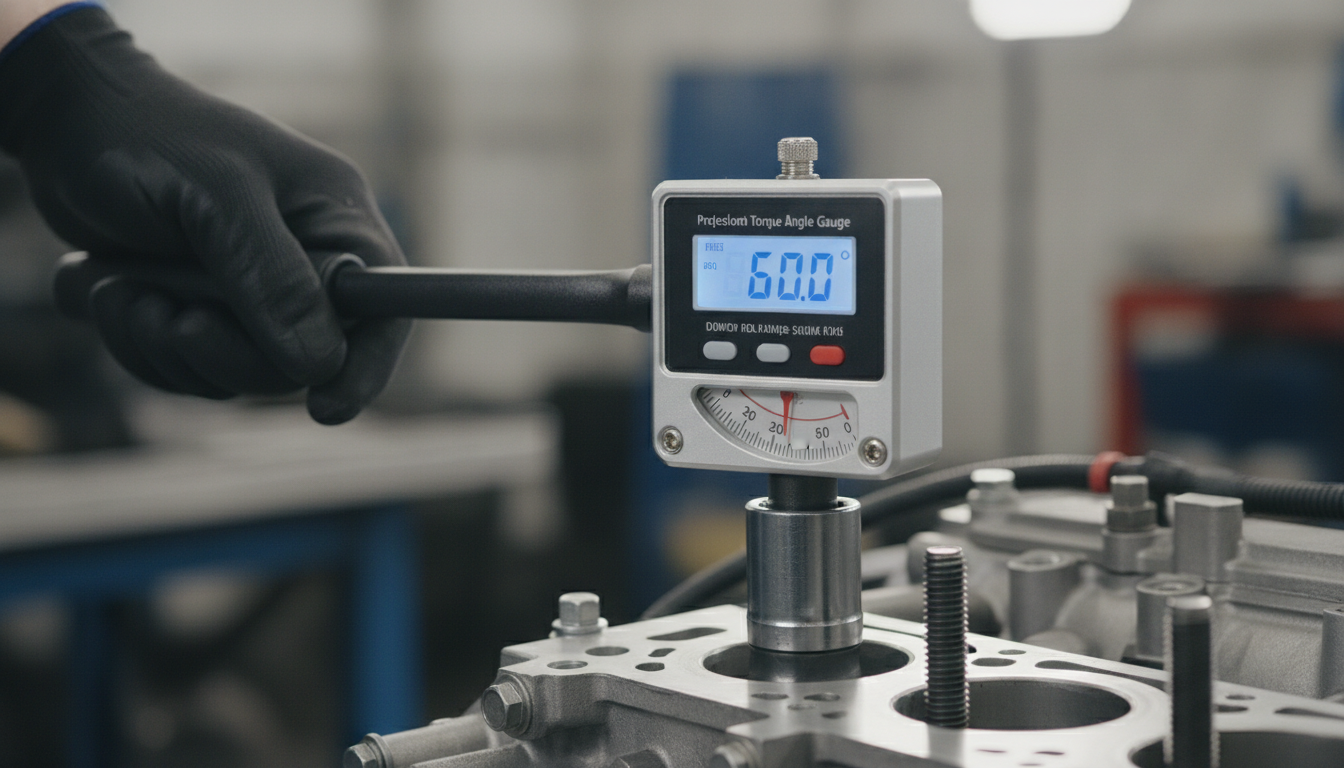
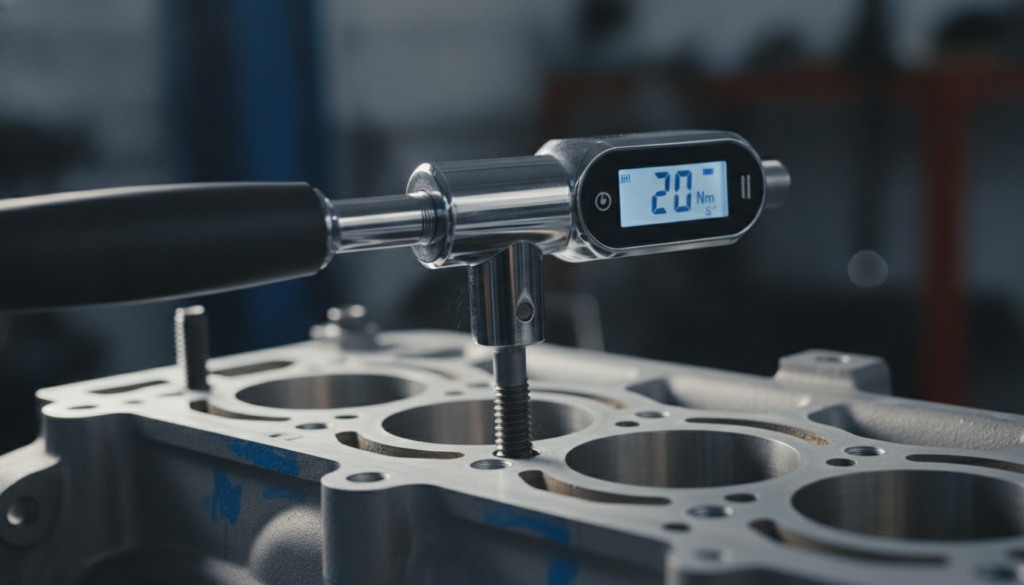
Alter Tag: Technician using a torque angle gauge to tighten a Hyundai torque-to-yield TTY bolt to factory specifications.
Torque-to-yield (TTY) bolts are designed to stretch to a precise point when torqued. Hyundai uses them heavily on cylinder head assemblies, main bearing caps, and some connecting rod caps. These bolts are single-use only. Reusing a TTY bolt risks unpredictable clamping force and potential fastener failure under load.
Angle torque is a two-stage process. The bolt is first torqued to a low initial value in Newton-meters, then rotated a specified number of degrees using a torque angle gauge. This method is more precise than a single torque value because it accounts for variations in thread friction. Hyundai factory documentation always lists both the initial Nm value and the final rotation angle separately.
Many DIYers skip the angle step because they think reaching the initial Nm value is enough. It is not. The angle rotation is where the correct clamp load is actually achieved. A torque angle adapter for a standard 3/8-inch or 1/2-inch drive ratchet costs very little and makes the step straightforward to complete correctly.
Older Hyundai models like the Galloper and Terracan used more conventional multi-stage torque patterns without angle requirements, but their fastener tables still vary significantly between engine options. Never assume the same spec applies across the range.
Reading Hyundai Torque Tables Correctly
Factory torque tables use a consistent structure. Each row lists the fastener description, the tightening torque in Nm, and often a corresponding kgf-cm or ft-lb column. Some tables also include a maximum or minimum range rather than a single value, meaning any value within that range is acceptable.
Unit awareness is critical. Hyundai's European-market documentation primarily uses Newton-meters. North American documentation often leads with foot-pounds. The conversion is straightforward: 1 ft-lb equals approximately 1.356 Nm, or divide Nm by 1.356 to get ft-lb.
Applying foot-pound values to a Newton-meter specification without converting causes serious over-torquing because Nm values are numerically higher for the same clamp load.
Torque tables are usually positioned at the end of each repair section in the factory service manual. They are not found in the general specifications chapter for most models.
This means a technician looking for head bolt torque needs to navigate to the engine mechanical section rather than the introductory specs page. Knowing where to look saves significant time.
Cylinder Head Multi-Stage Sequences
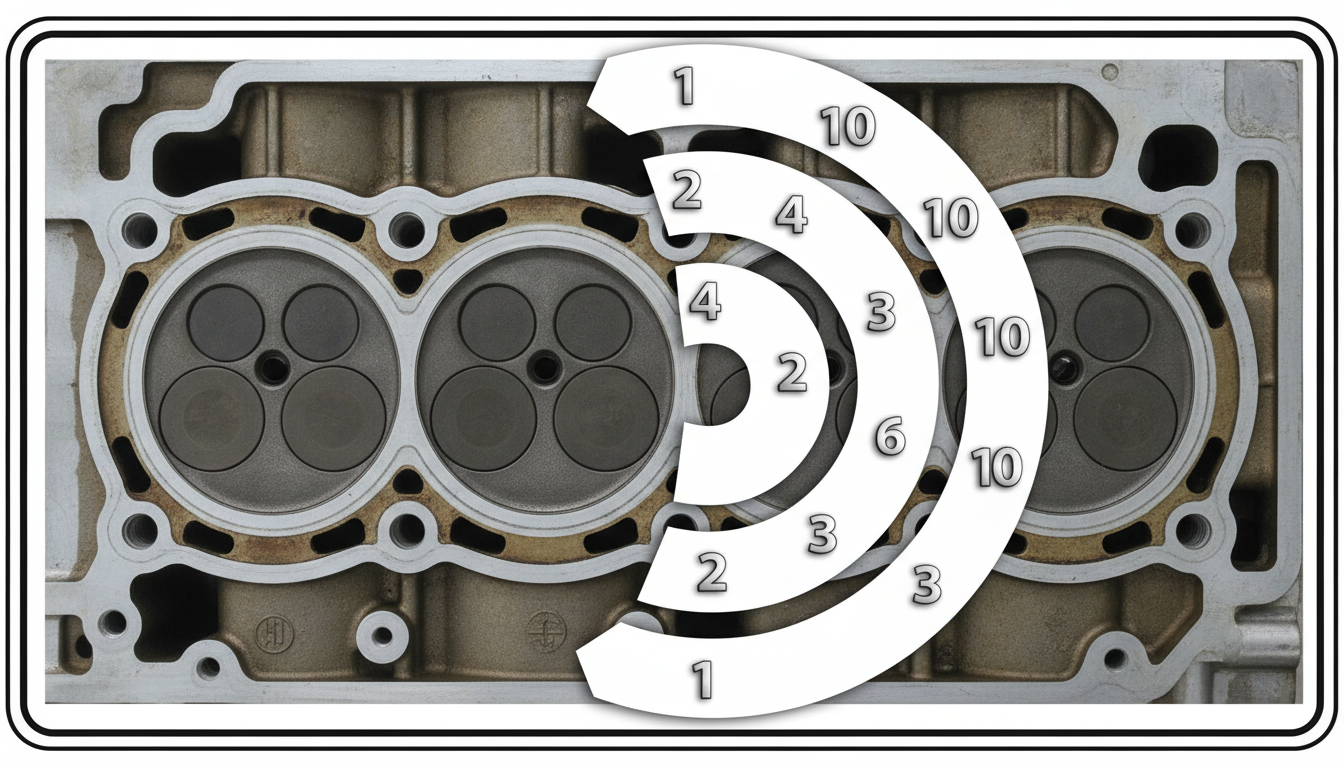
Alter Tag: Technical diagram showing the numbered multi-stage tightening sequence for a Hyundai cylinder head.
Hyundai cylinder head bolts always follow a numbered tightening sequence printed on the diagram immediately above the torque table. The sequence typically works from the center bolts outward in a crossing pattern.
The sequence number matters more than the physical position. Tightening in the wrong order creates uneven gasket compression and causes premature head gasket failure.
For most current Hyundai four-cylinder engines, the head bolt procedure runs: initial 20 Nm across the full sequence, then a 60-degree rotation, then a final 60-degree rotation.
Some older engines use a three-stage Nm progression before any angle step. The factory service manual lists every stage separately, and all stages are mandatory.
For more detail on sourcing cylinder head data, the post on finding engine torque specs for cylinder heads covers the lookup process in depth.
Lower Engine Bearing Caps
Main bearing cap bolts and connecting rod bolts also use TTY specifications on modern Hyundai engines. Main bearing caps typically receive an initial torque, followed by a 45- to 60-degree step.
Connecting rod caps often follow a similar pattern, but the values are significantly lower because of the smaller bolt diameter.
Always replace both the main bearing cap bolts and rod bolts if your factory documentation lists them as TTY. Reusing them is explicitly prohibited in Hyundai repair procedures.
Confirm the bolt type in the torque section of the manual before purchasing parts, as not all engine variants within the same model family use yield-point fasteners at the lower end.
Engine System Torque Values to Check First
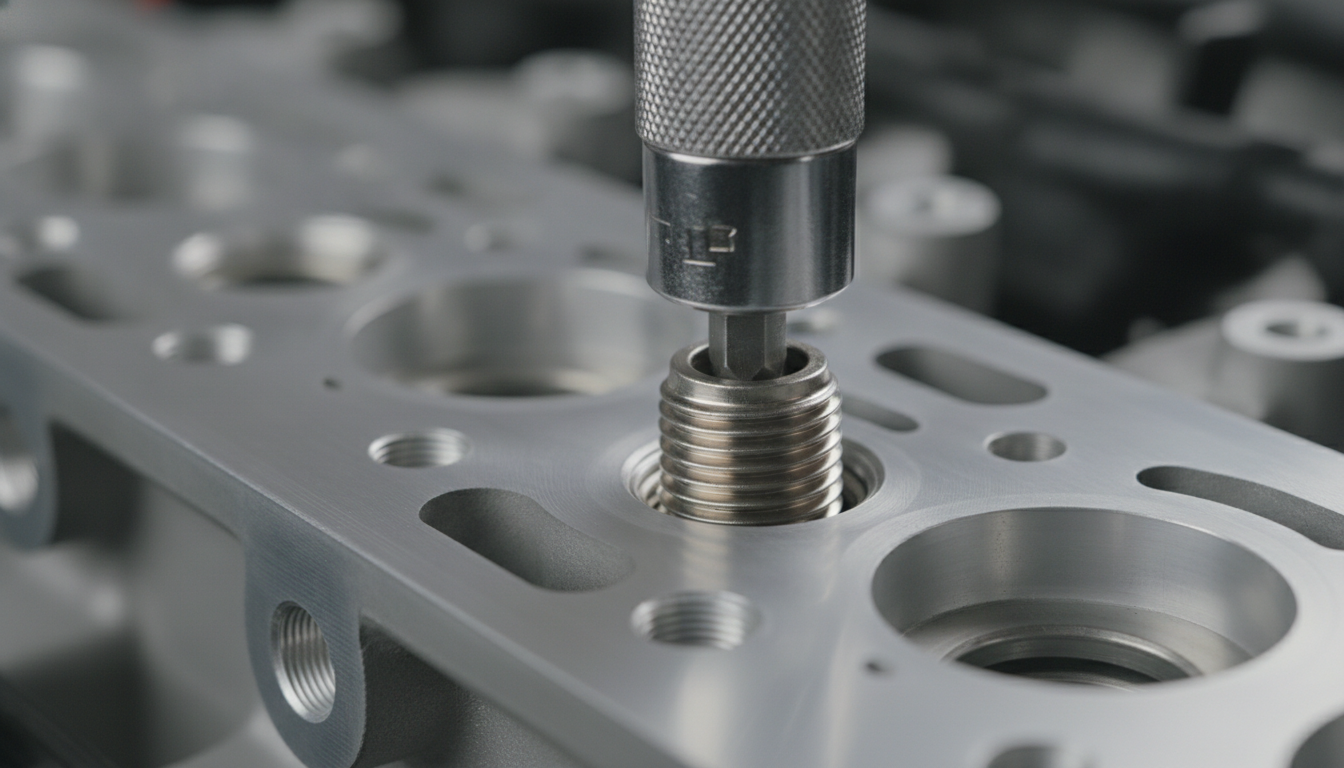
Alter Tag: Applying precise torque to a spark plug in a Hyundai aluminum cylinder head to prevent thread damage.
Before starting any engine repair, five systems carry the highest consequence if torqued incorrectly. Cylinder head fasteners are first because gasket integrity depends entirely on even clamping force.
Camshaft bearing caps are second because even slight over-tightening can seize the camshaft in its journals. Oil pump pickup tube bolts are third because a loose pickup causes catastrophic oil pressure loss at startup.
Timing system fasteners are the fourth priority. Hyundai timing belt tensioner and timing chain guide bolts are often torqued to very low values in the 10-15 Nm range.
Applying hand-tight guesses to these fasteners often causes the tensioner to move, disrupting belt or chain tension. Refer to the detailed procedure in the post on timing belt replacement assembly sequencing before touching any timing components.
Spark plug torque is the fifth and most commonly ignored. Aluminum heads require careful torque control on spark plugs. Most Hyundai petrol engines specify 15-25 Nm for spark plugs, depending on the thread diameter. Cross-referencing these against engine codes is covered in the post on spark plug gap specs and engine code charts.
Owners of models like the H-1 or ix55 with larger-displacement engines will find that torque values scale up considerably compared to compact models, and the factory documentation for these vehicles should be verified separately.
Suspension and Chassis Torque Priorities
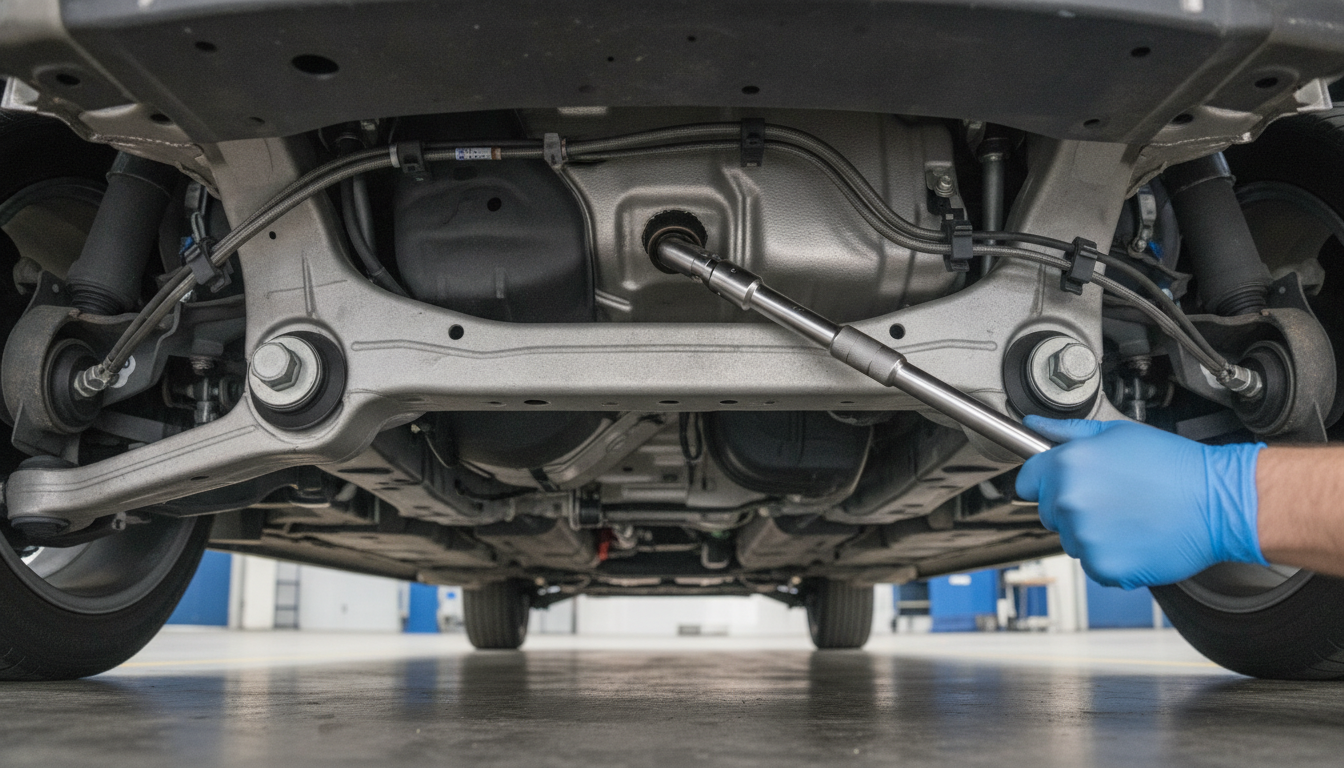
Alter Tag: Torquing high-consequence subframe mounting bolts on a Hyundai chassis according to service manual specs.
Suspension fasteners carry load continuously and experience constant vibration. Incorrect torque on suspension bolts causes two types of failure: gradual loosening under vibration or immediate fastener yielding under an unexpected load. Neither type gives obvious warning before something breaks.
Subframe mounting bolts on most Hyundai models fall between 100 and 150 Nm. These are high-consequence fasteners because the subframe simultaneously locates the engine, transmission, and front suspension.
Any service that requires subframe removal, such as clutch replacement on front-wheel-drive models, must include fresh fasteners torqued to the factory value.
Strut top-mount nuts, lower ball-joint pinch bolts, and trailing-arm bolts all have model-specific values that vary across the Hyundai lineup. A Lantra and an ix35 do not share suspension geometry or fastener specifications, even for bolts that appear physically identical.
The post on wheel bearing and hub torque specifications provides exact torque values for hub carrier bolts and axle retaining nuts, which are among the most safety-critical fasteners on any suspension system. Never estimate these.
Full Hyundai Europe vehicle and documentation resources are available through NXT Motors, covering models from the Pony through to current production SUVs.
Brake and Wheel Fastener Specs That Matter
Brake system fasteners cover a wide torque range. Caliper guide pin bolts on compact Hyundai models typically tighten to 25-30 Nm. Caliper bracket bolts, which carry the full braking load, run between 60 and 80 Nm on most models. The distinction matters because both types of bolts look similar but serve completely different structural roles.
Lug nut torque is one of the most-searched Hyundai specifications and one of the most frequently incorrect values found on general charts.
Most Hyundai models use a lug nut torque between 88 and 103 Nm, but compact models like the ix20 and larger platforms like the Grand Santa Fe do not use identical values. Always check the owner's documentation or factory data for your specific model and wheel size.
Brake rotor retaining screws, where fitted, are tightened to very low torque values, often 5 to 8 Nm. These are easy to over-tighten by hand without realizing it. The post on brake rotor minimum thickness specifications also covers related fastener data alongside rotor measurement procedures.
Where to Pull Verified Hyundai Torque Data
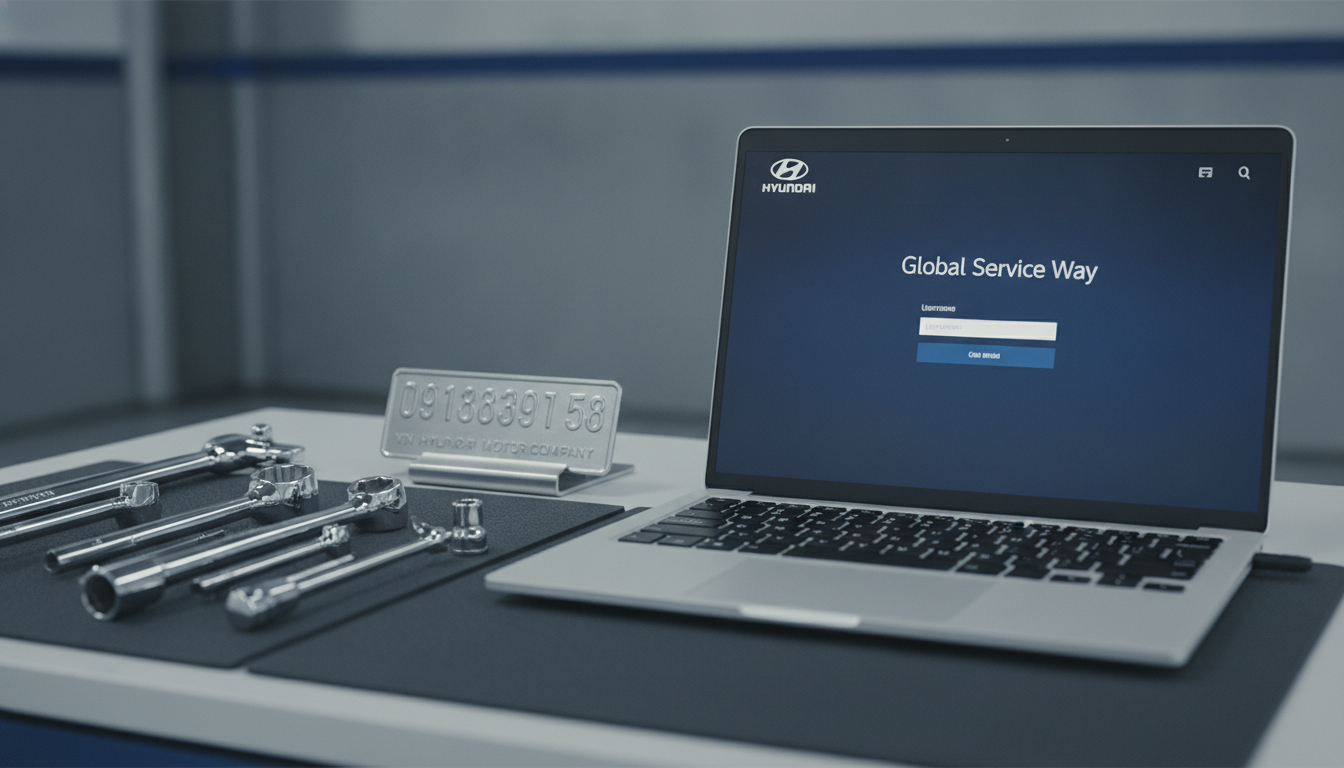
Alter Tag: Accessing official technical data via the Hyundai Global Service Way portal for accurate torque specifications.
Factory service manuals are the primary source and the only source that guarantees model and engine code accuracy. Hyundai's official technical documentation is available through the Hyundai Global Service Way portal for dealers and registered users. Independent technicians and advanced DIYers also access this data through professional repair information services.
Owner's manuals include some torque data, specifically for consumable service items like oil drain plugs and lug nuts, but they do not include full mechanical torque tables. Do not use the owner's manual as a source for engine internal or suspension torque values.
Third-party platforms like ALLDATA and Mitchell1 republish factory data under license and are reliable alternatives for most Hyundai models. The post on finding your factory service manual PDF by VIN explains how to match documentation to your exact vehicle before pulling any specification.
For older and more obscure Hyundai platforms, including the Santamo, S-Coupe, Pony, and Matrix, documentation availability through mainstream platforms is inconsistent. NXT Motors maintains resources for these models through the Hyundai Europe documentation hub, which is often the most practical starting point for older and regional-market vehicles.
The Accent 1st Generation X3 Series is a good example of a model where engine torque values differ significantly between the 1.3 and 1.5 petrol variants, making model and engine code confirmation essential before any engine-internal work. Similarly, the i30CW uses an updated GDI engine architecture, with some fastener specifications differing from those of earlier i30 variants.
The Trajet and ix20 both used multiple engine options across their production runs. Selecting the correct engine designation within the factory service manual structure is mandatory before reading any torque table, as the data is engine-specific rather than model-specific in many sections.
Common Asked Questions Hyundai Torque Specs Before Repair
What units do Hyundai torque specifications use?
Hyundai factory service manuals for the European market primarily express torque in Newton-meters (Nm). Many tables also include a kgf-cm column, and some include an ft-lb column. North American documentation often lists ft-lb first.
To convert Nm to ft-lb, divide the Nm value by 1.356. To convert ft-lb to Nm, multiply by 1.356. Applying the wrong unit system is one of the most common sources of torque error in practice, especially when using mixed-source data. Always confirm which unit system your manual uses on the first page of the torque table and carry that unit through every fastener in the same job.
Can I reuse torque-to-yield bolts on a Hyundai?
No. Torque-to-yield bolts are designed to stretch to a calibrated point during tightening, which means they permanently deform. Reusing a TTY bolt introduces unpredictable clamping force because the bolt may stretch further or fail to reach the correct clamp load on a second installation.
Hyundai explicitly prohibits reuse of TTY fasteners in factory service procedures. The most common TTY applications on Hyundai engines are cylinder head bolts, main bearing cap bolts, and connecting rod cap bolts.
Always purchase new TTY bolts before starting any job that requires removing these fasteners, and confirm whether your specific engine uses them by checking the torque section of the factory manual.
Where do I find torque specs for older Hyundai models?
Older Hyundai models like the Galloper, Terracan, Pony, Santamo, and S-Coupe have inconsistent coverage on mainstream repair platforms. The Hyundai Global Service Way portal most reliably covers more recent production years.
For older European-market models, NXT Motors maintains documentation references and vehicle-specific resources that are harder to locate elsewhere. Helm Inc. published workshop manuals for some older Hyundai models sold in North America, and physical copies occasionally appear on used-book platforms.
When multiple sources disagree, cross-check at least two independent factory sources and prioritize the one that matches your exact engine code and production year over any general-market edition.
What happens if I over-torque a Hyundai head bolt?
Over-torquing a head bolt causes the fastener to exceed its elastic limit and permanently stretch. A stretched bolt cannot maintain the specified clamp load, which allows the head gasket to relax and develop micro-leaks.
In severe cases, over-torquing can crack the cylinder block or strip the threads in the block deck, which makes the repair dramatically more expensive. On engines with aluminum blocks, the risk of thread pull-out is particularly high because aluminum yields at much lower clamp loads than cast iron.
If you suspect any head bolt was over-torqued during assembly, the correct action is to replace all head bolts as a set and re-torque from scratch using the factory sequence.
Do all Hyundai models use the same lug nut torque?
No. Lug nut torque varies across the Hyundai lineup depending on wheel size, hub design, and vehicle weight class. Most compact Hyundai models fall in the 88 to 98 Nm range while larger SUVs and vans typically specify 100 to 115 Nm.
The owner's manual for each vehicle includes the correct lug nut torque in the wheel change section.
After any wheel removal for brake work, tire fitting, or suspension service, always re-torque the lug nuts to the factory specification after driving approximately 50 kilometers, because seating the wheel against the hub face can slightly reduce the clamp load during the first heat cycle.