Many Hyundai owners mistakenly begin repairs by ordering parts based solely on fault codes. Skipping a technical service bulletin (TSB) check often leads to incorrect repairs, wasted money, and repeat shop visits.
Technicians use TSBs to access engineered fixes and approved procedures. Checking these bulletins first prevents misdiagnosis by offering known solutions, identifying software updates, or revealing warranty-covered parts.
This guide explains how Hyundai TSBs save time and money, where to find them, and how to apply them to real-world repair scenarios.
Hyundai TSB Check Before Repair: The Step Most Owners Skip

Alter Tag: A digital screen showing a comprehensive list of Hyundai Sonata technical service bulletins used to prevent repair misdiagnosis.
A Hyundai technical service bulletin is an official document issued by Hyundai to address known, recurring vehicle problems. These bulletins are not recalls. They do not get widely publicized. They are written to help technicians and owners identify a specific fault, follow an approved repair procedure, and use the correct parts the first time.
The Hyundai Sonata alone has over 600 active bulletins on record. Every model year from the Accent to the ix55 carries a library of bulletins covering everything from transmission solenoid replacement to ECU reprogramming. Skipping a TSB check means you may be guessing at a problem Hyundai already solved in writing.
TSB vs Recall vs Service Campaign Comparison
|
Type |
Issued For |
Repair Cost |
Safety Mandate |
Publicly Announced |
|
Technical Service Bulletin |
Known recurring non-safety issues |
Usually owner's expense |
No |
No |
|
Recall |
Safety-critical defects |
Free to owner |
Yes (NHTSA) |
Yes |
|
Service Campaign |
Widespread known issues, legal risk |
Often subsidized or free |
Sometimes |
Rarely |
Use this table every time you receive a fault code. Identifying the document type first tells you exactly who pays and what procedure to follow.
What a Hyundai TSB Actually Is (and Is Not)
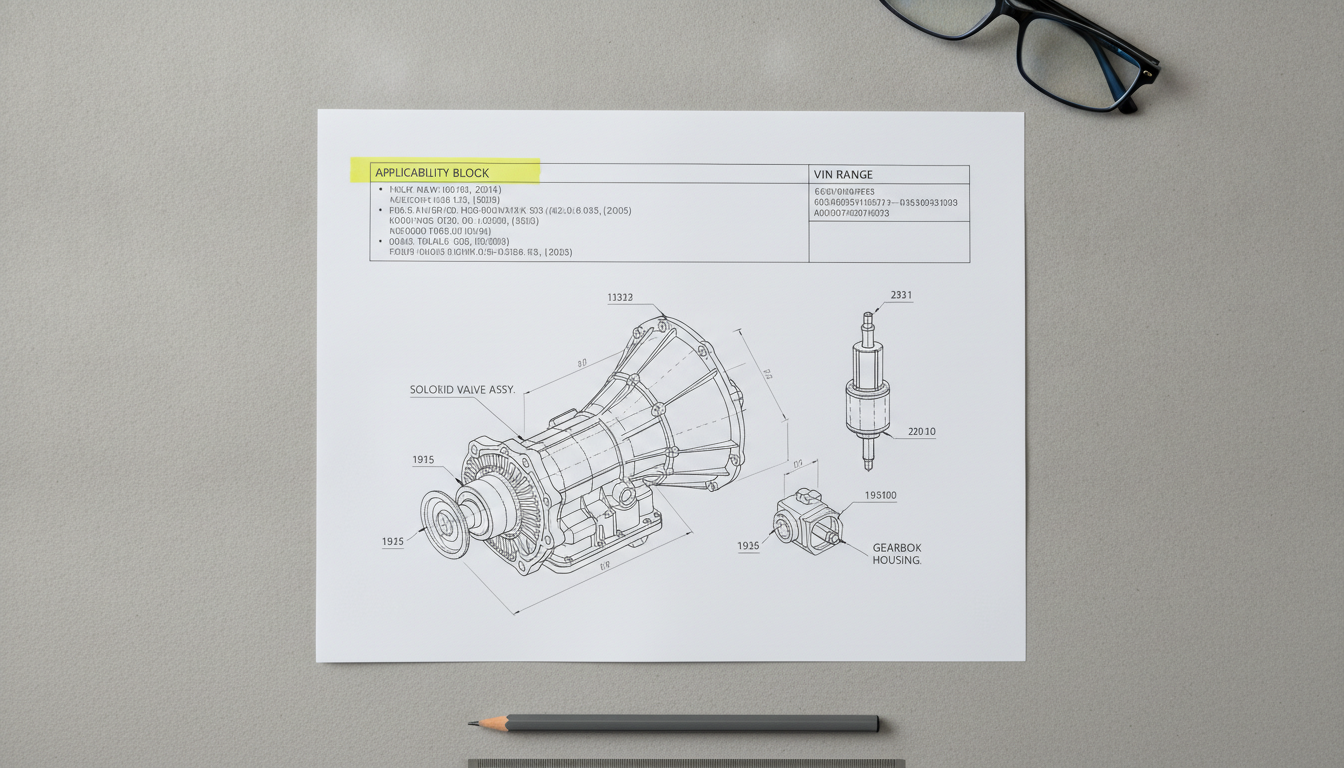
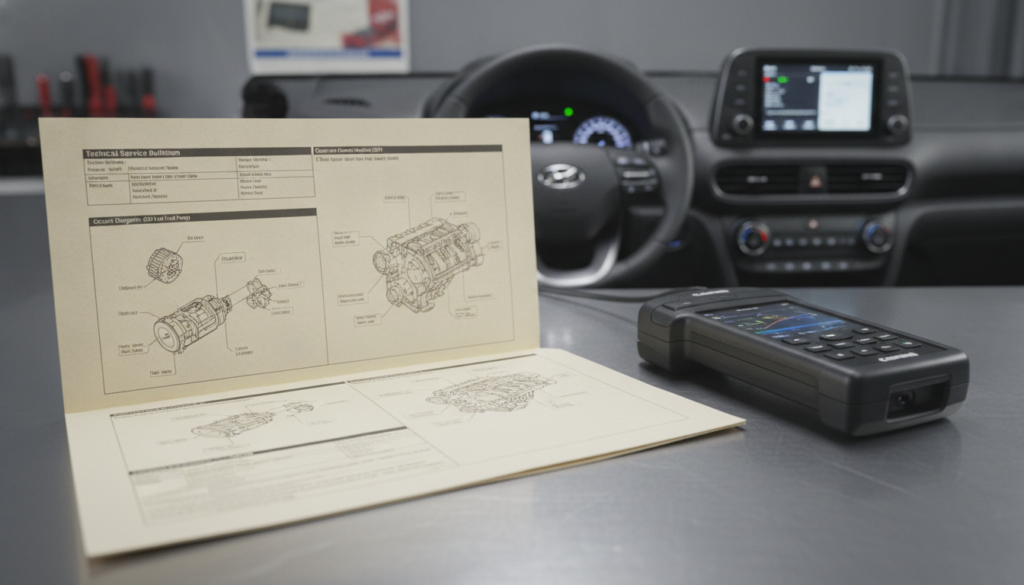
Alter Tag: Close-up of a Hyundai TSB document showing applicability blocks and VIN ranges for specific engine codes and models.
A technical service bulletin is a structured document that Hyundai engineers and field technicians produce after identifying a pattern of failures across multiple vehicles. It is not a safety recall and not a public announcement.
The bulletin describes the exact symptom pattern, the affected model years and VIN ranges, the root cause, and the approved repair procedure.
There can be more than one bulletin for the same fault. That happens when engineers find a better fix or when a previous procedure only partially resolved the problem. Knowing which bulletin applies to your specific VIN matters more than knowing a bulletin exists at all.
Hyundai distributes these documents to dealerships and via platforms such as Hyundai Global Service Way. Independent shops only receive them if they subscribe to tools like ALLDATA or Mitchell1.
This is exactly why so many DIY repairs fail: the information existed, but the owner or mechanic never accessed it. Bulletins often include OEM part numbers, special tool requirements, software update instructions, and torque specifications that are not found in the standard owner's manual.
How a Missing TSB Check Costs You Twice
The most common result of skipping a TSB check is replacing a part that is not the root cause. A Hyundai owner sees a check engine light, pulls a transmission ratio fault code, and buys a solenoid pack. The fault returns. They return to the shop. The actual fix was an ECU software update documented in a bulletin issued two years earlier.
This pattern shows up repeatedly across Hyundai forums and owner communities. The repair cost doubles because the wrong component was replaced first. Labor hours are charged twice. And the vehicle was off the road longer than necessary.
Misdiagnosis without a TSB check can lead to:
- Replacing sensors when a software reflash is the actual fix
- Replacing mechanical components when a wiring connector repair is specified in the bulletin
- Ordering aftermarket parts when the bulletin specifies a revised OEM part number
- Missing a free or subsidized fix that falls under a service campaign or warranty extension
Checking for active bulletins before picking up any tool is the fastest way to reduce your repair costs and repair time. It costs nothing to check and can save hundreds in parts alone.
Where to Find Your Hyundai TSB Fast
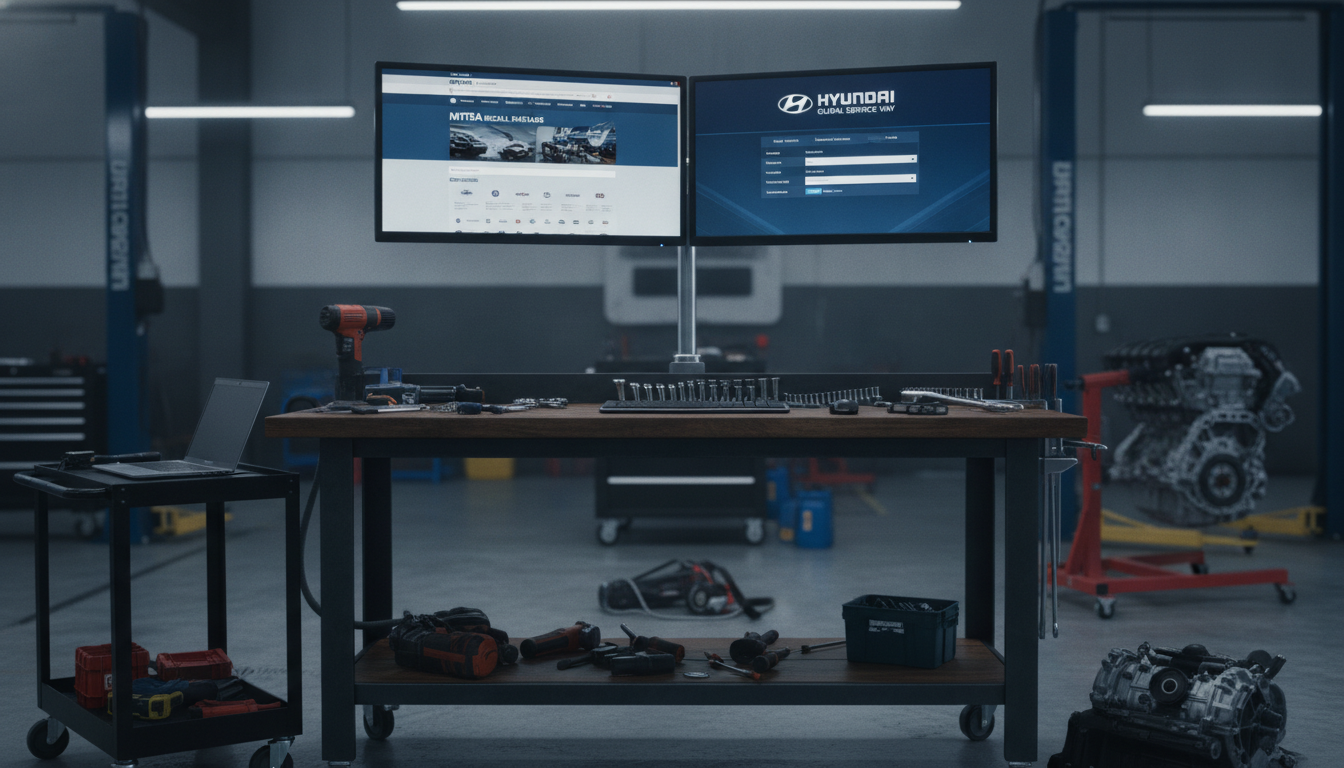
Alter Tag: Professional workstation showing the NHTSA and Hyundai Global Service Way portals for accessing technical service bulletins.
Three sources cover the majority of Hyundai bulletins available to owners and mechanics.
NHTSA Free Database: The National Highway Traffic Safety Administration publishes Hyundai bulletins for free at nhtsa.gov. Search by year, make, and model. Results include bulletin numbers, affected systems, and full PDF text on most entries.
This is the best starting point for any owner before visiting a shop. Many owners who found relevant bulletins used this data to push back on dealers charging for covered work.
Hyundai Global Service Way: Hyundai's OEM service information portal. It provides bulletin access by VIN, which means results are filtered to your specific vehicle configuration. Subscription access is required for full technical content, but it is the most accurate and up-to-date source for model-specific procedures.
Pair it with a Hyundai Europe service manual to get the full picture of how the bulletin integrates with standard repair procedures.
ALLDATA and Mitchell1: These paid platforms are the standard tools in professional independent shops. They aggregate bulletins from all manufacturers, including Hyundai, and organize them by DTC and system category.
If your independent mechanic says they cannot find a bulletin, it may be a subscription access problem rather than a missing document.
NHTSA Free TSB Search vs Paid Subscription Tools
|
Tool |
Cost |
Access Level |
VIN Filtering |
Best For |
|
NHTSA Database |
Free |
Summary + PDF |
No |
Quick owner reference |
|
Hyundai Global Service Way |
Subscription |
Full OEM content |
Yes |
Precise VIN-level lookup |
|
ALLDATA |
Subscription |
Full cross-brand |
Limited |
Independent shop use |
|
Mitchell1 |
Subscription |
Full cross-brand |
Limited |
Independent shop use |
How to Read a TSB and Apply It to Your Repair
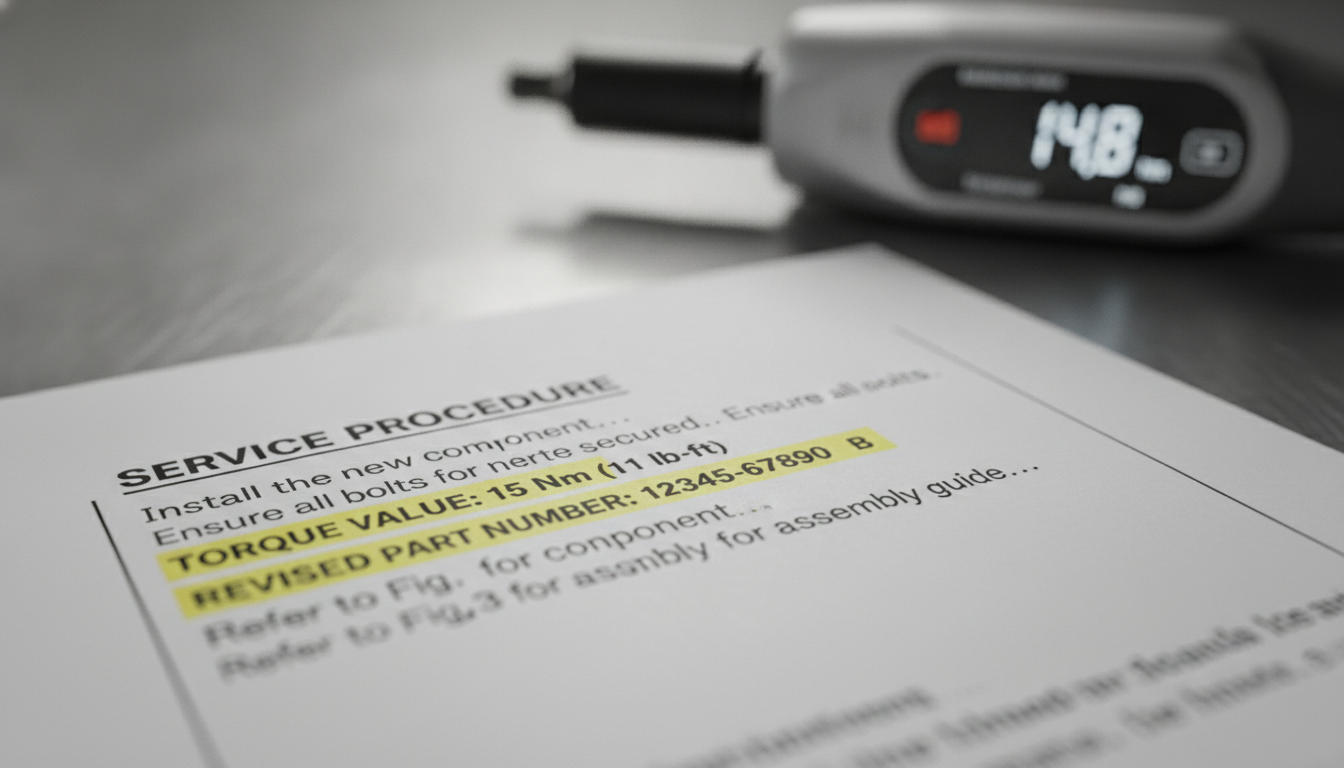
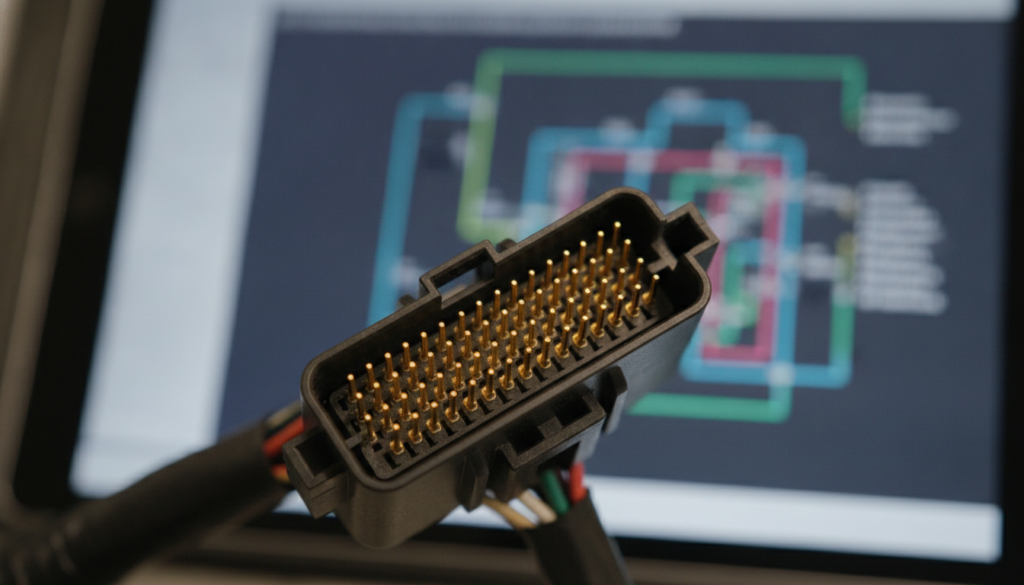
Alter Tag: Macro view of a Hyundai TSB service procedure section highlighting revised torque specifications and part numbers.
Reading a Hyundai technical service bulletin correctly requires attention to three key sections: the applicability block, the symptom list, and the service procedure.
The Applicability Block tells you which model years, engine codes, and VIN ranges the bulletin covers. A bulletin for a 2018 Tucson with a 2.0L engine may not apply to the same model with a 1.6T engine. Matching this section to your vehicle first prevents you from following a procedure that was never designed for your car.
The Symptom List describes exactly how the problem presents. Match your observed symptoms against this list before continuing. If your symptoms match two or more of the five listed conditions, the bulletin may still be relevant. A partial match is worth investigating. A total mismatch means you likely have a different root cause and need a different bulletin or a fresh diagnostic approach.
The Service Procedure is where the actual repair steps live. Follow these steps in exact sequence. Bulletins frequently specify:
- Software update file versions and programming sequences
- Revised torque values that differ from the base factory manual
- New part numbers that supersede older OEM stock
- Connector inspection steps that must happen before any component is replaced
Matching TSB Part Numbers to Your Repair
Bulletin part numbers are critical. A bulletin issued after a product revision will list a superseded part number and a replacement number. Ordering from the original manual without checking the bulletin may result in installing a part that has already been redesigned.
Cross-reference every bulletin part number against your current parts supplier catalog before ordering. For Hyundai models covered by European specifications, the Hyundai Europe parts lineup is a useful cross-reference for sourcing OEM components.
TSB vs Recall vs Service Campaign: Know the Difference
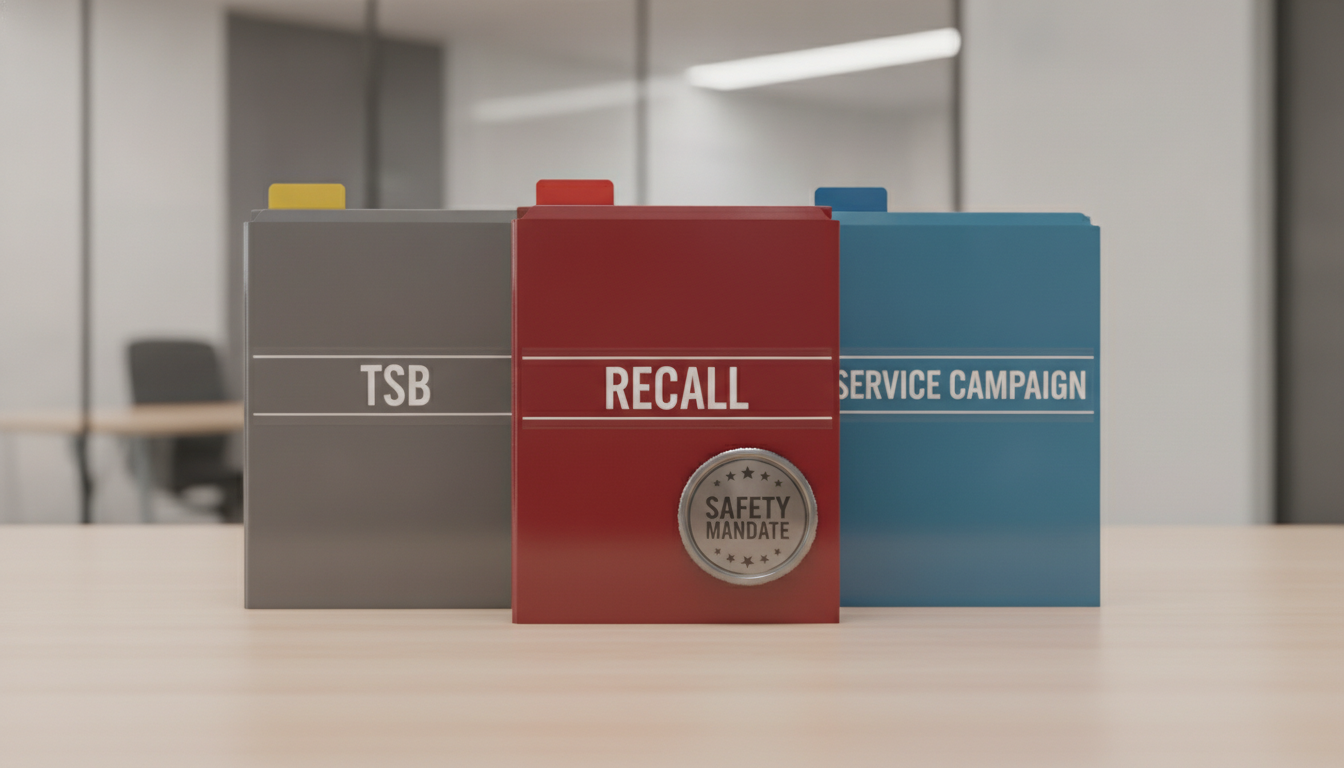
Alter Tag: Visual representation of the differences between Hyundai Technical Service Bulletins, Recalls, and Service Campaigns.
The three document types that Hyundai issues are frequently confused, and the confusion has direct cost consequences for owners.
A technical service bulletin is a recommended fix for a known non-safety issue. Following it is not mandatory. The repair cost typically falls on the owner unless the vehicle is under warranty. Hyundai is not legally required to notify you that a bulletin exists for your car.
A recall addresses a safety defect. NHTSA requires manufacturers to notify owners within 60 days of issuing a recall. Repairs under a recall are performed free of charge at any authorized dealership, regardless of the vehicle's mileage or warranty status. If you find a recall during your TSB research, document it before any shop visit.
A service campaign sits between the two. Hyundai issues these when a bulletin-level problem is widespread enough to create legal exposure or customer satisfaction risk. Some campaigns offer subsidized or fully covered repairs.
Campaigns are not always advertised publicly. Checking Hyundai's service campaign list by VIN through an authorized dealer is the most reliable way to know if your car qualifies.
Understanding this distinction before visiting a shop prevents you from paying for a repair that was already covered. Cross-referencing resources such as how to find a factory service manual PDF by VIN and where to download genuine OEM workshop manuals helps you build a complete picture of your vehicle's documented repair history.
When a Hyundai TSB Can Trigger Free or Covered Repair
A bulletin does not automatically mean a free repair. But several conditions can shift the cost responsibility away from the owner.
Active Warranty Coverage: If your Hyundai is still within its bumper-to-bumper or powertrain warranty, a repair procedure described in a TSB is treated the same as any other warranty repair.
The dealer documents the bulletin number, performs the specified procedure, and submits the claim. You pay nothing. Always confirm warranty status before authorizing any repair on a newer Hyundai.
Extended Warranty or Goodwill Coverage: Some bulletins are issued because the failure rate is high enough to create legal risk for Hyundai. In these cases, Hyundai may agree to cover the repair even after the standard warranty expires.
This is sometimes called goodwill coverage or a secret warranty. It is not publicized. Requesting a dealer check all active service campaigns and goodwill procedures for your VIN before authorizing work is a legitimate and effective approach.
Service Campaigns with Subsidized Parts: A campaign-level event may cover parts costs even if labor is billed to the owner. Knowing the difference between a TSB and a campaign at the point of the shop visit lets you negotiate more effectively.
For older Hyundai models that are entirely out of warranty, the TSB still has value.
It gives you the exact part number, the correct sequence, and any special tooling requirements. Following the bulletin on a vehicle like the Hyundai Terracan or the Hyundai H-1 means the repair is done right the first time, even if you are funding it yourself.
How Independent Mechanics Can Access Hyundai TSBs

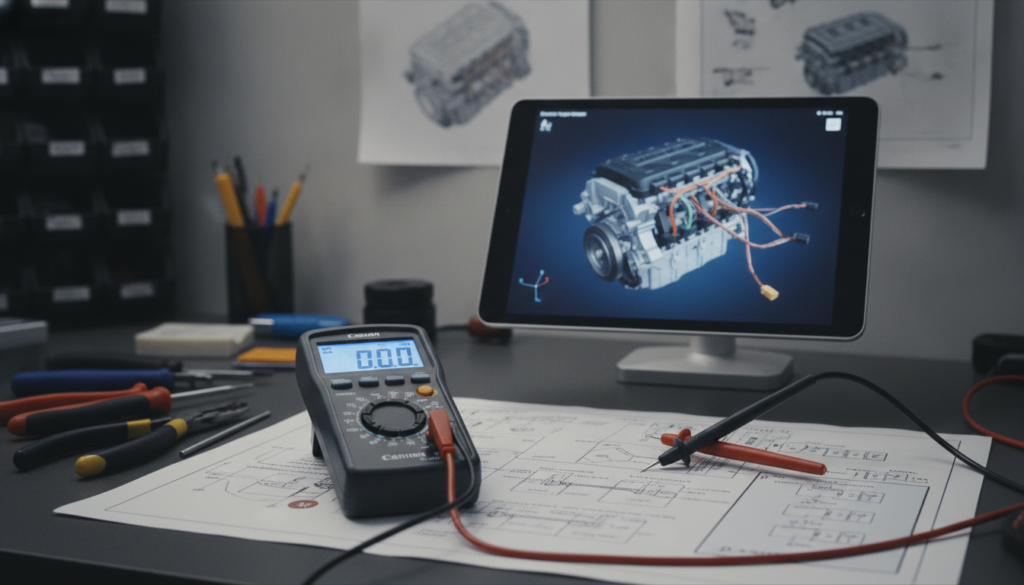
Alter Tag: An independent mechanic using professional diagnostic software to access Hyundai TSBs and wiring diagrams for a vehicle repair.
Independent mechanics face a real access problem with Hyundai bulletins. Hyundai's own portal requires a dealer or authorized service subscription. Many smaller shops cannot carry this cost.
The practical solution for independent shops is a subscription to ALLDATA or Mitchell1. These platforms aggregate TSBs from all manufacturers and are updated regularly. Shops that charge diagnostic fees without consulting active bulletins are adding a step they may already be billing for without delivering value.
For DIY owners working on their own Hyundai, the NHTSA database is the best free starting point. It does not require a subscription, and many bulletins are available as full PDF downloads.
The limitation is that NHTSA content does not immediately include the most recent bulletins, and VIN-level filtering is not available. Pairing NHTSA results with a Hyundai Europe workshop manual resource fills in the procedural gaps that a bulletin summary alone may not cover.
Independent mechanics who invest in TSB access spend less time on trial-and-error diagnosis and more time on confirmed, efficient repairs. For vehicles like the Hyundai ix35, Hyundai Trajet, Hyundai Lantra, Hyundai ix20, and the Hyundai Matrix that have accumulated years of documented field repairs, bulletin archives are extensive and highly practical.
Mechanics servicing older models like the Hyundai Santamo, the Hyundai S-Coupe, or the Hyundai Pony may find bulletin archives thinner, but pairing available service information with resources like OEM vs aftermarket manuals and reading OBD-II codes using manual flowcharts builds a more complete pre-repair picture. Models like the Hyundai Galloper, Grand Santa Fe, Hyundai Accent 1st Generation, Hyundai ix55, and the i30CW all have service histories where bulletin awareness directly affects repair accuracy.
The most consistent habit of experienced Hyundai technicians is simple: they look up the bulletin first. Every time. Before the toolbox opens.
Common Asked Questions About Why Check Hyundai TSB Before Repair
Does a Hyundai TSB mean Hyundai will pay for my repair?
Not automatically. A technical service bulletin describes a known fix but does not guarantee cost coverage. If your Hyundai is still under its factory warranty, any repair performed under a TSB procedure is treated as a standard warranty repair at no cost to you.
Outside of warranty, you are typically responsible for the repair bill. However, if the issue is widespread enough, Hyundai may issue a service campaign or offer goodwill coverage on a case-by-case basis.
Always ask your dealer to check for active campaigns and goodwill procedures before authorizing any work. The distinction between a bulletin, a campaign, and a recall determines who pays.
Where is the most reliable free source for Hyundai TSBs?
The NHTSA database at nhtsa.gov is the most accessible free source for Hyundai technical service bulletins. You can search by vehicle year, make, and model. Most entries include the full bulletin text as a PDF download.
The limitation is that NHTSA does not always carry the most recently issued bulletins, and results are not filtered by VIN. For the most precise, VIN-level TSB access, Hyundai's own Global Service Way portal is the authoritative source, though it requires a paid subscription.
Hyundai owner forums and model-specific communities are also useful for confirming whether a bulletin exists before searching official channels.
Can I repair my Hyundai myself using a TSB without going to a dealer?
Yes, a TSB can be used for DIY repairs in most cases. The bulletin provides the approved repair procedure, part numbers, and any special tooling or software requirements. The practical limitation for DIYers is that some TSB procedures involve ECU or TCM software reprogramming, which requires dealer-level diagnostic hardware.
Mechanical procedures, connector repairs, and parts replacements described in bulletins are generally accessible for a competent DIY mechanic with the right tools. Always read the full procedure before starting.
If the bulletin specifies software updates, confirm whether a dealer scan tool is required before committing to the repair yourself.
How do I know if a TSB applies to my exact Hyundai model and VIN?
Every TSB includes an applicability block near the top of the document. This section lists the affected model years, body codes, engine variants, and sometimes a specific VIN range. Match your VIN against this block before following any bulletin procedure.
A bulletin issued for a 2017 Tucson 2.0L may not apply to the 1.6T variant of the same year. Hyundai's Global Service Way portal allows direct VIN input, which filters results to only bulletins confirmed for your specific vehicle.
This is the most accurate method. Cross-referencing the DTC code with the bulletin symptom list adds a second layer of confirmation before starting the repair.
What happens if I repair my Hyundai without checking the TSB first?
The most common outcome is replacing a part that is not the root cause. The fault returns, the cost of the part is sunk, and the correct fix still needs to be performed. In cases where a TSB specifies a software update rather than a mechanical repair, the installed part does not affect the fault behavior.
In some situations, performing a repair that differs from the TSB-specified procedure can also complicate a warranty claim if the vehicle is still within coverage.
Dealers may reject a warranty repair if a non-bulletin procedure was already performed by a third party. Checking the TSB before any work begins protects both your wallet and your warranty position.