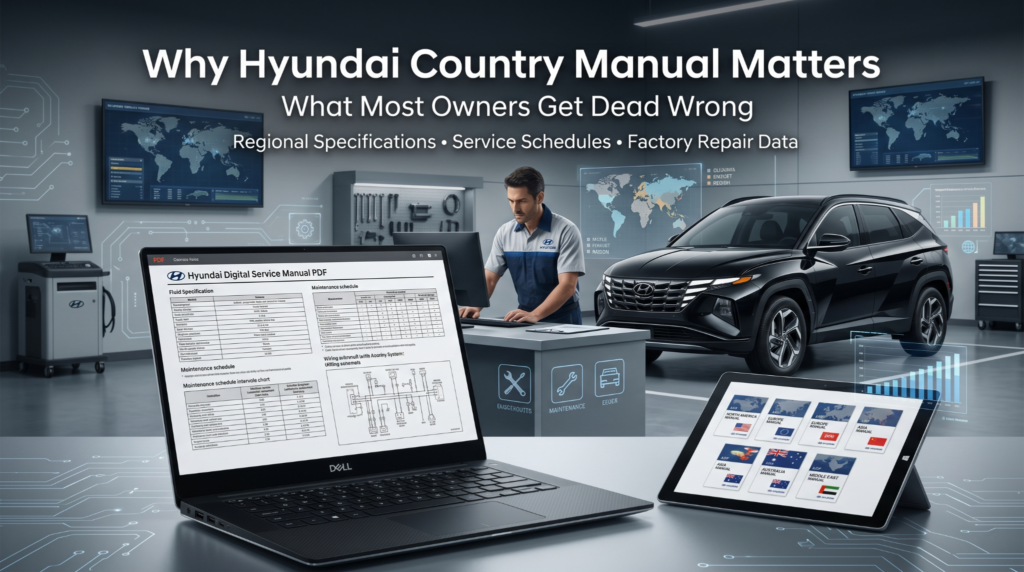
Using the wrong Hyundai manual for your country is a silent mistake that quietly voids warranties, causes incorrect repairs, and leaves technicians working off specs that simply do not apply. This is not a minor oversight. It is a real risk that affects maintenance outcomes every single day.
Always use the manual matched to your vehicle's specific country of origin and registration to ensure accuracy. Region-specific guides provide vital fluid specs, emissions data, and safety instructions. Using the correct schedule preserves your warranty, optimizes efficiency, and extends your car's lifespan.
This article covers why the Hyundai country manual matters, what varies across regions, how to identify the right one, and what can go wrong when owners get it wrong.
Why Hyundai Country Manual Matters: The Regional Gap Nobody Talks About
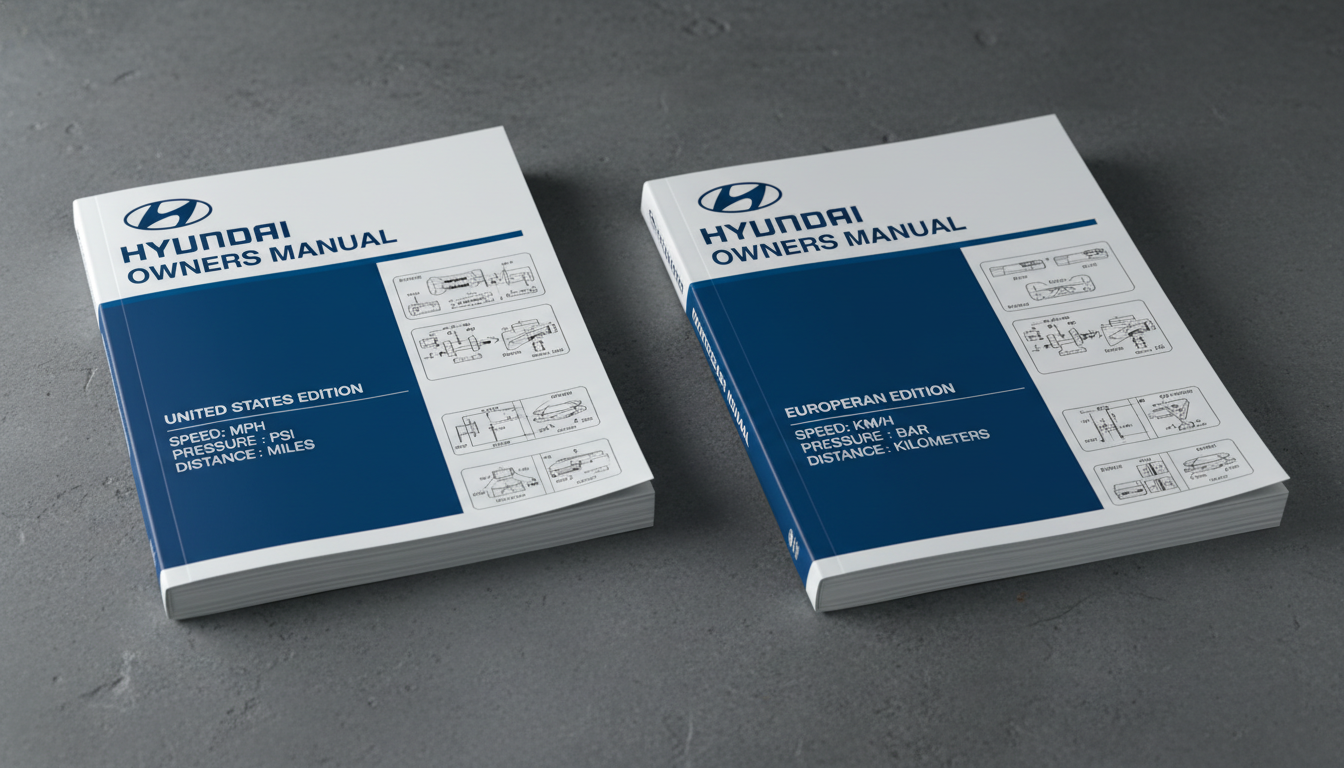
Alter Tag: Two different regional Hyundai manuals side by side showing measurement differences.
Most Hyundai owners assume any manual for their model and year will do the job. That assumption is costing people real money. Country-specific manuals contain technical data, safety standards, and maintenance schedules tailored to local regulations, road conditions, and emission requirements.
The gap between a US-market manual and a UK or Middle East version of the same model is not cosmetic. Fluid grades, tire pressure references, fuel octane guidance, and even warranty terms differ by country. Getting this wrong puts your repair accuracy and your warranty at risk.
Your Region Decides the Specs, Not the Model Name
Many owners search for a manual by model name alone and assume the content will match. It rarely does completely.
Hyundai produces vehicles for dozens of markets, and each regional variant reflects local engineering requirements. A Tucson sold in India runs different emissions controls than one sold in Germany. A Santa Fe in Australia carries different towing specs than one built for the US market.
Here is a breakdown of what changes by region:
|
Manual Element |
US Market |
EU Market |
Middle East |
India/ASEAN |
|
Fuel octane rating |
87 AKI minimum |
95 RON minimum |
95 RON |
91 RON |
|
Tire pressure unit |
PSI |
kPa / bar |
kPa |
kPa |
|
Emission system notes |
EPA/CARB |
Euro 6 |
Local standards |
BS6 |
|
Warranty period |
5yr/60,000mi |
Varies by country |
Varies |
3yr/100,000km |
|
Safety system coverage |
US federal FMVSS |
Euro NCAP aligned |
Regional |
AIS/Indian standards |
These are not minor editorial differences. They reflect real engineering and legal variation that affects how the vehicle should be maintained and repaired.
For owners working through repairs or service, understanding the Hyundai manual compatibility guide is the right starting point before choosing any documentation.
What a Wrong Manual Actually Does to Your Vehicle
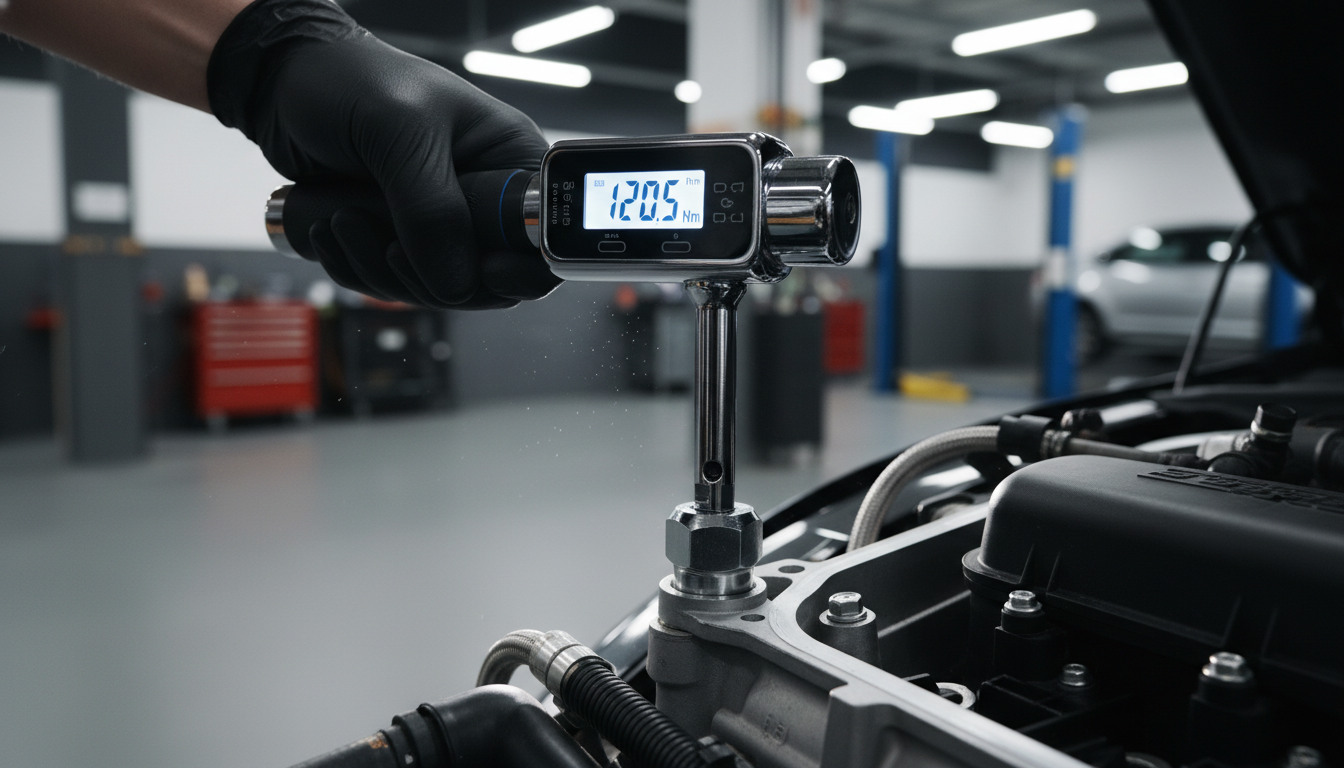
Alter Tag: A mechanic using a torque wrench on a vehicle engine in a professional shop.
Using a manual from the wrong country means every spec inside it is potentially misaligned with your actual vehicle. The results tend to show up over time rather than immediately.
The most common damage paths include:
- Using incorrect oil viscosity grades recommended for a different climate or fuel system
- Misreading service intervals based on km vs. mile conversions that were never adjusted for local conditions
- Following the wrong fuel octane guidance, which affects ignition timing and engine health
- Missing country-specific recall or technical service bulletin notes that only appear in the regional edition
Technicians working from a mismatched manual may complete a service job that looks correct on paper but uses the wrong torque spec or fluid grade for that specific market build.
This is a problem that compounds. One misaligned service leads to another. Over time, the vehicle's actual condition diverges from what its service history suggests.
Warranty Terms Are Written for a Specific Country
Alter Tag: Hyundai warranty documentation and car keys on a desk.
This point matters more than most owners realize. Hyundai's warranty documentation is region-specific, and the country of registration determines what coverage you are entitled to.
In the US, Hyundai provides a 5-year/60,000-mile bumper-to-bumper warranty and a 10-year/100,000-mile powertrain warranty. In Bahrain and other Middle East markets, wear-and-tear components are covered differently, with a separate cap of 120,000 km or 6 years on specific parts.
Key warranty facts that differ by country:
- Powertrain coverage duration varies between markets
- Plug-in hybrid battery coverage in California runs 10 years / 150,000 miles under TZEV rules, which does not apply globally
- Emission system warranty obligations follow local regulatory frameworks, not a single global standard
- Skipping scheduled maintenance listed in your country manual can void coverage for affected components
If your documentation does not reflect the country of registration, you may be following maintenance rules that do not align with the warranty terms your dealer will honor.
How Country Affects Manual Format and Language Variants
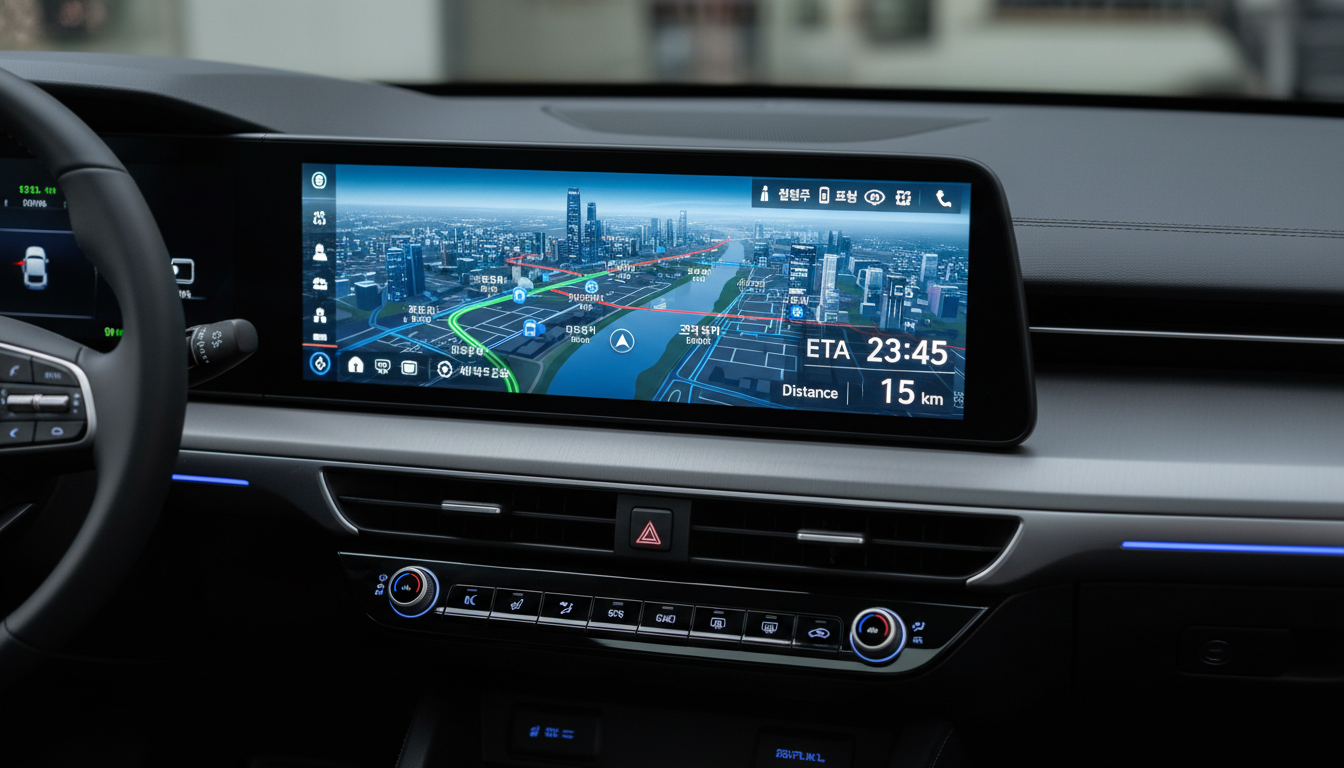
Alter Tag: Modern Hyundai infotainment screen showing regional navigation.
Beyond the technical specs, country-specific Hyundai manuals are structured differently to reflect local communication standards, legal disclosure requirements, and even measurement systems.
Owners often notice:
- Metric vs. imperial measurements used throughout the document
- Left-hand vs. right-hand drive vehicle diagrams for markets like the UK, Australia, and Japan
- Different infotainment and connectivity sections based on region-locked features
- Locally required legal disclosures included in warranty and safety sections
- Roadside assistance numbers and regional contact information that only apply in the country of issue
Understanding the difference between an owner handbook and a workshop manual is also important here. An owner manual gives operational and safety guidance. A service manual provides in-depth coverage of repairs and diagnostics.
These serve different purposes, and both can be region-specific. For a detailed look at this distinction, the differences between the owner and workshop manuals are worth reviewing before deciding which document you actually need.
How to Find the Right Hyundai Country Manual
Getting the correct manual is not complicated once you know what to look for. The key identifiers are built into the vehicle itself.
Steps to identify your correct regional manual:
- Locate your VIN on the dashboard or driver's door jamb
- The VIN's first three characters (World Manufacturer Identifier) identify the assembly plant and market origin
- Check whether your vehicle was built for your current country of registration or for a different market
- Visit Hyundai's official regional owners portal for your market, or use a VIN-based documentation lookup to pull the correct edition
VIN-based lookup tools make this process faster and more reliable than searching by model name alone. For a direct walkthrough of how this works, see the vehicle documentation lookup process, which covers exactly what you need to locate the right edition.
For owners who also need wiring documentation, regional electrical diagrams follow the same country-specific structure. Pulling the correct version is just as important for electrical repairs. The process for Hyundai wiring resources by vehicle follows the same VIN-first approach.
When Genuine OEM Documentation Is the Only Safe Option

Alter Tag: Technician using a tablet to view official Hyundai OEM service diagrams.
Third-party manuals and aftermarket guides vary significantly in accuracy. Some are compiled from older regional editions and may mix specifications from multiple markets without flagging the differences.
Genuine OEM manuals are written by the same engineers who designed the vehicle. They carry the exact specifications, torque values, fluid grades, and maintenance intervals that Hyundai validates for each country of sale.
Using an OEM document eliminates guesswork on:
- Correct fluid specifications by model year and regional fuel standard
- Exact torque specs for engine, drivetrain, and chassis components
- Accurate diagnostic trouble code (DTC) references aligned to the regional ECU calibration
- Safety system procedures required for airbag, ABS, and ADAS components in your market
For owners who want reliable access to the correct documentation, knowing OEM repair information access options is the most direct path to verified, market-specific content.
Conclusion
The Hyundai country manual matters because your vehicle was engineered, certified, and warranted for a specific market.
Using documentation from another country poses real risks to your maintenance accuracy, warranty standing, and repair outcomes.
The fix is straightforward: match your manual to your market, use your VIN to confirm the right edition, and prioritize OEM sources over generic alternatives. That one step protects every service decision that follows.
Common Asked Questions About Why Hyundai Country Manual Matters
Can I use a US Hyundai owner manual for a vehicle registered in Australia?
Not reliably. Australian-market Hyundai vehicles are right-hand drive, use metric measurements, and follow different emission and safety standards than US-spec models.
The fluid grades, tire pressure units, and even infotainment system notes may not match. Using a US manual for an Australian vehicle poses a real risk of incorrect servicing.
Always use the manual for the country of registration, not just the model name or year. VIN-based lookup tools help quickly confirm the correct regional edition.
Does the Hyundai warranty change based on what country the car was sold in?
Yes, significantly. Hyundai's warranty terms are set by regional distributors and national regulations. The US market offers a 5-year/60,000-mile bumper-to-bumper warranty and a 10-year/100,000-mile powertrain guarantee.
Middle East markets have different coverage caps for wear-and-tear components. European warranty terms vary by country.
Plug-in hybrid battery coverage in California is subject to unique rules under TZEV regulations that do not apply globally. Always read the warranty section of your country-specific manual to know what is and is not covered.
Why does my Hyundai manual say "not available in your region" on the official website?
Hyundai's official owners' manual portal is geo-restricted, meaning it only serves the manual edition matched to the country from which you are accessing the site. If you are outside that market, the portal may block access or redirect you.
This is intentional. The restriction exists because showing the wrong regional edition to an owner could result in incorrect maintenance. Using a VIN-based lookup service bypasses this restriction and pulls the correct edition for your specific vehicle and market.
Do Hyundai Creta manuals differ between India and Middle East versions?
Yes, they do. The Creta sold in India is tuned to BS6 emission standards and uses different fuel system components than the GCC-market version. Maintenance intervals, recommended oil grades, and even the safety system configurations can differ between the two editions.
The Indian-market manual also includes specific guidance for monsoon and high-dust driving conditions.
Using the Middle East edition on an India-spec Creta could result in incorrect service intervals and mismatched fluid recommendations, which can affect long-term engine health.
What happens if a mechanic uses the wrong country manual for a Hyundai repair?
The most common outcomes are incorrect fastener torque settings, incorrect fluid grades used in the engine or transmission, and service intervals that do not align with the vehicle's actual maintenance requirements.
In some cases, using incorrect specifications can trigger ECU-related issues or accelerate component wear.
If the repair is documented under a warranty claim and the work was done using out-of-region specifications, the dealer may have grounds to dispute coverage. Always confirm the manual edition before any significant service or repair work begins.