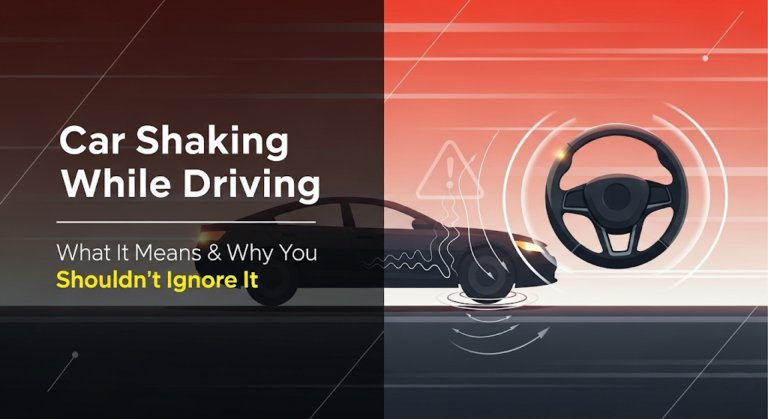
If your car is shaking while driving, it’s more than just a minor annoyance. Vibrations coming through the steering wheel, floor, or even the seats can signal anything from uneven tires to severe mechanical issues. Left unchecked, this problem can quickly turn from uncomfortable to dangerous.
The good news is that most causes of a car shaking while driving can be identified and fixed once you know what to look for. Whether it’s something as simple as wheel alignment or a more complex engine-related issue, acting early can save you time, money, and safety risks.
In this article, we’ll break down the most common reasons your car might be shaking while driving, explain the warning signs you should watch for, and share what to do next. By the end, you’ll know how to recognize the problem and decide whether it’s something you can handle yourself or needs a mechanic’s attention.
Car Shaking While Driving: Understanding the Causes and What to Do Next

Noticing your car shaking while driving can feel alarming, and for good reason. Vibrations often indicate underlying issues that can impact comfort, performance, and even safety. Some causes are minor and easy to address, while others demand urgent repairs. This section breaks down the most common reasons for a car shaking while driving, how to recognize them, and what steps to take.
Uneven or Worn Tires
One of the most frequent causes of a car shaking while driving is related to the tires. When tires are out of balance or unevenly worn, they create vibrations that become more noticeable at certain speeds.
- Tire imbalance happens when the weight isn’t distributed evenly around the wheel.
- Worn tread patterns can cause poor road grip, leading to shuddering.
- Flat spots from long periods of parking in one position can also create shaking.
If you feel vibrations starting around 50–60 mph, it’s often a sign of tire-related issues. Getting your tires balanced, rotated, or replaced usually fixes the problem.
Wheel Alignment Problems

When the wheels are misaligned, your car will pull to one side, and you may notice shaking while driving at higher speeds. Misalignment often results from hitting potholes, curbs, or regular wear and tear.
- Uneven tread wear is a telltale sign of alignment issues.
- Steering may feel “off-center” or less responsive.
- Left uncorrected, misalignment increases stress on suspension components.
A professional alignment service can quickly restore balance and prevent further damage.
Brake System Issues
If your car shakes while driving, primarily when braking, the issue may lie with the braking system. Warped brake rotors are a common culprit, causing noticeable vibrations when you press the pedal.
- Warped rotors develop from overheating or heavy use.
- Worn brake pads can create uneven contact with the rotor.
- Loose calipers may cause pulsation during braking.
Brakes are a safety-critical system, so if you feel shaking linked to braking, it’s best to have them inspected immediately.
Suspension and Steering Components
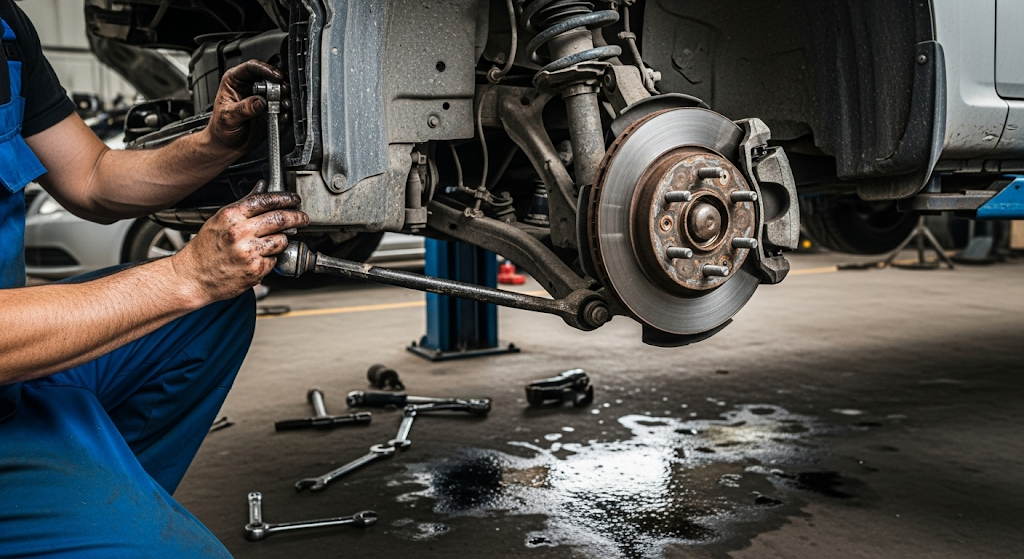
Your car shaking while driving could also come from worn or damaged suspension parts. Since suspension links the wheels to the frame, any weakness here can amplify vibrations.
- Worn ball joints or tie rods make steering unstable.
- Nasty shocks or struts can’t absorb road bumps effectively.
- Bushings that are cracked or broken allow excess movement.
These issues often cause shaking at both low and high speeds, sometimes accompanied by clunking sounds over bumps.
Engine or Transmission Issues
Not all vibrations come from the wheels. Sometimes, the engine or transmission is responsible for the shaking. If the car shudders while idling and continues when accelerating, this might be the root cause.
- Worn engine mounts allow too much movement.
- Misfiring cylinders create uneven power delivery.
- Transmission problems can cause shuddering during gear changes.
Unlike tire or brake fixes, engine-related vibrations usually require professional diagnosis.
When the Steering Wheel Shakes the Most
Pay attention to where the shaking shows up. If the steering wheel is shaking while driving, it often points to wheel balance, alignment, or brake rotor issues. On the other hand, if the entire car vibrates, the cause may be deeper in the suspension or drivetrain.
Noticing whether the shake happens during acceleration, braking, or constant cruising is also key to narrowing down the problem.
Quick Checks You Can Do Yourself
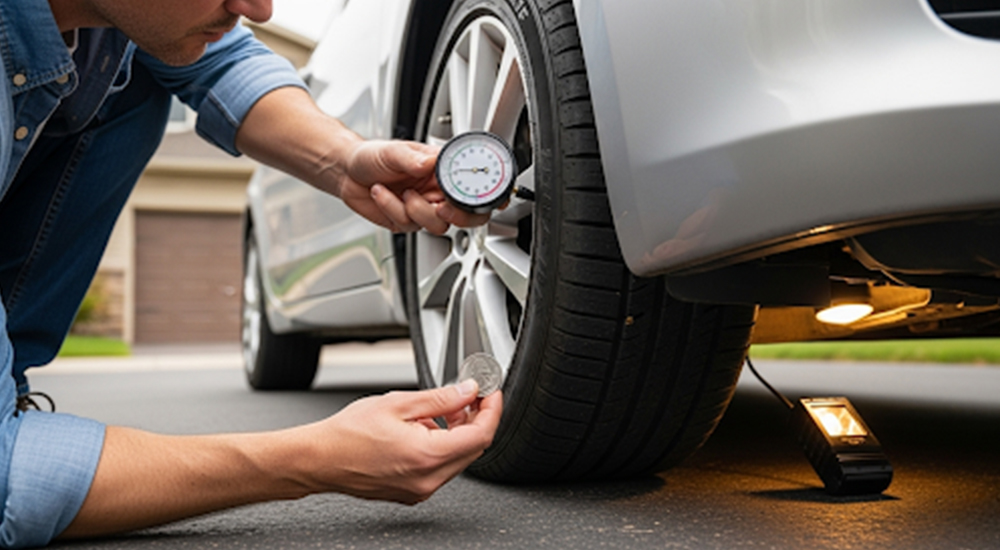
While some causes need a mechanic, you can do a few quick checks at home to identify possible reasons your car shakes while driving:
- Inspect tire tread depth with a coin test.
- Check tire pressure with a gauge.
- Look under the car for any loose suspension parts.
- Test if the shaking changes when braking or accelerating.
These steps won’t replace professional care, but they can give you an idea of where the problem lies.
When to See a Mechanic
If your car shaking while driving continues after checking tires and pressure, it’s time to seek help. Constant vibrations may indicate deeper issues, such as suspension wear or drivetrain imbalance. Ignoring these symptoms risks turning a minor fix into a costly repair.
A mechanic can perform detailed inspections of the tires, wheels, brakes, and engine mounts to identify the exact problem.
Conclusion
A car shaking while driving isn’t just inconvenient, it’s a warning sign. From tires and brakes to suspension and engines, vibrations can stem from a variety of issues. Acting early can prevent minor problems from escalating into dangerous ones. By understanding the common causes and knowing when to seek professional help, you’ll keep your car safe, stable, and road-ready.
FAQs About Car Shaking While Driving
Shaking that appears only at higher speeds often points to tire balance or wheel-related issues. The faster the wheels spin, the more noticeable even a slight imbalance becomes.
Yes, leaving the issue unchecked can create extra stress on suspension, steering, and even engine mounts. Over time, this can lead to more expensive repairs.
Short distances might not cause immediate harm, but it’s not safe to ignore vibrations. The problem could worsen quickly, especially if brakes or suspension are involved.
This typically indicates drivetrain or engine issues, such as worn mounts or axle problems. Unlike tire-related vibrations, these tend to appear only under load.
Yes, rough pavement can mimic the feeling of a car shaking, but the vibrations should stop once the road smooths out. If the shaking continues, the issue lies with the vehicle itself.
Cold weather can cause temporary flat spots on tires, making the car feel shaky until the tires warm up. In hot conditions, overinflated tires may also lead to vibrations.