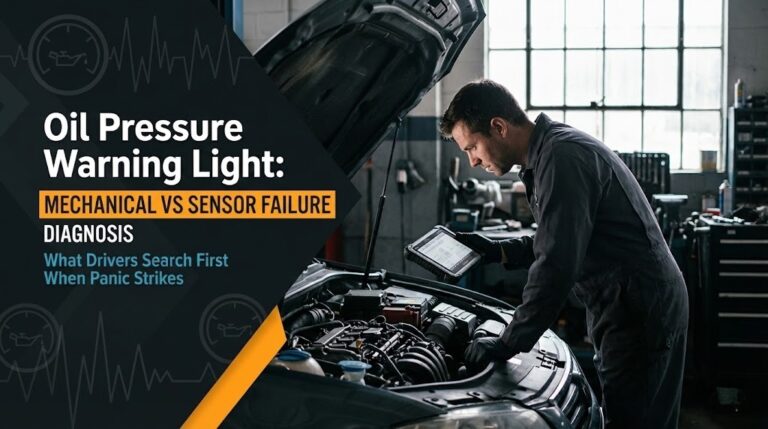
The phrase “Oil Pressure Warning Light Mechanical Sensor Failure Diagnosis” instantly signals danger. A glowing warning light can mean catastrophic mechanical damage or a faulty sensor misreading, and ignoring it risks severe engine failure.
Use a structured diagnostic approach to separate mechanical faults from sensor errors before costly damage occurs. This method ensures you act on real problems instead of chasing false alarms.
In this article, we’ll explore the most common causes of oil pressure light activation, explain how mechanical vs. sensor-based diagnosis works, and provide practical steps to identify the actual fault quickly.
Oil Pressure Warning Light: Mechanical vs Sensor Failure Diagnosis: How to Tell the Difference Before It’s Too Late
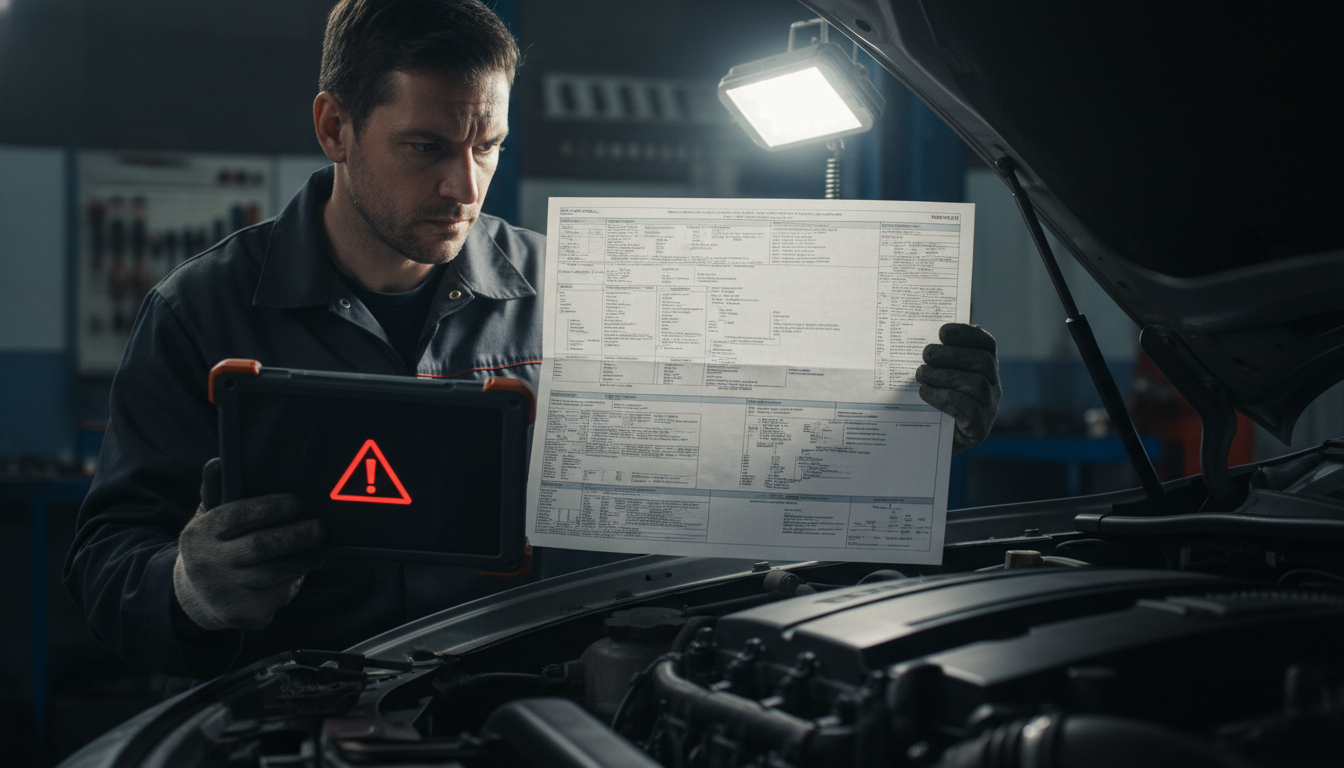
When the oil pressure warning light comes on, drivers often face confusion. Is it a mechanical failure in the engine, or a sensor failure that is giving false alarms? This section explains how a manual-based diagnostic flowchart helps separate the two, why it matters, and how you can act quickly to prevent costly damage.
Why Oil Pressure Warning Lights Trigger Suddenly
Search queries show drivers often ask, “Why does my oil pressure light come on?” This section explains the most common triggers and how a mechanical vs sensor failure diagnosis pinpoints them.
For example, guides like the 2001 Ford Laser Sedan LXi Workshop Service and Repair Manual highlight how clogged filters or worn pumps can cause genuine mechanical drops in oil pressure.
- Low oil levels: Insufficient lubrication causes real mechanical pressure drops.
- Faulty oil pressure sensor: Incorrect readings trigger false warnings.
- Clogged oil filter: Restricts flow, leading to pressure loss.
- Worn oil pump: Mechanical wear reduces pressure output.
Mechanical Failure Signs You Can’t Ignore

Search data highlights “symptoms of mechanical oil pressure failure.” This section outlines clear warning signs indicating mechanical issues rather than sensor faults.
The 1997 Ford Laser Sedan LXi Workshop Repair Manual explains how persistent low readings and engine noise are strong indicators of mechanical failure.
- Engine noise: Knocking or ticking indicates poor lubrication.
- Overheating: Lack of oil pressure increases friction and heat.
- Metal shavings in oil: Evidence of internal wear.
- Persistent low readings: Even after sensor replacement.
Sensor Failure Clues That Mislead Drivers
Many searches ask “how to tell if the oil pressure sensor is bad.” This section explains how sensor faults mimic mechanical problems.
The 2010 Ford Mondeo XR5 Turbo Hatch (MB) Workshop Service and Repair Manual notes that intermittent warning lights with no engine noise often point to sensor failure.
- Intermittent warning light: Flickers on and off without other symptoms.
- Normal oil levels: Dipstick shows proper lubrication.
- No engine noise: Light on, but engine runs smoothly.
- Error codes: Diagnostic scan reveals sensor malfunction.
Diagnostic Flowchart Steps for Clarity

Search queries reveal demand for “oil pressure diagnostic flowchart.” This section explains how structured steps separate mechanical vs sensor faults.
The 2009 Ford Mondeo XR5 Turbo Hatch (MB) Workshop Service and Repair Manual provides a clear flowchart for testing sensors and confirming mechanical pressure.
- Check oil level → If low, refill and monitor.
- Inspect wiring → Loose connections often mimic faults.
- Test sensor output → Use a multimeter or OBD-II scanner.
- Measure mechanical pressure → Attach gauge to confirm actual oil pressure.
- Compare results → If the gauge shows normal pressure, sensor failure is likely.
Preventing Future Oil Pressure Warning Light Issues
Search queries show drivers want “how to stop oil pressure light coming back.” Preventive measures guided by manuals are key.
The 2004 Ford Focus ST170 Workshop Service and Repair Manual emphasizes routine oil changes and sensor inspections to prevent recurring warning lights.
- Change oil and filter regularly.
- Inspect wiring harnesses for wear.
- Replace sensors at manufacturer intervals.
- Monitor oil pump health during primary services.
Conclusion
The Oil Pressure Warning Light: Mechanical vs Sensor Failure Diagnosis is more than a technical process, it’s a safeguard against engine damage. By following a structured flowchart, you can separate mechanical faults from sensor errors, saving time and money. The takeaway is clear: act quickly, trust diagnostic steps, and protect your engine’s life.
Frequently Asked Questions
Yes, mechanical wear in the oil pump or clogged passages can reduce pressure while the sensor still reports normal values.
It provides a step-by-step process, starting with oil-level checks and ending with pressure-gauge readings, ensuring clarity between mechanical and sensor faults.
Absolutely. If the sensor is malfunctioning, the warning light may remain illuminated despite fresh oil and proper levels.
Not always. While flickering lights often indicate sensor issues, loose wiring or unstable voltage can also trigger intermittent warnings.
Yes, insufficient oil pressure can lead to rapid wear of bearings, camshafts, and pistons, causing severe engine damage if not addressed.