VIN manual lookup, accurate repair instructions model-specific guide, and precise troubleshooting are not just technical terms. They represent the key difference between fixing your car right and making a mistake that could cost thousands. Ignoring them can lead to using the wrong parts, following misleading diagrams, or misinterpreting crucial repair data. When it comes to modern vehicles, minor errors can have serious consequences, causing many car owners to become frustrated and spend more time and money than necessary.
The answer lies in using VIN-specific manuals that match your vehicle perfectly.These manuals provide step-by-step, accurate repair instructions based on your car’s exact VIN, giving you a model-specific guide that ensures precise troubleshooting and reliable maintenance every time.
In the following sections, this article explores what makes VIN-specific manuals essential, how to perform a VIN manual lookup correctly, how to identify truly accurate repair instructions and why model-specific guides have become the gold standard for modern vehicle troubleshooting.
VIN-Specific Manuals: How Exact Data Turns Guesswork into Confident Repair

VIN-Specific Manuals have become an essential part of modern automotive care because no two vehicles are truly identical. Even cars from the same model year can differ in parts, systems, and diagnostic codes.
These manuals rely on your Vehicle Identification Number (VIN) to deliver accurate repair instructions, a model-specific guide, and precise troubleshooting steps designed only for your car. This section explains how these manuals work, why they matter, and how they transform complicated repairs into organized, step-by-step success stories.
What a VIN Manual Lookup Really Reveals
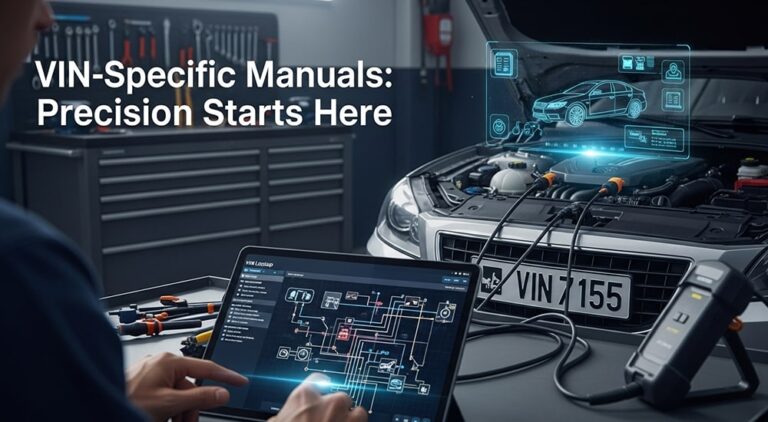
A VIN manual lookup does more than show basic specifications. It connects you to the exact technical data, service intervals, wiring diagrams, and component locations unique to your vehicle. Each VIN is like a fingerprint. When you input it into a trusted lookup tool, you unlock the manual created specifically for that vehicle configuration.
- It identifies exact engine and transmission combinations.
- It lists manufacturer-recommended torque settings and fluids.
- It prevents confusion between trims or regional variants.
Many car owners mistakenly rely on general guides that apply to a broad category. A VIN manual lookup removes that uncertainty, ensuring every step you take aligns with your specific make and build.
Why Accurate Repair Instructions Save More Than Time
Using accurate repair instructions eliminates the risk of improper part installation or incomplete diagnostics. Generic repair information might look similar, but even one mismatched bolt specification or electrical connector can lead to a costly outcome.
Professionals rely on verified instructions because modern systems, which involve integrated electronics and safety features, can fail without the correct procedure. For example, following incorrect airbag reset steps or mismatched software updates could lead to warning lights or malfunctioning sensors. With precise directions from VIN-specific manuals, these risks disappear.
Accuracy in repair work also builds trust. It allows technicians to document repairs correctly and assure customers that their vehicles meet manufacturer standards. For individual car owners, it brings peace of mind knowing every fix is exact.
The Power of a Model-Specific Guide in Every Step
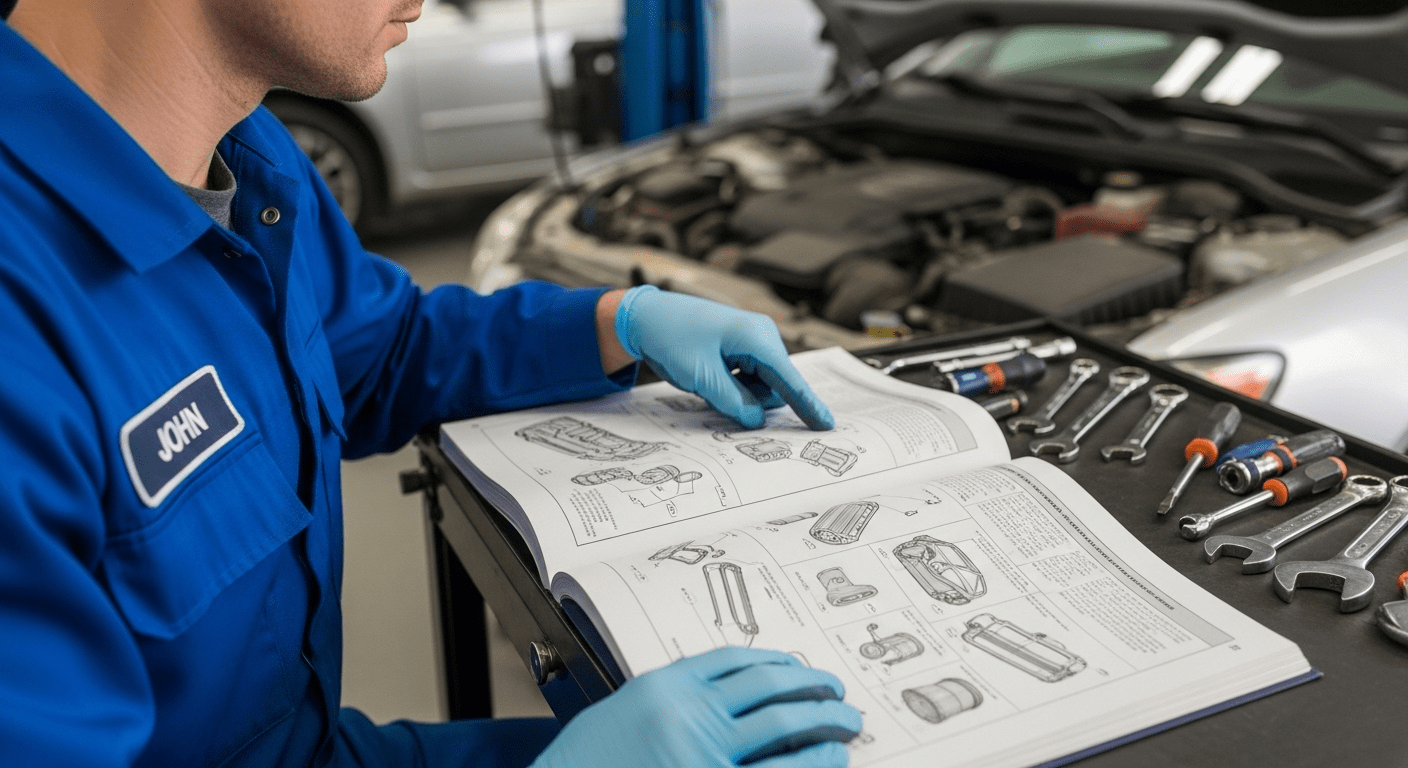
A model-specific guide isn’t just a manual; it’s the roadmap to your car’s unique build. Every model year introduces subtle design changes that can affect repair and maintenance. A slight adjustment in wiring harness placement or a redesigned oil filter mount might sound minor, but it can drastically alter a repair process.
Model-specific guides provide:
- Step-by-step visuals that match your car’s design.
- Updates reflecting service bulletins or manufacturer revisions.
- Access to torque specs, part numbers, and safety protocols verified for your VIN.
Relying on a model-specific guide is especially valuable for older cars. Over time, generic repair data may disappear or be replaced by new versions. The VIN-based document keeps those details preserved. It’s the difference between improvising and performing a repair that lasts.
How Precise Troubleshooting Prevents Costly Mistakes
When problems appear, precise troubleshooting helps determine whether you fix an issue or create new ones. Guesswork often leads to replacing the wrong part, wasting both money and time. A VIN-based diagnostic path allows you to identify the root cause, not just the symptom.
For instance, an engine misfire could stem from multiple systems: ignition, fuel delivery, or software. VIN-specific troubleshooting instructions provide the sequence of tests specific to that powertrain. Instead of jumping between possible causes, you follow a structured path to the confirmed fault.
Precision also extends to electronic systems. Modern cars rely heavily on communication networks like CAN and LIN. VIN-specific manuals show exact pin configurations, color codes, and voltages for every wire in your setup. Without that, even experienced mechanics can spend hours chasing phantom issues.
Step-by-Step: Using a VIN Manual Lookup Correctly

Performing a VIN manual lookup requires accuracy from the start. Entering one wrong digit can connect you to an entirely different vehicle. Here’s the right way to do it:
- Locate your VIN on the dashboard near the windshield or on the driver-side door frame.
- Verify the number on your registration or insurance card matches the one on the vehicle.
- Use an authorized lookup platform or the manufacturer’s database.
- Double-check the decoded data: year, engine, and transmission details.
- Download or view the manual explicitly assigned to that VIN.
Once you have the document, review its table of contents. This layout ensures you know exactly where to find repair sections, wiring diagrams, or maintenance intervals. Bookmark pages that apply to frequently serviced systems like brakes, fluids, and filters.
Common Issues Avoided Through VIN-Specific Manuals
The difference between a general guide and a VIN-specific one becomes apparent in the results. Below are frequent issues avoided when following the proper documentation:
- Incorrect parts: Prevent ordering the wrong components by verifying part numbers that match your VIN.
- Mismatched procedures: Avoid following steps for a different trim or year that may not align with your vehicle’s design.
- Safety oversights: Access manufacturer safety updates or service recalls included in VIN-specific manuals.
- Software confusion: Ensure proper calibration of sensors and modules after repairs using VIN-based reprogramming instructions.
Each of these benefits leads to smoother, faster, and safer repairs.
When VIN Manuals Outperform Traditional Service Guides

Traditional repair books often summarize instructions for an entire generation of vehicles. While they serve as helpful references, they can’t match the precision of VIN-targeted documentation. The shift toward digital, VIN-linked manuals reflects how complex cars have become.
These manuals are constantly updated with manufacturer data, technical service bulletins, and safety notices. That makes them living documents rather than static PDFs. Every technician and informed car owner can access the same verified procedures used at authorized service centers.
Another advantage is adaptability. Some platforms allow online searches within the manual, so you can quickly find details about systems like adaptive cruise control, hybrid batteries, or emission sensors.
Final Thoughts: Why Precision Defines Modern Automotive Repair
In today’s world of smart vehicles and intricate systems, repair accuracy is no longer optional. VIN-Specific Manuals bridge the gap between complicated engineering and user-friendly repair knowledge. They empower both professional technicians and everyday car owners to perform maintenance safely and effectively.
The combination of VIN manual lookup, accurate repair instructions, model-specific guide, and precise troubleshooting forms a system that protects your time, your investment, and your safety.
By choosing VIN-specific information, you move from uncertainty to clarity and from assumption to confidence. Every repair becomes predictable, traceable, and correct the way it should be.
Frequently Asked Questions
Yes, a VIN manual lookup can still provide details for older cars if the manufacturer’s database retains those records. In some cases, third-party platforms maintain archived manuals that include factory specifications, wiring layouts, and mechanical data.
However, for vehicles built before standard VIN formatting was introduced in 1981, results may be limited, and owners might need to request data directly from the automaker or verified restoration sources.
This happens because production changes occur throughout a model year. A model-specific guide based on your VIN reflects those mid-year adjustments, which could include updated parts, revised torque specifications, or system recalibrations.
Generic manuals typically don’t capture those updates, so even minor discrepancies in steps or component layouts can appear between different sources.
Absolutely. While they’re designed for professional technicians, many DIY enthusiasts rely on accurate repair instructions from these manuals to avoid costly mistakes.
The clear procedures, diagrams, and verified specifications make home repairs safer and more reliable, especially for electrical and diagnostic work that used to be out of reach for non-professionals.
Most manufacturers refresh VIN-specific manuals when new service bulletins, recall notices, or technical updates are released. Digital platforms often integrate these revisions automatically, ensuring that anyone accessing the manual gets the most recent and relevant information.
This ongoing update process is what makes them far superior to printed manuals that quickly become outdated.
If a lookup yields no results, it usually indicates that the VIN was entered incorrectly or that the source platform doesn’t have direct access to the manufacturer’s database. Recheck the VIN for accuracy and confirm the lookup source is authorized.
In rare cases, recently manufactured vehicles might not yet have their data uploaded, requiring a short waiting period before results appear.
Yes. Modern VIN-specific manuals include in-depth coverage of electronic control units, hybrid systems, and advanced sensors. They provide precise troubleshooting steps to test high-voltage components safely and explain how to isolate electrical faults without damaging sensitive circuits.
This level of accuracy is essential for maintaining newer technologies and preventing dangerous errors.