
Car Overheating: What It Really Means and Why Ignoring It Can Cost You Thousands

A car overheating on the road can turn a standard drive into a stressful mess. One second, everything feels fine, then suddenly the temperature gauge shoots up or steam starts curling out from under the hood. The thought of being stranded, burning up an engine, or facing a repair bill you can’t afford hits fast.
Here’s the silver lining: most overheating problems can be spotted early and often repaired before they destroy your engine. Something as simple as low coolant, a stuck thermostat, or a failing radiator fan can be the culprit. Quick action can mean the difference between topping up fluids and replacing an engine.
This guide pulls together the top questions drivers ask about car overheating. You’ll see the real reasons it happens, the warning signs to watch for, what to do in the moment, and how much repairs actually cost. On top of that, we’ll look at practical ways to keep your car from reaching that danger zone again.
Car Overheating: Why It Happens, What It Costs, and How to Stop It Early
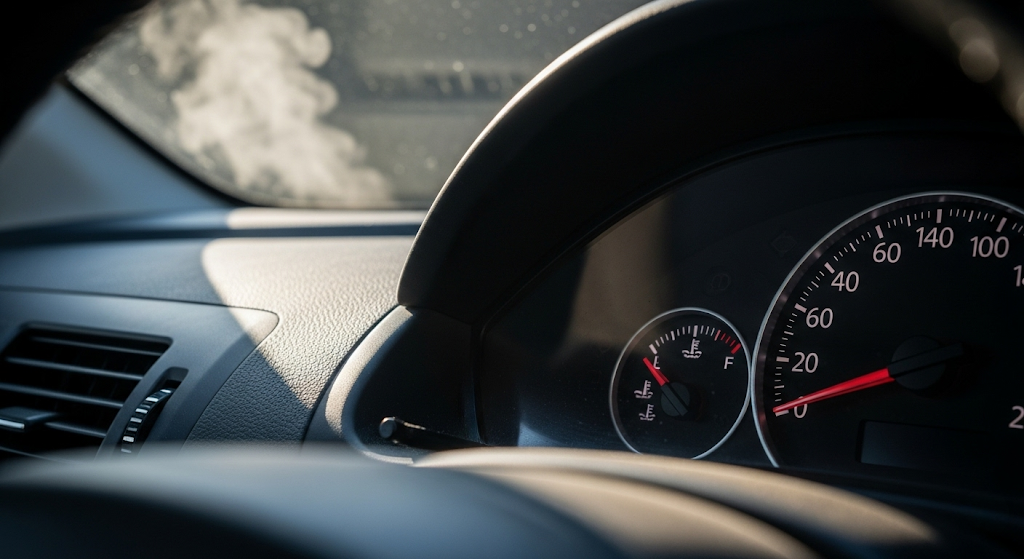
A car overheating can be a warning shot or a final blow, depending on how soon you catch it. Sometimes it’s a slow build, other times it hits fast with no apparent reason. The goal here is to break down why it happens, what it actually means for your vehicle, and how you can respond before things spiral into expensive territory.
This section will cover common overheating causes, how to recognize the early signs, what to do in the moment, and the typical cost of repairs. It’s built around real questions drivers are searching for when they’re stuck on the side of the road—or trying to avoid ever being in that spot again.
Why Is My Car Overheating Even with the Coolant Full?
One of the most confusing things for drivers is seeing their car overheating even though the coolant reservoir looks fine. However, just because coolant is present doesn’t mean the system is functioning correctly.
Here’s why this can happen:
- Thermostat stuck closed: This small part regulates coolant flow. If it gets stuck, coolant won’t circulate, even if it’s full.
- Air pockets: Trapped air inside the system prevents coolant from moving correctly.
- Water pump failure: The pump may not be circulating coolant at all, even if there’s plenty of it in the system.
- Blocked radiator or hoses: Sediment buildup or internal clogs can stop the coolant from reaching where it needs to go.
- Radiator fan not working: If the fan fails, heat can’t dissipate effectively, especially at low speeds or while idling.
- Important note: If your coolant is full but boiling, that’s a major red flag. Don’t just top it off and keep driving. Something deeper is wrong.
What Are the Most Common Reasons a Car Overheats?

It’s not always about coolant. Some of the most frequent car overheating issues have to do with failing components that slowly wear out or go unnoticed.
The most common causes include:
- Low coolant (even a small leak can lead to big problems)
- Cracked radiator or leaking radiator cap
- Broken or loose serpentine belt (which drives the water pump)
- Malfunctioning thermostat
- Cooling fan not engaging.
- Clogged radiator or heater core
- Head gasket failure (severe, and often the most expensive)
From my own experience, a radiator fan motor failure can sneak up on you. I had no idea until my temperature gauge hit the red zone in stop-and-go traffic. Highway speeds masked the issue altogether.
How to Tell If Your Car Is About to Overheat
Knowing the early signs is key. Catching the issue before things boil over (literally) can save you thousands.
Watch for these warning signs:
- The temperature gauge is climbing above normal
- Steam or a sweet smell coming from under the hood
- Reduced engine performance or sluggish acceleration
- Warning lights on your dash (coolant, engine temp, check engine)
- The heater is suddenly blowing cold air, even with the heat on
Tip: If you smell something sweet while driving, it might be leaking coolant. Pull over and check your levels when the engine cools.
What Should You Do If Your Car Starts Overheating While Driving?
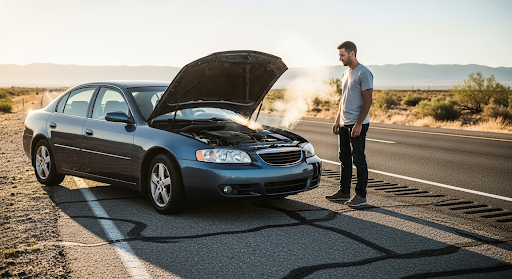
If your temperature gauge spikes or you see steam, don’t keep driving unless you’re in immediate danger where pulling over isn’t an option.
Here’s a quick step-by-step if your car is overheating on the road:
- Turn off the AC and turn on the heater full blast. It sounds backwards, but this helps pull heat from the engine.
- Find a safe place to stop immediately.
- Turn off the engine, but leave the key in accessory mode to allow the fan to run (if it’s working).
- Do not open the radiator cap while the engine is hot. Wait at least 30 minutes.
- Check coolant levels only after the engine has cooled completely.
- If low, add coolant or water if necessary (this is a short-term fix).
- Call a tow truck or mechanic if the problem isn’t apparent or quickly resolved.
Driving on an overheating engine, even for a few miles, can lead to cracked heads, warped components, or complete engine failure.
How Much Does It Cost to Fix an Overheating Car?
Repair costs vary depending on the root problem. Some fixes are quick and cheap. Others can total more than the value of the car.
Here’s a rough breakdown of car overheating repair costs:
- Coolant flush: $100–$150
- Thermostat replacement: $150–$300
- Radiator fan repair: $300–$600
- Water pump replacement: $400–$750
- Radiator replacement: $500–$900
- Head gasket repair: $1,200–$2,000+
Prices depend heavily on your car’s make, model, and how fast you caught the issue. Ignoring early signs can easily turn a $150 fix into a $1,500 headache.
Why Does My Car Only Overheat in Traffic or When Idling?
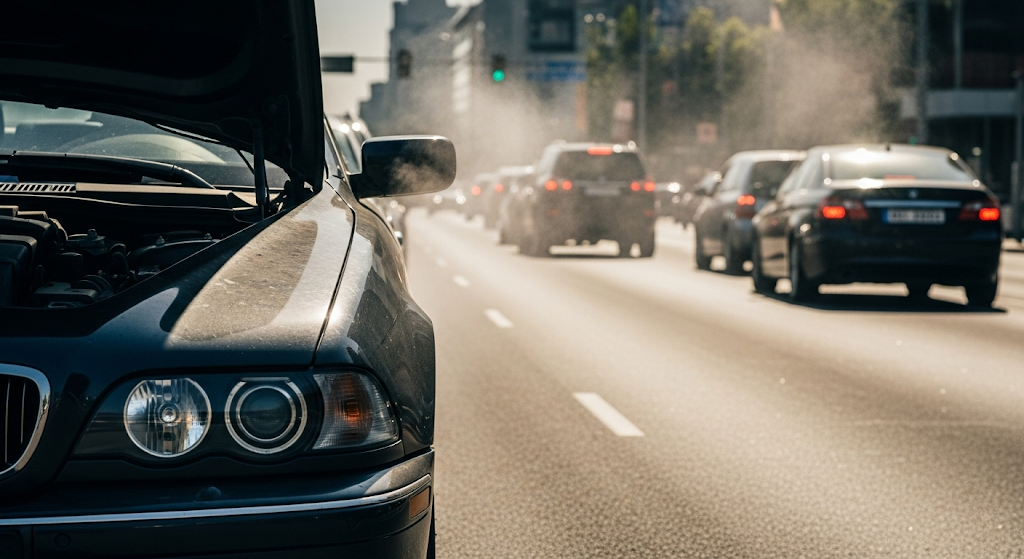
This issue arises frequently in forums and repair shops. If your car overheats while stopped but cools off when driving, that’s a strong clue the radiator fan isn’t working correctly.
When you’re moving, air naturally flows through the radiator to help cool things down. But at idle or low speeds, the fan is the only thing pushing air. If it’s not engaging, the heat builds quickly.
Other possible reasons:
- Low coolant level reduces circulation at idle
- Clogged radiator blocking airflow.
- AC compressor strain (especially on older vehicles in hot weather)
This is one of those problems that can feel random until it becomes constant. If it only happens on hot days or in stop-and-go traffic, get the fan motor and related fuses checked first.
Can Overheating Damage the Engine Permanently?
Short answer: Yes.
The longer your car runs hot, the more likely it is that internal components are getting warped, cracked, or destroyed. The engine block, cylinder head, and head gasket are all at risk.
Potential long-term damage includes:
- Warped cylinder head
- Cracked engine block
- Blown head gasket
- Oil contamination from coolant leaks
- Total engine failure
That’s why acting fast matters. Every extra minute your car runs hot is a gamble.
How to Prevent Your Car from Overheating Again
The best way to avoid car overheating issues is to stay proactive. Regular maintenance makes a huge difference, especially before long drives or summer weather.
Here’s what helps most:
- Check coolant levels monthly and before road trips
- Flush the cooling system every 30,000 to 50,000 miles.
- Replace the thermostat and radiator cap during primary services.
- Inspect belts and hoses for cracks or wear
- Monitor your temperature gauge while driving.
- Keep an eye out for leaks on your driveway or garage floor.
If your vehicle has a history of overheating, consider carrying extra coolant and a pair of gloves in your trunk. It’s a small move that can save you enormous stress later.
Conclusion
A car overheating isn’t just a mechanical issue. It’s a chain reaction that can lead to engine failure, towing bills, and repair costs that pile up fast. However, with proper awareness and a quick response, it’s often preventable.
From warning signs to what to do on the road, you now have the key info most drivers don’t learn until it’s too late. Taking care of your cooling system isn’t complicated—it’s just often overlooked.
Don’t wait for that temperature needle to hit red. Pay attention, act early, and keep your engine cool.
FAQs About Car Overheating
While it’s not the most common cause, yes, it can. A failing alternator may not provide enough power to keep the radiator fan or water pump running properly, especially in modern vehicles with electric-driven cooling systems. If the fan isn’t spinning or the pump slows down, overheating can happen.
It can under certain conditions. The AC system adds extra load to the engine and often increases under-hood temperatures, especially in hot weather or during long idling periods. If your cooling system is already struggling, running the AC can push it over the edge.
In most cases, you shouldn’t drive at all once the gauge spikes. Even a few minutes can cause internal damage. If you absolutely must move the vehicle (like getting to the side of the road), limit it to under 1 minute, and turn the heater on full blast to help reduce engine heat. Then shut it down as soon as you safely can.
Not always. If the overheating was mild and caught early, you might get away with just topping off coolant or replacing a thermostat. But if the engine ran hot for too long, there’s a strong chance some components got damaged, even if symptoms don’t show up immediately.
Yes, especially if they haven’t had recent cooling system maintenance. Parts like radiators, hoses, and thermostats wear out over time, and build-up inside the system can block proper flow. Keeping up with maintenance is even more critical as a car ages.
Only as a temporary emergency fix. Water doesn’t have the same boiling point or protective additives as a proper coolant, so it won’t work well long-term. If you’re stuck, adding water can help you get off the road, but flush and refill with genuine coolant as soon as possible.