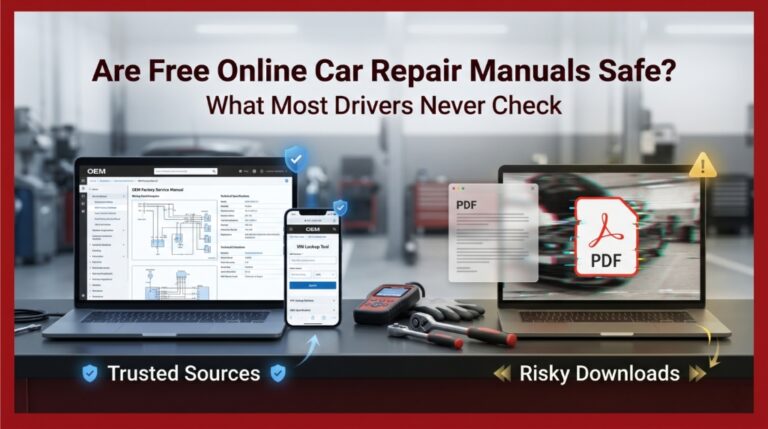
Free online car repair manuals are everywhere, and most drivers grab the first safe-looking PDF they find. But using the wrong online source for car repair data has sent more than a few DIYers straight to a mechanic with a bigger problem than they started with.
The source origin determines the safety of free online car repair manuals. Manufacturer databases, OEM portals, and library-authenticated platforms like Chilton or Mitchell1 are reliable. Conversely, unauthorized PDFs often harbor malware and lack vehicle-specific accuracy, posing significant safety risks.
This article walks through how to identify trustworthy sources, what red flags expose a dangerous manual, how to verify one in under five minutes, and which free platforms professionals actually trust.
Are Free Online Car Repair Manuals Safe: The Truth Behind the Download
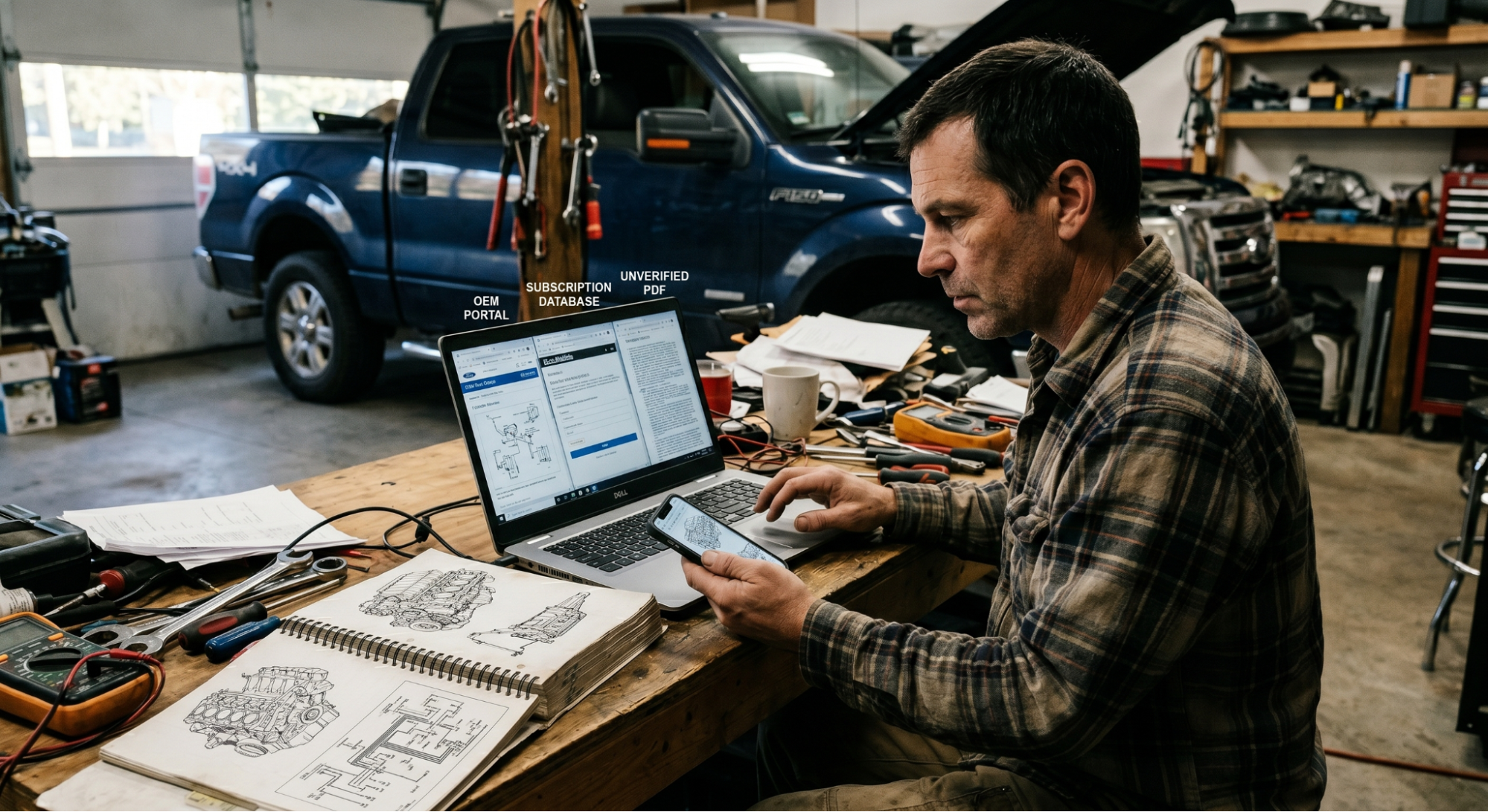
Safety depends on the source. Many online PDFs are outdated, unverified scans. Distinguishing between reliable manuals and risky files is essential before starting any repair.
Where Free Car Repair Manuals Actually Come From
Most drivers assume all free car repair manuals online come from the same pool. They don’t. The source determines the accuracy, and the accuracy determines the safety of every repair you make.
Free online car repair manuals fall into three distinct categories:
- OEM-authorized portals: Manufacturer-sanctioned platforms like Ford’s owner portal, GM’s ACDelco TDS, or Toyota’s TIS that publish safe, version-controlled data.
- Third-party aggregators: Platforms like Mitchell1, Chilton (via library access), and ALLDATA DIY that compile verified, regularly updated OEM repair data.
- Community-uploaded PDFs: Files shared through forums, Google Drive, Scribd, or torrent sites with no version control, no accuracy checks, and often infected with malware.
The first two categories are generally safe to use. The third is where most repair errors, and even safety incidents, originate.
Red Flags That Expose an Unsafe Manual

Spotting a bad manual before using it takes less time than a single incorrect repair. Most low-quality online repair manuals share the same warning signs once you know what to look for.
Watch for these red flags:
- No model year or version date printed on the cover or in the header
- Generic torque specs that don’t align with your specific trim level or engine code
- Blurry or missing wiring diagrams, especially for electrical and sensor systems
- No OEM part number references tied to specific components
- Copied branding from publishers like Chilton or Haynes, but hosted on an unfamiliar domain
- No TSB (Technical Service Bulletin) references or recall integration
If a manual hits more than two of these, discard it. For example, if you’re investigating something as critical as an oil pressure warning light, an incorrect spec in a poor-quality manual can deepen the problem rather than fix it.
Safe vs. Unsafe: A Source Comparison Table
|
Source Type |
Accuracy |
Cost |
Updated Regularly |
Safety Rating |
|
OEM Manufacturer Portal |
Very High |
Free / Paid |
Yes |
✅ High |
|
ALLDATA DIY |
High |
Paid |
Yes |
✅ High |
|
Mitchell1 DIY |
High |
Paid |
Yes |
✅ High |
|
Chilton (via Library) |
High |
Free |
Periodic |
✅ High |
|
Scribd / File-sharing Sites |
Low |
Free |
Rarely |
❌ Low |
|
Forum-shared PDF Scans |
Very Low |
Free |
Never |
❌ Very Low |
This table reflects what professional technicians already know. The cheapest source is almost never the safest one for car repair.
How to Verify a Free Manual Before Using It
Verification takes under five minutes. Most drivers skip this step entirely, and that’s exactly where avoidable mistakes happen. A quick check protects your car and your safety.
Follow these steps before using any free online car repair manual:
- Cross-check your VIN: Confirm the manual’s listed model year, engine code, and trim match your vehicle’s VIN plate exactly.
- Check the publication date: A 2010 manual applied to a 2022 model is dangerous. Procedures change between generations.
- Look for OEM part numbers: Legitimate manuals reference specific part numbers. Vague component descriptions are a red flag.
- Compare torque specs with a second source: Always verify structural torque values before tightening any critical fastener.
- Check electrical diagrams match your trim: Wiring layouts vary by trim, region, and production date.
This matters especially when working on safety-sensitive systems. If you’re chasing down a battery warning light issue, an incorrect wiring diagram can introduce new faults into your charging circuit rather than resolving the original one.
What OEM Manuals Cover That Free PDFs Miss
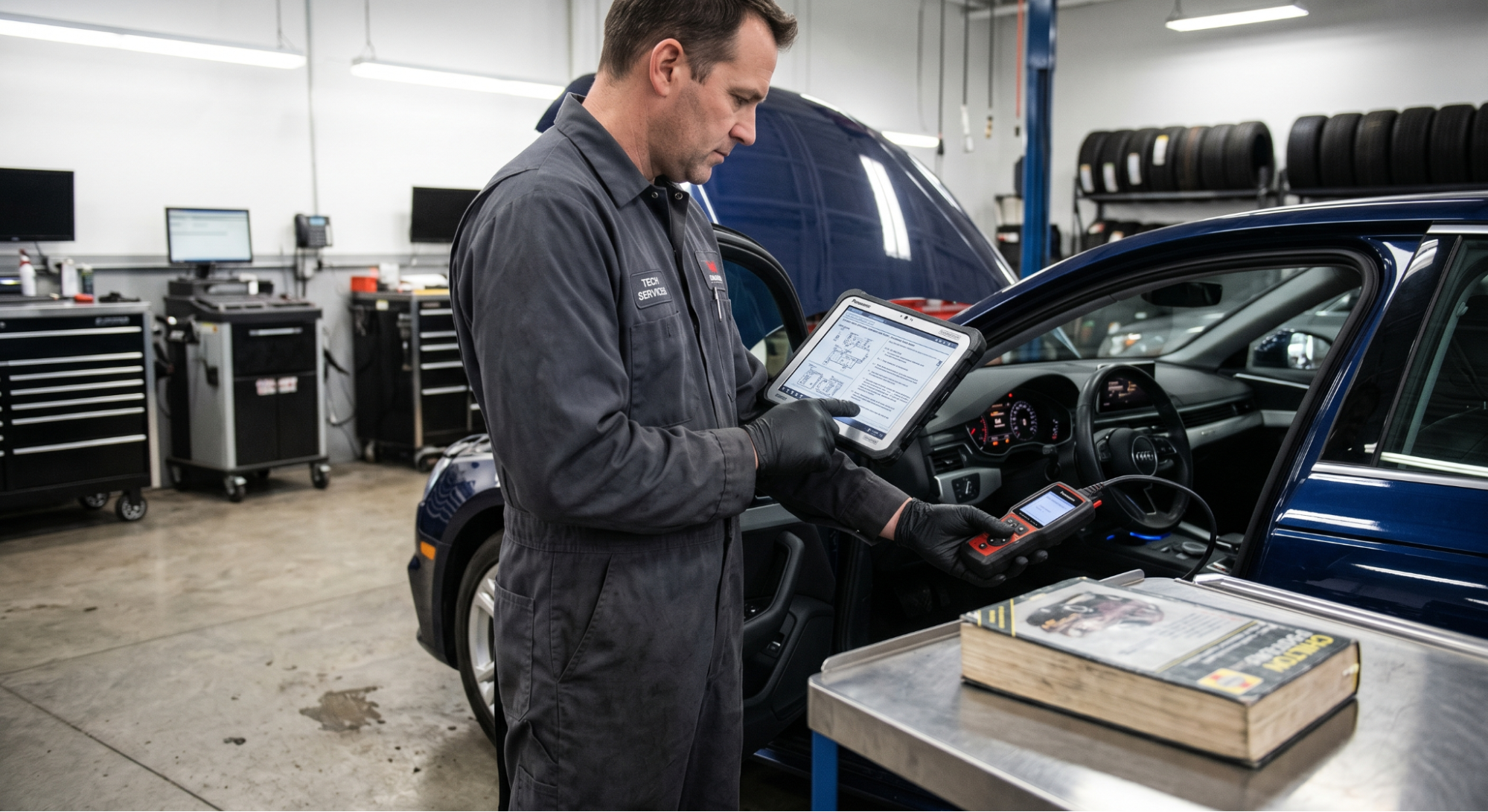
This is the gap most DIYers don’t discover until something goes wrong. OEM manuals contain proprietary procedures that generic PDFs simply do not include, and in modern vehicles, that missing data causes real problems.
OEM manuals include:
- TSBs (Technical Service Bulletins): Manufacturer-issued corrections for known production defects or updated repair procedures
- Recall integration: Current recall status and corrected repair steps that supersede original instructions
- Special tool codes: Specific tool part numbers required for procedures that cannot be safely completed without them
- Calibration sequences: Required post-repair calibrations for ADAS, airbag systems, transmission control modules, and more
Traction control system repairs are a good example of where this gap matters. Traction control light diagnostics using OEM manuals require calibration steps and sensor thresholds that are simply absent from free community PDFs.
The same applies to transmission repairs. If you’re working through a transmission warning light fault, updated solenoid procedures tied to TSBs can differ significantly from what an older scanned manual describes.
Platforms That Actually Offer Safe Free Manuals
Several platforms offer free, accurate, regularly maintained car repair manuals online. The key is knowing which ones professionals trust and why.
Verified free and low-cost options:
- NHTSA.gov: Official U.S. government recall and TSB database. Always free. Always current.
- Manufacturer owner portals: Many automakers now offer free digital access for registered owners (Ford, GM, Subaru, and others).
- Chilton via public library: Many U.S. libraries offer free access with a library card login. This is one of the most overlooked safe free resources available.
- Mitchell1 DIY: Paid subscription, but one of the most accurate and complete databases for both older and newer vehicles.
- iATN (International Automotive Technicians Network): Free registration gives access to peer-reviewed repair data used by working technicians.
When working on airbag-related faults, using one of these verified platforms alongside a proper diagnostic flowchart, like the approach outlined in this airbag light on diagnostic guide, ensures you’re working with accurate and current safety-system data rather than guesswork from a dated PDF.
Conclusion
Free online car repair manuals are not inherently dangerous. The risk sits squarely in the source, not the format. OEM portals, library-access Chilton, and verified platforms like Mitchell1 consistently deliver accurate, safe data that professionals rely on.
Before any repair, spend five minutes verifying the source. Check the publication date. Confirm the VIN match. Look for TSB references. Those small steps separate a clean repair from a costly comeback job. The online car repair manual you choose is only as good as the database it comes from.
Frequently Asked Questions
Some do, but rarely with the calibration sequences and post-repair reset procedures those systems require. For any safety-critical repair, always cross-reference with an OEM-authorized source or a manufacturer portal to confirm the procedure is current and complete.
Not reliably. Scribd hosts user-uploaded documents with no version control or accuracy review. The manual you download may be an outdated scan, may be missing critical updates, and the site has a documented history of malware in uploaded files.
In most cases, yes, but the accuracy of the repair procedure matters for passing inspection. Using an incorrect or outdated free manual can lead to an improper repair and result in a failed emissions test or a rejected inspection.
Not always. Some OEMs charge a subscription fee for full technical access. However, many manufacturers now offer limited free access to registered owners, particularly for owner’s manuals, maintenance schedules, and basic diagnostic procedures.
Verified platforms like Chilton, through library systems, update periodically, usually annually. OEM portals update in real time as TSBs and recalls are issued. Community-uploaded PDFs are almost never updated once they’re posted, which is one of the core reasons they carry a higher risk.