A vehicle air conditioner can stop cooling for many different reasons, and the visible symptom does not always identify the failed component. When searching for how to repair a car air conditioner, many people assume the solution is simply adding refrigerant, replacing the compressor, or changing a filter.
In reality, the AC system depends on multiple connected components working together, including the compressor, condenser, evaporator, expansion device, blower system, sensors, wiring, and climate controls.
NXT Motors approaches car air conditioner repair by first identifying the actual failure point, then matching the repair process to vehicle-specific workshop information. This prevents unnecessary parts replacement and helps determine whether the issue is a simple maintenance problem or a repair requiring specialized equipment.
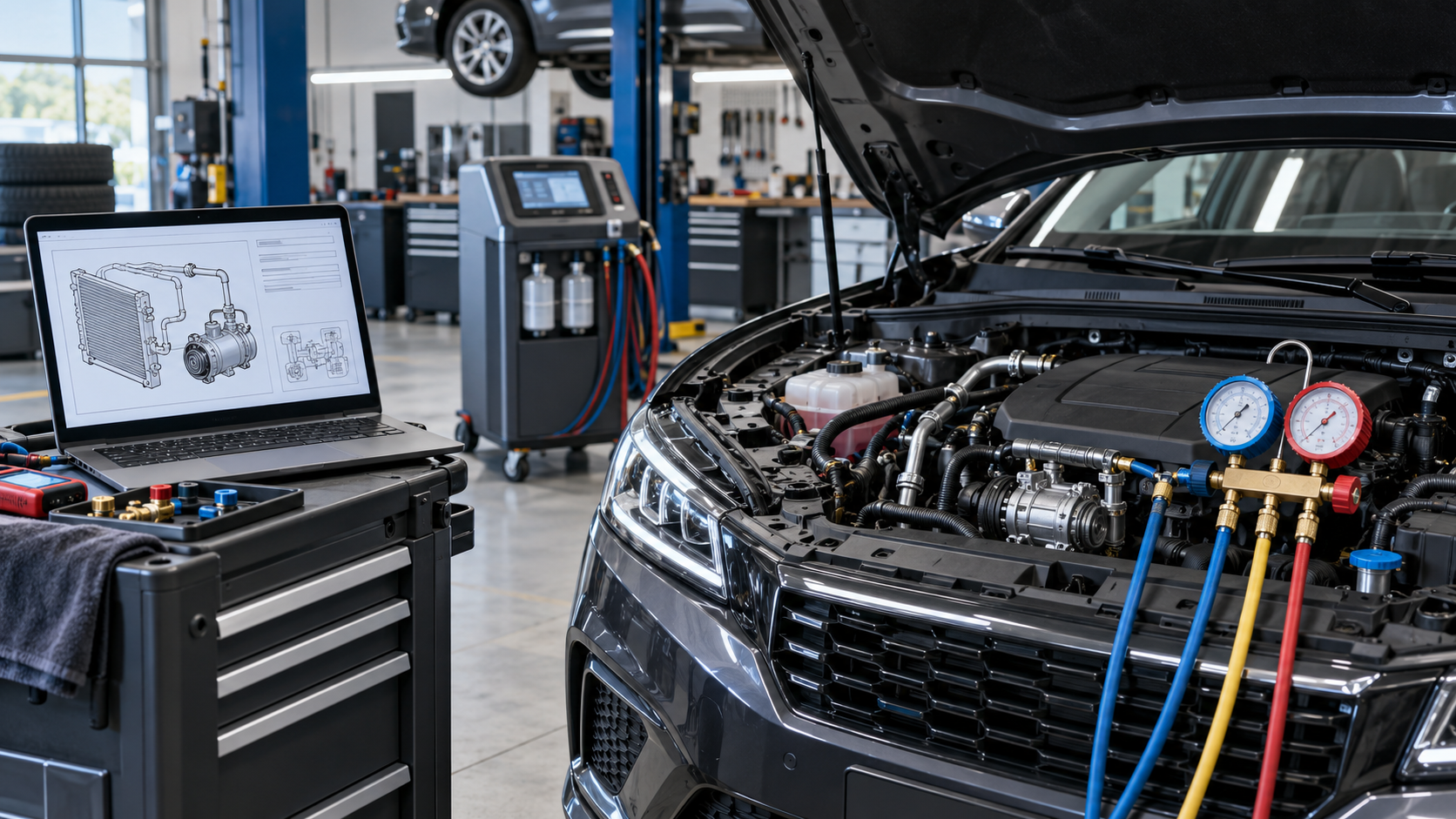
Before replacing AC components or opening the system, find the correct workshop repair manual for your vehicle to verify AC system layout, refrigerant information, component locations, electrical diagrams, and repair procedures.
Key Takeaway
- Start any car air conditioner repair with a diagnosis, because poor cooling can come from refrigerant issues, airflow problems, electrical faults, compressor concerns, or control-system failures.
- A vehicle AC system is interconnected, so replacing one component without confirming the cause can waste money and may not solve the cooling problem.
- The correct workshop manual helps identify car air conditioner repair procedures, refrigerant specifications, electrical diagrams, component locations, and system-specific testing information.
- Common AC problems include weak airflow, warm air from vents, unusual compressor behavior, leaks, electrical faults, and incorrect system pressure.
- Some automotive AC repairs require specialized equipment, such as recovery machines, pressure gauges, leak detectors, and refrigerant-handling tools.
How to Repair Car Air Conditioner: Find the Actual Fault First
A car air conditioner repair should begin with understanding the symptom. A system blowing warm air may have a completely different cause from a system that cools poorly, loses airflow, makes noise, or works only intermittently.
The first step is separating the symptom from the cause.
Car Air Conditioner Diagnosis Matrix
AC Symptom | Possible Cause | Initial Check | Workshop Manual Value |
Warm air from vents | Low refrigerant, compressor issue, electrical fault, sensor problem | Confirm compressor operation and system behavior | AC circuit layout, component location, specifications |
Weak airflow | Cabin filter restriction, blower issue, evaporator restriction | Check airflow strength and blower operation | HVAC component access and removal procedure |
AC works sometimes | Electrical connection, relay, sensor, clutch/control issue | Observe when failure occurs | Wiring diagrams and control logic |
Strange AC noise | Compressor, pulley, bearing, fan, internal component issue | Identify noise location and timing | Component identification and replacement steps |
Water leaking inside cabin | Drain issue or evaporator-related problem | Check drain path and HVAC housing | HVAC housing layout |
AC stops after driving | Pressure issue, overheating, electrical protection | Check operating conditions | System control strategy |
The first car air conditioner repair decision is identifying whether the problem is related to cooling production, airflow delivery, electrical control, or mechanical operation.
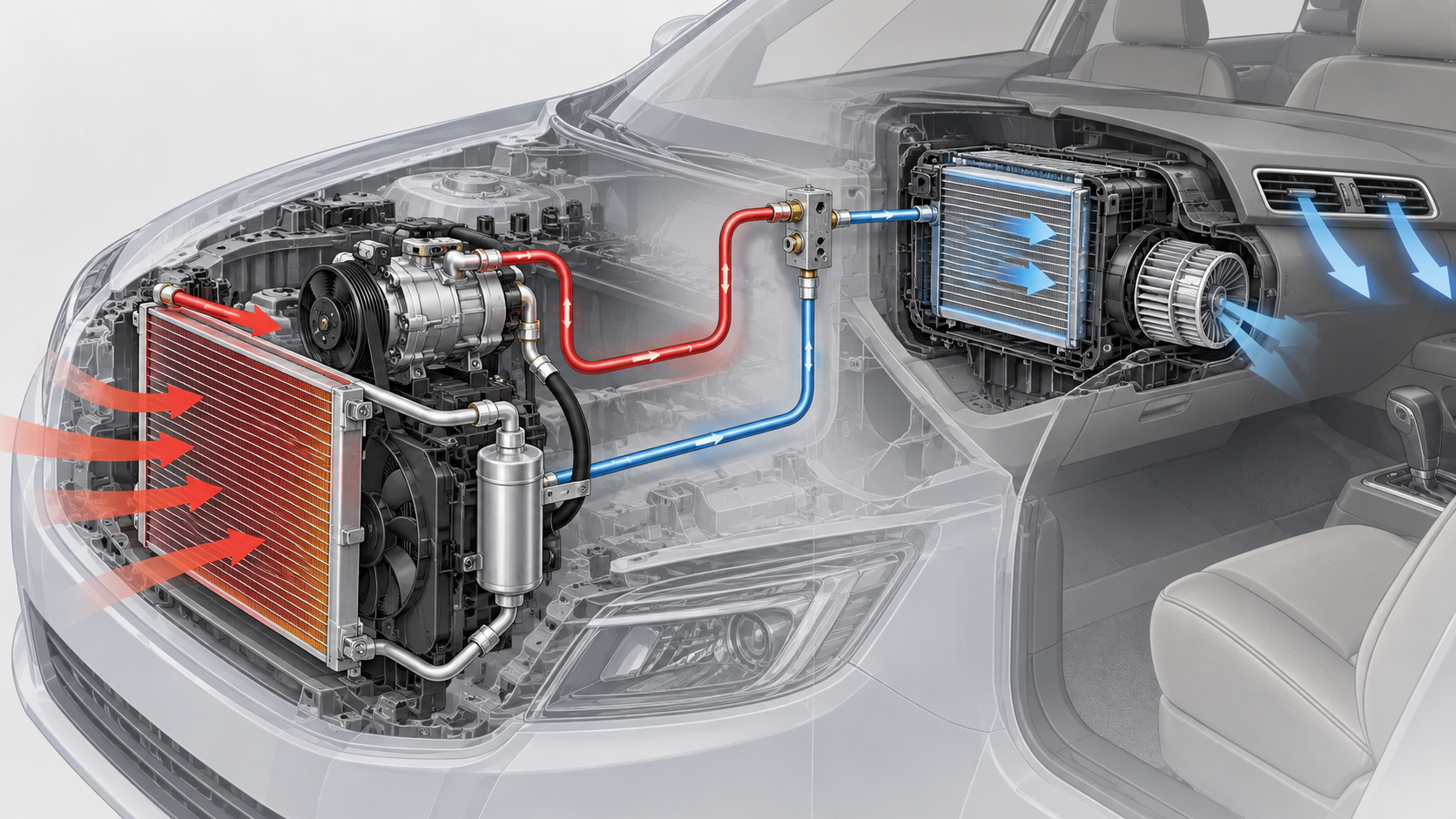
A properly functioning AC system requires several stages:
- The compressor circulates refrigerant.
- The condenser removes heat.
- The expansion device controls refrigerant flow.
- The evaporator absorbs heat from cabin air.
- The blower moves cooled air into the cabin.
- Sensors and controls maintain system operation.
A failure anywhere in this chain can create similar symptoms.
NXT Motors workshop manuals are useful because AC layouts differ significantly between vehicles. Compressor location, refrigerant specifications, electrical control strategies, and diagnostic procedures can change by model year and engine configuration.
Common Car Air Conditioner Problems
Car air conditioner repair starts with identifying the failed system area. The most common AC problems usually involve refrigerant, airflow, electrical control, compressor operation, or component wear.
Low Refrigerant and AC Leak Problems
Low refrigerant is one of the most common causes of weak cooling, but refrigerant doesn't normally disappear without a reason. If the system is low, a leak may be somewhere in the AC circuit.
A car air conditioner repair involving refrigerant loss requires finding the leak source before recharging the system. Adding refrigerant without fixing the leak may temporarily improve cooling but won't solve the underlying problem.
Possible leak areas include:
- AC hoses and connections.
- Condenser damage.
- Compressor seals.
- Evaporator leaks.
- O-rings and service connections.
The workshop manual helps identify AC component locations and system specifications before inspection begins.
NXT Motors keeps refrigerant-related diagnosis separate from general AC operation because the right repair depends on locating the failed component, not simply restoring refrigerant quantity.
Compressor-Related Car Air Conditioner Repair
The compressor is one of the most important components in a vehicle AC system. It circulates refrigerant through the system, allowing heat transfer between the cabin and outside environment.
A compressor-related car air conditioner repair may involve:
- Compressor clutch problems.
- Electrical power issues.
- Internal compressor wear.
- Incorrect lubrication.
- Refrigerant pressure problems.
However, replacing a compressor should not be the first assumption when AC cooling fails.
A compressor may appear inactive because of another issue, such as:
- Failed relay.
- Sensor input problem.
- Low-pressure protection.
- Wiring fault.
- Control module command issue.
NXT Motors workshop manuals help identify whether the compressor is mechanically driven, electronically controlled, clutch-operated, or managed through another vehicle system.
Weak Airflow From Car Air Conditioner
Not every AC problem is a cooling problem. A vehicle may produce cold air but fail to move enough air into the cabin.
A weak airflow car air conditioner repair may involve:
- Restricted cabin air filter.
- Blower motor problem.
- Blower resistor/module failure.
- HVAC door problem.
- Evaporator restriction.
The diagnostic approach changes depending on whether the air is cold but weak, or strong but warm.
Workshop information helps identify HVAC component locations because accessing blower motors, filters, and evaporator areas varies greatly between vehicles.
NXT Motors repair approach focuses on confirming the failed system area before recommending component replacement.
Car Air Conditioner Electrical Diagnosis
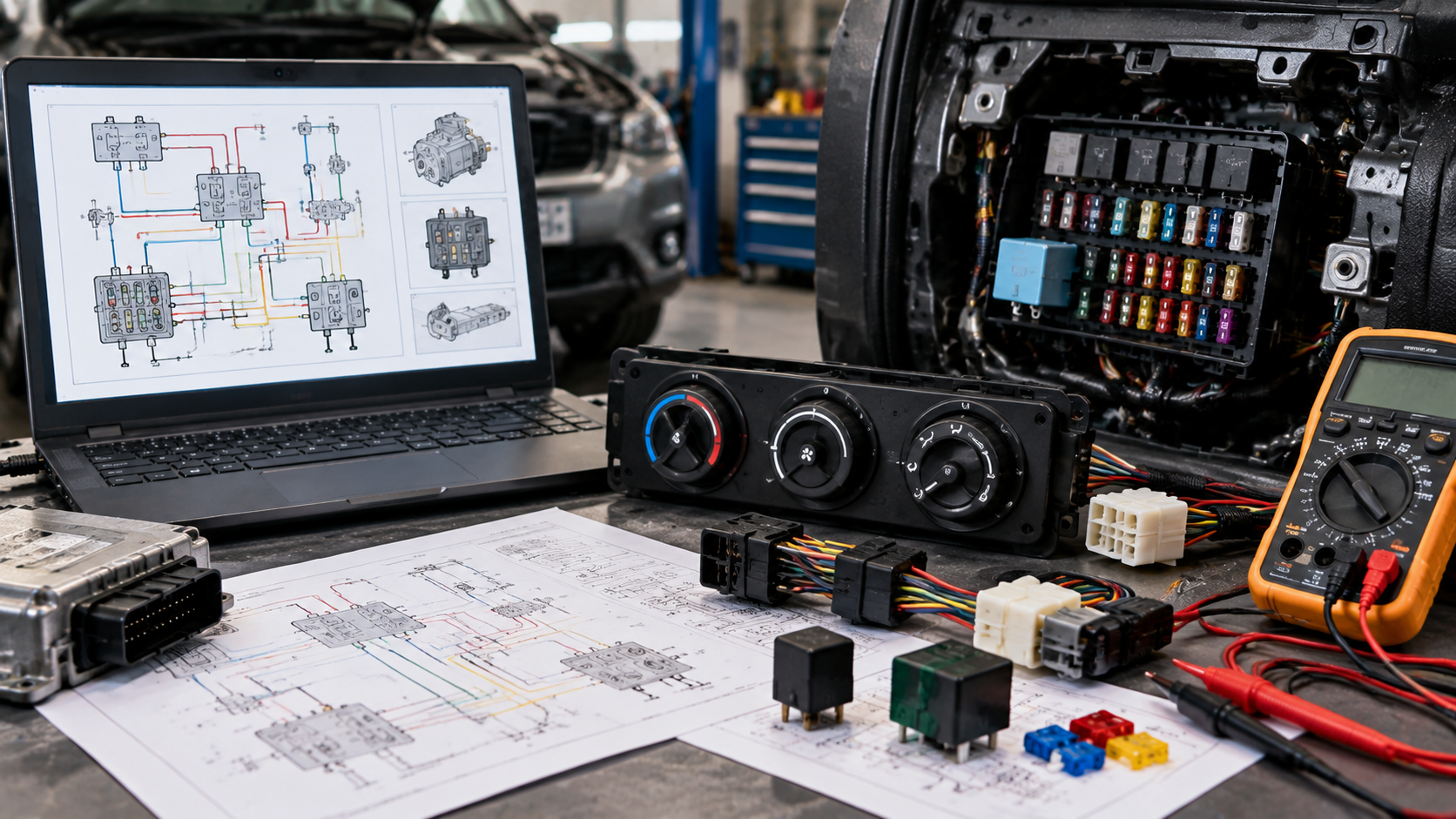
A car air conditioner repair is not always caused by a mechanical AC component. Modern vehicles rely heavily on electrical controls, sensors, modules, relays, and wiring to operate the cooling system correctly.
A vehicle AC system may stop working because the compressor is not receiving the correct command or because a safety system has prevented operation.
Common electrical causes of car air conditioner problems include:
- Failed AC relay.
- Blown fuse.
- Damaged wiring connection.
- Faulty pressure sensor.
- Temperature sensor issue.
- Climate-control module fault.
- Compressor control problem.
Before replacing an expensive AC component, electrical checks should confirm whether the component is actually receiving the required power and control signals.
NXT Motors workshop manuals are valuable during car air conditioner repair because electrical layouts differ between vehicles. Some vehicles use a traditional compressor clutch system, while others use variable displacement compressors controlled electronically.
The correct manual can help identify:
- AC fuse locations.
- Relay positions.
- Wiring routes.
- Connector locations.
- Sensor circuits.
- Control module communication.
NXT Motors also explains how to read automotive wiring diagrams because AC electrical diagnosis often requires following the circuit from the power source to the affected component.
Car Air Conditioner Compressor Repair
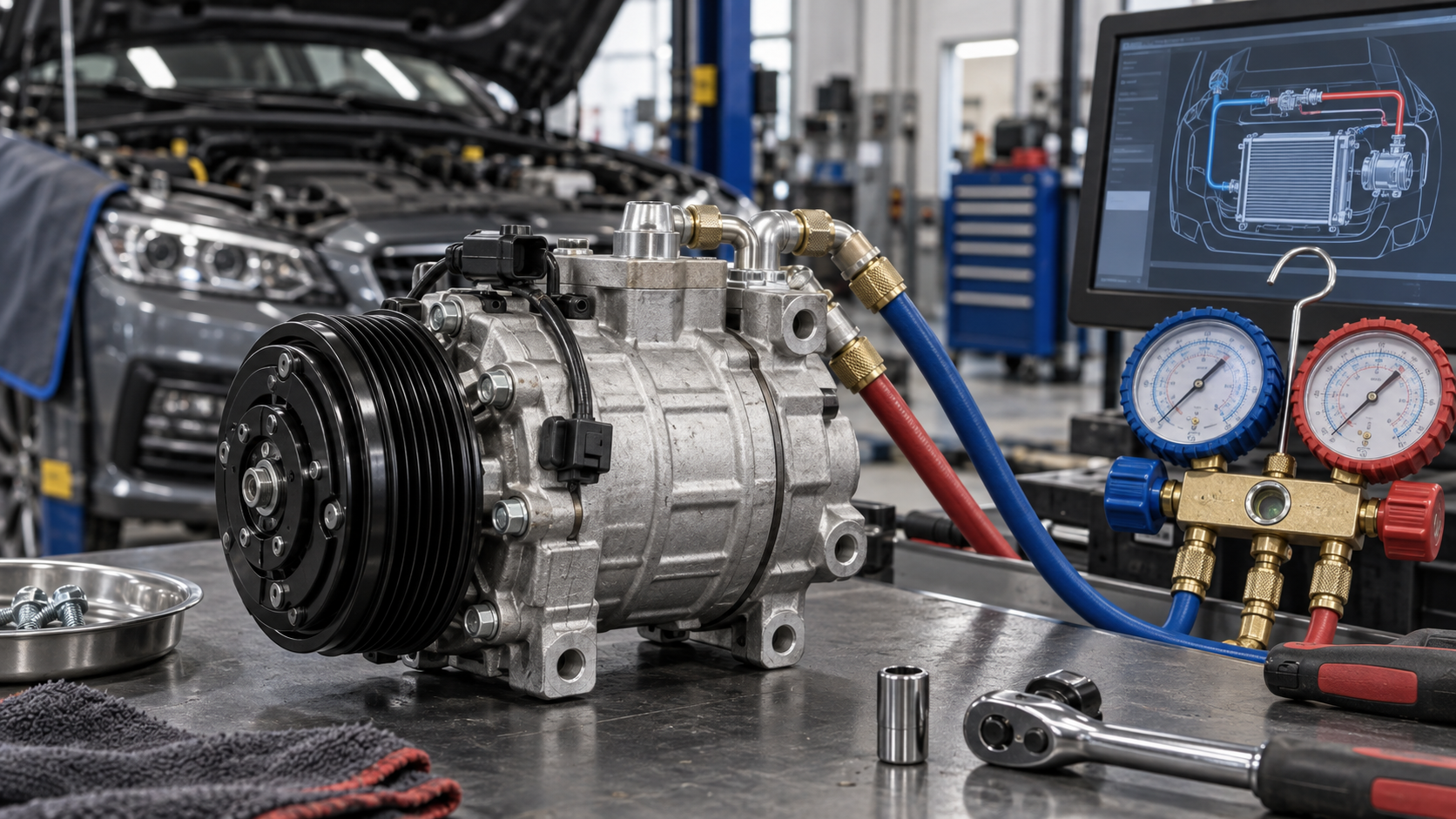
The compressor is the heart of the AC system because it moves refrigerant through the cooling cycle. A compressor-related car air conditioner repair can range from an electrical issue to a complete component replacement.
Before replacing the compressor, technicians usually confirm:
- Does the compressor receive the correct electrical command?
- Is the clutch engaging if equipped?
- Are refrigerant pressures within the expected range?
- Is another component preventing compressor operation?
- Is the compressor mechanically damaged?
A compressor should not automatically be blamed simply because the AC is blowing warm air.
For example:
A compressor may not engage because of:
- Low refrigerant pressure.
- Faulty pressure sensor.
- Electrical supply problem.
- Failed relay.
- Control system restriction.
Replacing the compressor without confirming the actual failure can result in unnecessary expense.
NXT Motors workshop manuals help identify the correct compressor design, mounting location, electrical connections, and replacement procedure for the exact vehicle.
Car Air Conditioner Condenser Repair
The condenser removes heat from the refrigerant after it leaves the compressor. It is normally located at the front of the vehicle near the radiator area, making it exposed to road debris and environmental damage.
A car air conditioner repair involving the condenser may be needed when:
- Refrigerant leaks are detected.
- The condenser is physically damaged.
- Airflow through the condenser is restricted.
- Internal contamination affects operation.
Common condenser-related symptoms include:
- Weak cooling performance.
- Refrigerant loss.
- AC performance changing with vehicle speed.
- Visible damage near the front of the vehicle.
A condenser problem is not always obvious because refrigerant leaks can occur from small cracks, connections, or damaged seals.
The correct workshop manual helps confirm condenser location, removal sequence, refrigerant specifications, and related component access.
Car Air Conditioner Evaporator Repair
The evaporator is located inside the HVAC housing and removes heat from cabin air before cooled air reaches the vents.
An evaporator-related car air conditioner repair is often more complex because the component is usually located behind the dashboard.
Possible evaporator problems include:
- Refrigerant leaks.
- Restricted airflow.
- Odor caused by contamination.
- Drainage problems.
- HVAC housing issues.
Signs of possible evaporator problems include:
- Weak cooling.
- Refrigerant loss without visible external leaks.
- Water leaking incorrectly inside the cabin.
- Unusual smells from vents.
Because evaporator access can require significant interior disassembly, vehicle-specific repair information becomes especially important.
NXT Motors workshop manuals help show:
- HVAC housing design.
- Dashboard removal sequence.
- Evaporator access procedure.
- Related electrical connections.
Car Air Conditioner Expansion Valve and Refrigerant Control Repair
The expansion valve or refrigerant metering device controls how refrigerant enters the evaporator. If it does not operate correctly, the AC system may fail to maintain proper cooling performance.
Possible expansion-system problems include:
- Restricted refrigerant flow.
- Incorrect pressure balance.
- Contamination inside the system.
- Valve failure.
A car air conditioner repair involving refrigerant-control components requires accurate diagnosis because similar symptoms can appear from compressor, condenser, or refrigerant-level issues.
Replacing the expansion valve without confirming the cause may not solve the problem.
NXT Motors workshop manuals help identify:
- Component location.
- Refrigerant circuit layout.
- Service procedures.
- Required system specifications.
Car Air Conditioner Repair Complexity
The difficulty of car air conditioner repair depends on which part of the system has failed and how much access is required.
Car Air Conditioner Repair Complexity Table
AC Component | Repair Complexity | Main Challenge | Workshop Manual Value |
Cabin air filter | Low | Access location varies | Filter location and replacement procedure |
Fuse or relay | Low to moderate | Correct circuit identification | Electrical layout |
Compressor clutch/electrical issue | Moderate | Diagnosis before replacement | Wiring and component information |
Condenser replacement | Moderate | Refrigerant recovery and front-end access | Removal sequence and specifications |
Compressor replacement | Moderate to high | Correct diagnosis and system servicing | Installation procedure |
Evaporator replacement | High | Dashboard/HVAC access | Interior removal sequence |
Refrigerant leak repair | Varies | Finding the actual leak source | System layout and component locations |
A car air conditioner repair becomes more complex when the failed component is hard to access, even if it isn't expensive.
For example:
A small evaporator leak may require major dashboard disassembly.
A compressor replacement may look simple externally but still requires proper refrigerant-handling procedures.
NXT Motors workshop information helps readers understand the repair scope before deciding whether to attempt the work or visit a professional.
Car Air Conditioner Repair: Manual vs Repair Shop
A workshop manual and a repair shop offer different value during car air conditioner repair.
The manual provides vehicle-specific technical information, while the repair shop provides equipment, physical inspection, and hands-on service capability.
Car Air Conditioner Manual vs Repair Shop Comparison
Repair Need | NXT Motors Workshop Manual | Repair Shop |
Identify AC components | Shows vehicle-specific layout | Confirms physical condition |
Check electrical system | Provides wiring information | Performs live electrical testing |
Understand refrigerant system | Provides specifications | Uses recovery and charging equipment |
Access hidden components | Shows removal sequence | Performs physical disassembly |
Diagnose complex faults | Provides technical reference | Uses diagnostic tools and experience |
Perform refrigerant service | Explains system information | Handles refrigerant safely |
A workshop manual is especially useful before visiting a repair shop because it helps owners understand the system and communicate more clearly about the suspected issue.
NXT Motors guide on digital car manuals vs mechanic advice explains how technical information and professional service can work together.
However, refrigerant handling requires specialized equipment and should follow proper environmental and safety procedures.
Car Air Conditioner Repair Safety
A car air conditioner repair involves refrigerant, pressure systems, electrical components, and sometimes specialized equipment.
Important safety considerations include:
- Do not open a pressurized AC system without proper equipment.
- Do not release refrigerant into the atmosphere.
- Avoid electrical testing if you don't understand the circuit.
- Follow vehicle-specific procedures before removing components.
- Use proper tools and protective equipment.
Refrigerant systems operate under pressure, and incorrect handling can create safety risks.
NXT Motors workshop manuals help identify the correct system information, but they do not replace professional refrigerant recovery equipment or technical training.
Ford Car Air Conditioner Repair
Match Ford car air conditioner repair to the exact model year and system configuration. Ford vehicles use different HVAC layouts, compressor systems, and electrical strategies across generations.
The NXT Motors Ford category connects broad AC repair questions with vehicle-specific workshop manuals.
Ford F-150 Car Air Conditioner Repair Factors
A Ford F-150 car air conditioner repair depends on the engine, model year, and HVAC configuration.
For applicable vehicles, the 2007-2013 Ford F-150 2WD workshop manual provides a vehicle-specific manual destination.
The manual helps verify AC component locations, electrical information, and repair procedures for the correct configuration.
It should not be interpreted as evidence that every F-150 has the same AC failure.
Toyota Car Air Conditioner Repair
A Toyota car air conditioner repair requires matching the correct generation and HVAC system because Toyota vehicles can vary significantly across model years.
NXT Motors Toyota category helps users match their AC issue to the correct technical documentation.
Toyota Camry Car Air Conditioner Repair Factors
A Toyota Camry car air conditioner repair should begin with confirming the exact generation and system configuration.
For applicable vehicles: 1997-2002 Toyota Camry LE workshop manual provides the relevant NXT Motors manual destination.
The manual can help identify AC components, wiring information, and service procedures for that vehicle configuration.
BMW Car Air Conditioner Repair
A BMW car air conditioner repair can involve advanced climate-control systems, electronic compressor management, and vehicle-specific HVAC designs.
NXT Motors BMW category provides access to manuals organized by vehicle configuration.
BMW 3 Series F30 Car Air Conditioner Repair Factors
For applicable vehicles: 2012-2018 BMW 3 Series F30 workshop manual provides a technical reference for the matching configuration.
The manual helps verify AC system layout, component locations, and repair information rather than assuming every BMW AC system operates identically.
Volkswagen Car Air Conditioner Repair
A Volkswagen car air conditioner repair requires correct model and platform identification because HVAC systems vary across generations.
NXT Motors Volkswagen category helps connect AC repair topics with vehicle-specific manuals.
Volkswagen Golf Mk6 Car Air Conditioner Repair Factors
For applicable vehicles: 2008-2013 Volkswagen Golf Mk6 workshop manual provides the relevant workshop manual destination.
The manual supports car air conditioner repair by helping verify HVAC components, electrical connections, and system procedures for that platform.
Car Air Conditioner Repair: Confirm the Procedure Before Starting
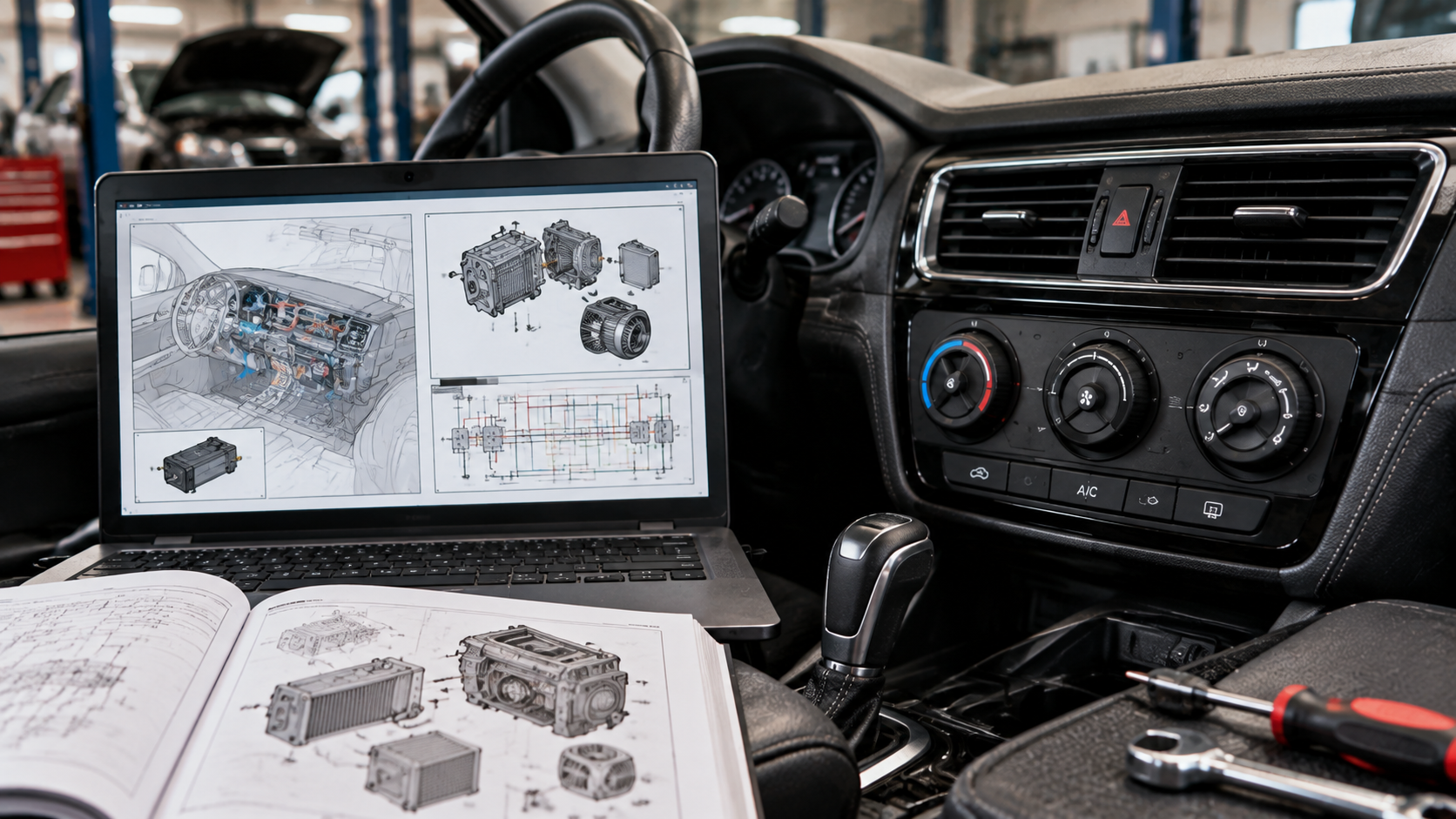
Once the cause of the AC problem has been identified, the next step in a car air conditioner repair is confirming the correct procedure before replacing components or opening the refrigerant system.
A proper repair decision should confirm:
- The exact failed component.
- The correct vehicle configuration.
- Required tools and equipment.
- Refrigerant type and capacity.
- Electrical diagnosis results.
- Component access requirements.
- Manufacturer repair procedures.
Many AC problems look similar from the driver's seat. A system blowing warm air may be caused by low refrigerant, compressor control issues, electrical faults, airflow problems, or mechanical failures.
That is why the first step in how to repair car air conditioner is not replacing parts. It is identifying where the system has stopped working.
NXT Motors helps connect the repair question with vehicle-specific workshop information, allowing owners, technicians, and DIY users to understand:
- Where AC components are located
- How the system operates
- What components are connected
- What repair steps are required
- When professional equipment is needed
Before replacing an expensive AC component, find the correct workshop repair manual for the exact vehicle and confirm the system information first.
Commonly Asked Questions About Car Air Conditioner Repair
Why Is My Car Air Conditioner Blowing Warm Air?
A car air conditioner blowing warm air can happen for several reasons, including low refrigerant, compressor problems, electrical faults, airflow restrictions, sensor issues, or climate-control failures. Warm air from the vents does not automatically mean the compressor has failed.
The correct diagnosis starts by checking whether the compressor operates, whether the system has the correct refrigerant pressure, and whether electrical components are functioning correctly.
A vehicle-specific workshop manual helps identify the AC system design, component locations, and testing information for that exact model. NXT Motors uses this approach to prevent unnecessary replacement of expensive AC components before the real cause is confirmed
How Do I Know If My Car AC Needs Refrigerant?
A car air conditioner that needs refrigerant may show symptoms such as weak cooling, inconsistent temperature, or warm air from the vents. However, refrigerant loss usually indicates another problem because a properly sealed AC system should maintain its refrigerant level.
Low refrigerant may result from leaks in hoses, seals, condensers, evaporators, or other AC components. Simply adding refrigerant may temporarily improve cooling but will not fix the underlying issue.
Proper car air conditioner repair requires finding the leak source first, then confirming the correct refrigerant specification and repair procedure using vehicle-specific information.
Why Does My Car AC Work Sometimes and Then Stop?
A car air conditioner that works intermittently may have an electrical, pressure, sensor, compressor-control, or temperature-related issue. The problem may appear only under certain conditions, such as when the vehicle gets hot, when driving at certain speeds, or after extended operation.
Intermittent AC problems are often difficult to diagnose because the system may work normally during inspection. A workshop manual can help identify the electrical circuits, sensors, relays, and control strategies used by that specific vehicle.
NXT Motors recommends confirming the system behavior and matching the diagnosis to the correct vehicle documentation before replacing parts.
Can I Repair My Car Air Conditioner Myself?
A car air conditioner repair may be possible for simple issues such as replacing an accessible cabin filter, checking a fuse, or inspecting visible components. However, many AC repairs involve refrigerant systems, electrical diagnosis, specialized tools, and safety procedures.
Opening the refrigerant circuit requires proper recovery equipment and should not be done without appropriate training and equipment. Compressor replacement, leak repair, refrigerant charging, and evaporator repairs often require professional tools.
NXT Motors workshop manuals can help explain the system and repair requirements, but they do not replace specialized AC service equipment.
How Much Does Car Air Conditioner Repair Cost?
The cost of a car air conditioner repair depends on which component has failed, how difficult it is to access, and what equipment is required. A simple electrical issue or fuse replacement can differ greatly from replacing a compressor or evaporator.
The repair cost is often influenced more by labor time than by the component price. For example, an evaporator replacement may require significant dashboard removal, while an accessible electrical repair may take much less time.
NXT Motors workshop information helps explain the repair scope by showing component locations, access requirements, and service procedures before work begins.
Why Is My Car AC Making Noise?
An air conditioner making unusual noises may involve the compressor, pulley, clutch, blower motor, fan, or another HVAC component. The type and location of the sound can provide important clues.
A clicking noise, grinding, rattling, or unusual compressor operation may point to different possible causes. However, noise alone does not identify the failed component. Proper car air conditioner repair requires confirming the source of the sound and comparing it with the vehicle-specific system design and repair information.
Why Is Water Leaking Inside My Car When AC Is Running?
Water dripping from the vehicle is often normal because the evaporator removes moisture from cabin air. However, water appearing inside the cabin may indicate a drainage problem or HVAC housing issue.
A blocked evaporator drain, incorrect drain routing, or an HVAC housing problem can allow moisture to enter areas where it shouldn't. The correct workshop manual helps identify the HVAC layout and drain location for the specific vehicle.
NXT Motors uses vehicle-specific information to separate normal AC condensation from a repair issue.
Img P
Image 1
Placement: H1: How to Repair Car Air Conditioner
Prompt:
16:9 realistic premium automotive workshop scene showing a modern vehicle with the hood open, AC diagnostic equipment nearby, digital workshop manual displaying HVAC system information, clean professional environment, technically accurate components, no text overlay, no logos, no people.
Alt Text:
How to repair car air conditioner by diagnosing the AC system before replacing parts
Image 2
Placement: How to Repair Car Air Conditioner: Find the Actual Fault First
Prompt:
16:9 technical automotive illustration showing a vehicle air conditioning system flow with compressor, condenser, evaporator, expansion valve, blower, and refrigerant path visually connected, clean educational workshop-manual style, no labels, no text.
Alt Text:
Car air conditioner diagnosis showing AC system components and repair points
Image 3
Placement: Car Air Conditioner Compressor Repair
Prompt:
16:9 realistic automotive technical image showing an AC compressor assembly beside diagnostic gauges and vehicle service information, professional repair environment, accurate mechanical details, no branding, no readable text.
Alt Text:
Car air conditioner compressor repair and AC system diagnosis
Image 4
Placement: Car Air Conditioner Electrical Diagnosis
Prompt:
16:9 automotive electrical diagnostic scene showing AC wiring diagrams, fuse panel, relay box, and HVAC control connectors on a professional technician workstation, no hands touching live components, no text overlays, no logos.
Alt Text:
Car air conditioner electrical diagnosis using wiring diagrams and fuse checks
Image 5
Placement: Car Air Conditioner Repair Manual Selection
Prompt:
16:9 realistic workshop scene showing a digital OEM-style vehicle repair manual with HVAC diagrams beside a vehicle interior dashboard and AC controls, professional technical environment, no readable brand names, no text overlay.
Alt Text:
Car air conditioner repair manual with vehicle-specific HVAC information