
How Much Does It Cost to Wrap a Car in 2025? Full Pricing Guide

If you’ve ever wondered how much it costs to wrap a car, you’re not alone. Quotes can range anywhere from budget-friendly jobs to premium invoices that rival high-end paintwork. Without understanding the breakdown, many drivers overpay, cut corners, or end up with a poor wrap that harms their vehicle’s look and long-term value.
The good news: car wrapping doesn’t have to be a guessing game. This guide explains every cost factor, what professional shops include in their pricing, and how to budget smartly without falling for common traps.
We’ll cover price ranges, material and labor differences, and hidden costs people often overlook. Whether you’re considering a full-body wrap, a partial design, or comparing vinyl wraps to paint jobs, this article gives you the numbers and insights you need to decide.
Car Wrap Pricing: What Really Impacts the Cost

When people ask “how much to wrap a car?”, the answer depends on several variables:
- Vehicle size: Coupes and compacts take less material; SUVs, trucks, and vans require more vinyl and labor.
- Wrap material: Standard gloss vinyl is the cheapest. Specialty films like carbon fiber, metallic, or chrome cost significantly more.
- Finish type: Matte, satin, and color-shifting wraps demand higher prices and skill.
- Labor quality: Experienced installers charge more, but deliver cleaner edges, fewer bubbles, and longer-lasting results.
- Car condition: Dents, rust, or damaged paint surfaces often require prep work, which adds to cost.
How Much Material Does a Car Wrap Use?
Material costs depend on vehicle size and square footage:
- Compact car: 50–60 feet of vinyl
- Sedan: 65–75 feet
- Truck or large SUV: 90–100+ feet
Premium vinyl brands (3M, Avery Dennison) and specialty finishes raise the price per foot.
Average Car Wrap Price Ranges (U.S. 2025)
- Small cars (compact/coupe): $1,500 – $2,500
- Sedans: $2,000 – $3,500
- SUVs or trucks: $3,000 – $5,000
- Luxury/exotic cars: $5,000 – $10,000+
These prices cover full-body wraps with standard materials. Custom graphics, metallics, or complex installs can easily push totals higher.
Partial Car Wraps: Cheaper Alternatives
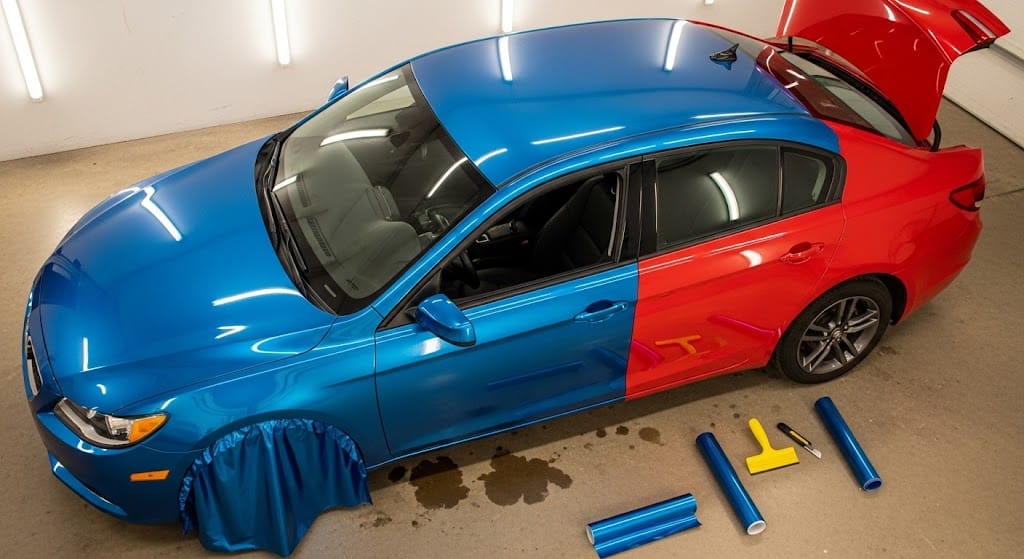
- Roof or hood: $250 – $600
- Accent panels or stripes: $500 – $1,000
- Half-wraps (sides or top-to-bottom designs): $1,000 – $2,500
Partial wraps save money but require careful color-matching with your existing paint.
Does Wrap Finish Affect Price?
- Gloss wraps: Most affordable, clean, paint-like look.
- Matte or satin: Higher cost, more prone to fingerprints and scratches.
- Chrome/metallic: Among the most expensive options, often doubling costs.
- Color-shifting wraps: Premium films that change shades with light, priced at the top end.
Other Factors: Location & Installer Experience
Urban shops often have higher labor rates, but installer experience matters most. Paying more upfront for a professional saves money long-term since poor application can lead to peeling or bubbling.
Car Wrap vs Paint: Which Lasts Longer?

A vinyl car wrap typically lasts 5–7 years with proper care, sometimes up to 10 with premium films. High-quality paint jobs last longer but cost significantly more. Wraps are removable, making them ideal for style changes without hurting resale value.
Hidden Costs to Ask About
- Prep work: Rust or dent repair before wrapping
- Panel removal: Handles, mirrors, and bumpers for seamless coverage
- Protective coatings: Ceramic or PPF applied over vinyl
- Wrap removal: $500–$1,000 when it’s time to change
Is Wrapping a Car Cheaper Than Painting?
Yes, in most cases. A quality paint job can start at $3,000 and exceed $10,000, while most wraps range between $2,000 and $5,000. Wraps also win on flexibility—you can remove or change them without damaging the original paint, protecting resale value.
Conclusion: Car Wrap Costs Explained
The cost to wrap a car depends on size, material, finish, installer skill, and prep work. Expect anywhere from $1,500 for small cars with standard vinyl to $10,000+ for exotic vehicles with specialty finishes. The key is choosing the right installer and being realistic about the add-ons.
At NXT Motors, we provide not just pricing insights, but also repair manuals and DIY resources to help you care for your car before and after a wrap. Whether you’re planning a full transformation or a partial accent, the right knowledge ensures your investment lasts.
Frequently Asked Questions About Car Wrap Costs
In most cases, car wraps don’t increase insurance premiums. However, insurers may require you to report the modification if it alters the vehicle’s value or appearance. Ask your provider if wrap damage is covered under comprehensive insurance or if separate coverage is needed.
Yes. Many professional wrap shops offer payment plans or partner with third-party financing providers. This lets you break the total cost into smaller monthly payments, especially helpful for high-end or custom wrap jobs.
Maintaining a vinyl-wrapped car is generally low-cost. Use gentle soap, microfiber towels, and avoid abrasive cleaners. Touchless car washes are usually safe, but harsh chemicals or automatic brushes can reduce the wrap’s lifespan.
Yes, in some cases. A well-installed wrap protects your factory paint from sun damage and scratches. If removed before resale, the original paint underneath may look newer, helping preserve or increase resale value—especially on collector or luxury vehicles.
Custom-designed wraps for business branding or advertising usually cost more than a standard vinyl color change. Expect to pay $500 to $2,500 more depending on the complexity of the design, printing, and installation. These wraps often include logos, patterns, and full-vehicle coverage.
DIY wrapping can save money upfront, but it comes with a learning curve. You’ll need heat guns, squeegees, surface prep tools, and a clean space to work in. Mistakes like bubbles, wrinkles, or torn vinyl may lead to costly rework. For full wraps or expensive vehicles, professional installation is often a smarter investment.