
Hyundai ix35 Service: Prevent Costly Breakdowns & Tackle Common Issues Now

Are you a Hyundai ix35 owner feeling a nagging worry about unexpected repair bills? Many owners face significant issues, from costly Hyundai ix35 diesel particulate filter problems to baffling electrical glitches and alarming engine concerns, especially with models like the 2013 Hyundai ix35. Neglecting your Hyundai ix35 service schedule can quickly turn minor hiccups into major headaches, jeopardizing your vehicle’s reliability and your peace of mind.
By understanding the specific vulnerabilities of your Hyundai ix35 and sticking to a proactive maintenance plan, you can significantly extend its lifespan, improve performance, and avoid the wallet-draining surprises many others experience. Regular checks and timely interventions are your best defense.
This guide will walk you through the essential Hyundai ix35 service intervals, highlight critical common issues to watch out for – including insights into specific model years like the 2013 Hyundai ix35 1.7 CRDi – and provide practical advice on how to keep your SUV running smoothly. We’ll also cover how to find reliable information on the 2013ix35 manual and wiring diagrams for DIYers and informed repairs.
Main Focus Keyword: Navigating Hyundai ix35 Service and Common Issues: Your Guide to a Reliable Ride

Understanding the specific maintenance needs and potential trouble spots for your Hyundai ix35 is paramount for long-term ownership satisfaction. This section will walk you through essential service considerations and shed light on frequent problems, enabling you to maintain your vehicle proactively. After all, nobody wants a breakdown, do they?
A guide to the Hyundai ix35 Service Schedule and Intervals
Keeping up with your Hyundai ix35 service schedule is the single most effective way to ensure its longevity and prevent unexpected issues. There are often varying recommendations, depending on whether you consider “normal” or “adverse” driving conditions. Frankly, for a used vehicle, adhering to the “adverse conditions” schedule isn’t a bad idea at all. It means more frequent, albeit minor, attention.
- Interim Service: Typically, an Interim Service is suggested every 6 months or 6,000 miles, whichever comes first. This involves critical checks like fluid levels, lights, tires, and a visual brake inspection. It’s particularly useful for those doing lots of short trips or accumulating high mileage quickly.
- Full Service: An annual Full Service or every 12,000 miles is usually recommended. This expands on the interim checks, including a more rigorous look at brake health, radiator pipes, and power steering fluid levels. An air filter replacement is also usually part of this service.
- Major Service: Every 24 months, a Major Service is advised. This comprehensive service covers everything, including significant items like brakefluid and pollenfilter replacements, ensuring your vehicle runs as intended.
- Key Component Intervals: Specific components have their timelines. For instance, engine oil and filter changes for Hyundai ix35 2.0 diesel models are often every 15,000 km or annually. The fuel filter on these diesels typically needs changing at 30,000 km. Engine coolant might be every 90,000 km or five years initially, then every 30,000 km or two years subsequently. Interestingly, the timing chain, designed to last the engine’s life, generally doesn’t have a fixed replacement interval but should be checked periodically after 200,000 km, especially if you notice unusual noises.
Tackling Hyundai ix35 Diesel Particulate Filter Problems

One of the most talked-about concerns for owners of diesel models, particularly the 2013 Hyundai ix35 1.7 CRDi, revolves around Hyundai ix35 diesel particulate filter problems. These issues commonly arise when the filter can’t effectively regenerate itself.
That’s usually because the car isn’t getting hot enough for long enough, a common scenario for those of us mostly driving in urban areas.
- Symptoms to Watch For: You might notice reduced engine power, often described as the car feeling sluggish, or perhaps smoke, possibly black, during acceleration. A drop in fuel efficiency is another tell-tale sign. Sometimes, the car enters a “limp mode”—power severely limited—which can be unnerving on the motorway. Crucially, the DPF warning light might illuminate; a solid light suggests a blockage, while a flashing one indicates it’s nearly complete. Occasionally, you won’t get any warning light, making diagnosis tricky.
- Causes of DPF Issues: The main culprit is usually a lack of proper DPF regeneration, which requires high exhaust temperatures. Short, frequent journeys are the primary reason for this. Also, a faulty exhaust back pressure sensor or temperature sensor can really mess things up, preventing the system from kicking in to clean itself.
- Solutions and Prevention: The best defense here is preventative driving. Try to take your Hyundai ix35 on a freeway drive at consistent speeds (around 60 MPH) for at least 15-20 minutes every few weeks. This allows for automatic regeneration. If the problem persists, a professional diagnostic check is necessary. They suggest DPF cleaning, which can involve chemical additives or a professional machine clean. In severe cases, a DPF replacement becomes unavoidable, and yes, it’s not cheap, potentially costing upwards of £1000. For instance, a 2013 Hyundai ix35 diesel with over 90,000 km had a defective DPF that needed significant repair, estimated at 1550€. Oh, and be aware of engine oil dilution; persistent incomplete regenerations can introduce diesel into your engine oil, leading to accelerated wear.
Common Mechanical and Electrical Issues Beyond the DPF

While Hyundai ix35 diesel particulate filter problems get a lot of attention, the Hyundai ix35 has other common issues that owners, particularly of the 2013 Hyundai ix35, have reported. Being aware of these can help you identify problems early and prevent more significant repairs.
- Suspension Noises: Creaking from the front suspension, especially over bumps, is relatively standard. It often comes from movement between the shock absorber rod protection and the upper bearing. A bit of sealant can sort this, thankfully. Rear suspension knocking has also been noted.
- Clutch Problems: Many Hyundai ix35 owners have reported clutch issues like a burning smell or difficulty engaging gears. A soft clutch pedal often points to a faulty clutch master cylinder. This is especially problematic in stop-and-go traffic.
- Electrical Quirks: Sometimes, the entertainment system just decides to shut down. This often relates to a low battery, especially if you’re only making short trips. Instrument panel gauges dropping to zero while driving is another known, albeit less frequent, electrical issue.
- Gearbox Concerns: For manual versions, gearbox synchro failure is a common repair request, often surfacing around 115,000 km. It’s a costly repair, involving gearbox removal and clutch replacement.
- Recalls: It’s really important to check for any outstanding recalls. The 2013 Hyundai ix35, for example, was part of a significant recall for fire risk due to a manufacturing defect where brake fluid could leak into the ABS module. There were also recalls for seatbelt tensioner cables and airbag retention nuts. If you’re looking at a used model, confirming these fixes have been done is, well, just smart.
Finding Your ix35 Manual 2013 and Wiring Diagrams

For the proactive owner or a seasoned DIY enthusiast, having access to proper documentation is invaluable. Whether you own a 2013 Hyundai ix35 1.7 CRDi or another variant, knowing where to find your 2013 Hyundai ix35manual or the necessary wiring diagram can save you time and money.
- Owner’s Manuals: You can often find a digital version of the 2013 Hyundai ix35 owner’s manual in PDF format online, sometimes even specific to UK specifications. If you prefer a physical copy, 584-page English-language manuals for the 2013-2014 models are available for purchase.
- Service & Repair Manuals: For more in-depth mechanical and electrical information, dedicated service and repair manuals are your best bet. Haynes, for example, offers online repair guides for the Hyundai ix35 starting from 2013, which are great for diagnostics and servicing. These include details on electronic diagnostics tools and mechanical guides.
- Wiring Diagrams: Need to trace an electrical fault? A Hyundai ix35 wiring diagram is what you’re after. These are typically found within the comprehensive service and repair manuals, covering everything from engine components and fuse boxes to specific sensors and relays. You can often find these manuals as downloadable PDFs. Be sure to specify your exact model year, as diagrams can vary. For example, diagrams for the Hyundai ix35 D4HA-H/2 engine are available and quite detailed.
Engine Insights for Your Hyundai ix35
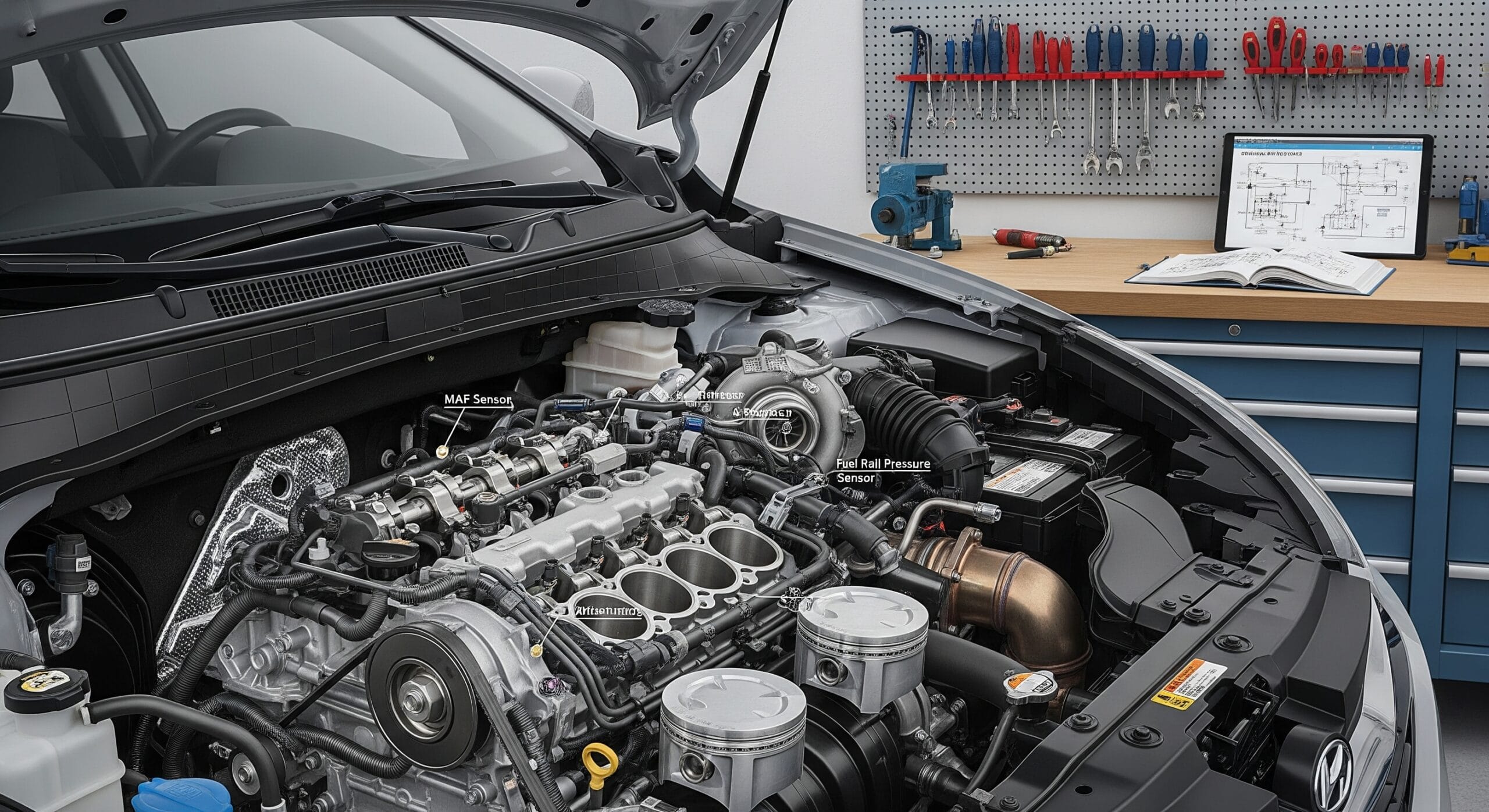
The Hyundai ix35 engine diagram might seem intimidating at first glance, but understanding its basic components helps in knowing what’s going on under the hood. The Hyundai ix35 was available with various engine options, including 1.6L and 2.4L petrol engines, and 1.7L and 2.0L diesel engines.
The 2013 Hyundai ix35 1.7 CRDi is a good example, known for its decent fuel economy and lower servicing costs compared to the 2.0 CRDi variant.
- Key Engine Components: A typical Hyundai ix35 engine diagram would illustrate components like the engine block, cylinder head, pistons, crankshaft, and camshafts. Crucial ancillary systems like the fuel system, air intake system, and exhaust system are also mapped out.
- Electrical Components: On the electrical side, expect to see the placement and connections of various sensors (e.g., accelerator pedal position sensor, AC refrigerant pressure sensor) and actuators, along with their electrical connections and relays. This is where an exemplary Hyundai ix35 wiring diagram really comes into its own for troubleshooting.
- Maintenance of Engine Components: Regular engine oil and oil filter changes are absolutely vital for any Hyundai ix35 engine. For diesel variants, maintaining a clean fuel filter is particularly important, given its common fault of needing replacement around every 20,000 km. Checking the timing chain periodically, even though it’s designed for life, is also wise, especially as mileage climbs over 200,000 km.
Making the Most of Your Hyundai ix35 Ownership
Ultimately, keeping your Hyundai ix35 in top shape boils down to a blend of diligent maintenance and informed observation. It’s not just about addressing issues when they arise, but anticipating them.
Many owners find joining online Hyundai ix35 owner forums or even Facebook groups incredibly helpful for sharing experiences and getting practical advice.
You’d be surprised what a shared bit of wisdom can do for troubleshooting a mysterious knocking sound or that odd entertainment system glitch.
Whether you’re dealing with the everyday frustrations of Hyundai ix35 diesel particulate filter problems or simply keeping up with your Hyundai ix35 service schedule, being proactive is key.
Don’t be shy about consulting your ix35 manual 2013—it’s there for a reason! Remember, a well-maintained vehicle isn’t just about avoiding costly repairs; it’s about ensuring your vehicle performs safely and reliably for years to come. That piece of mind? Priceless, if you ask me.
Frequently Asked Questions (FAQs)
Generally, a basic interim service might run you around £77 to £133. A more comprehensive full service typically falls between £106 and £178, while a significant service, performed every two years, usually starts from £179 and can go up to £289. Keep in mind, specific costs for things like a brake fluid flush or a transmission service can add a couple of hundred pounds to the bill, so do check with your mechanic.
The Hyundai ix35 maintains a solid reputation for reliability, particularly when regularly serviced. Owners often report repairs starting at an average age of 9.3 years or around 80,000 miles. With consistent, proactive maintenance, you can expect your ix35 to perform dependably for many years beyond that.
While the AWD system provides enhanced traction, owners have occasionally reported specific issues. These include corrosion and spline problems with the intermediate support of the right axle shaft. Lubricant leakage from the center coupling and failures of the electric motor within that coupling have also been noted. Naturally, such repairs can be pretty involved.
For most Hyundai ix35 diesel models, specifically the 2.0 diesel, a 5W-30 viscosity is typically recommended. When performing an oil change, you’ll generally need about 8 liters of oil, though the total engine oil capacity might be slightly higher at around 8.8 liters. Always consult your owner’s manual for the most precise specification for your exact model.
It’s an interesting point that many owners discuss! While manufacturer figures for the ix35, like the 1.7 CRDi’s official 5.2 L/100km combined, sound great, real-world driving often yields different results. User reviews commonly suggest an actual average closer to 6.4 L/100km. So, expect your mileage to vary. It’s typical for cars to perform less efficiently than their official ratings.