
Ford Laser Sedan: Is It Still Reliable, or a Costly Mistake?

Finding a dependable budget car like a 2001 Ford Laser sedan or other Ford Lasers for sale can feel like a win, but what if that seemingly reliable Ford Laser holds hidden pitfalls? For many, an appealing Ford Laser review might suggest a safe bet, yet overlooked issues could quickly transform a bargain into a costly headache.
The 2001 Ford Laser sedan, including the LXi and GLXi variants, remains a remarkably reliable and cost-effective vehicle, often praised for its longevity and practicality. However, savvy buyers must be aware of its specific quirks and common problems to avoid surprises down the road.
This comprehensive guide dives deep into everything you need to know about the Ford Laser sedan’s performance, features, common issues, and how to spot a genuinely good 2001 Ford Laser for sale. We’ll equip you with the insights to make an informed decision and ensure your next budget-friendly ride is truly a wise investment.
Performance and Engine Options: What to Expect From Your 2001 Ford Laser
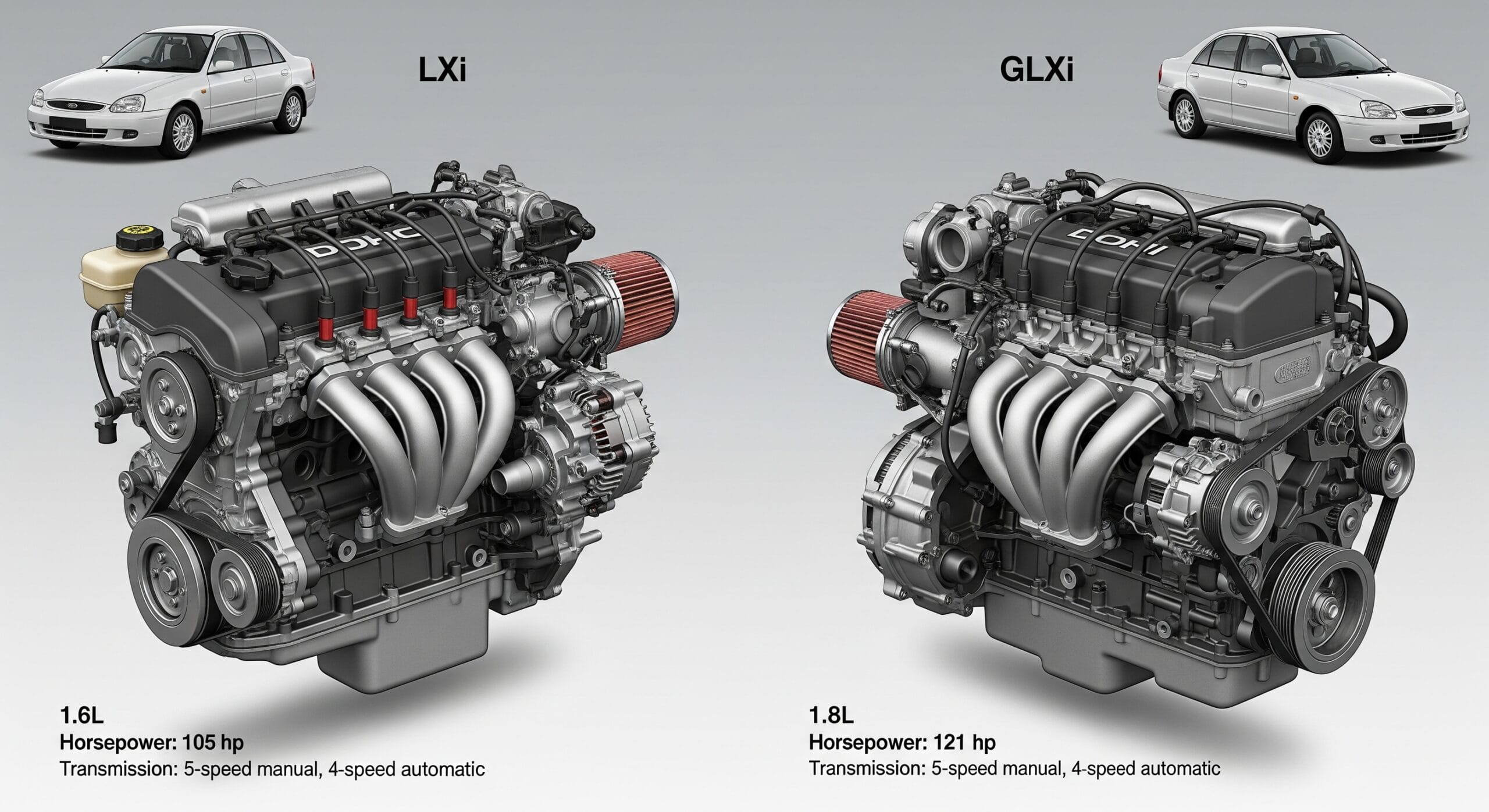
When you’re considering a 2001 Ford Laser sedan, the engines on offer are straightforward. You’ll primarily find two petrol options, both four-cylinder units, offering a balance of efficiency and everyday usability. The 2001 Ford Laser LXi typically came equipped with a 1.6-liter engine, producing around 79 kW (that’s about 106 horsepower for those of us who prefer the imperial system) and 145 Nm of torque. This setup is perfectly adequate for city driving and provides enough oomph for highway cruising without feeling stressed.
Now, if you want a bit more zing, the 2001 Ford Laser GLXi steps it up with a 1.8-liter engine. This one pushes out approximately 90 kW (121 horsepower) and 160 Nm of torque. That extra displacement helps, making the GLXi feel noticeably peppier, especially off the line. For instance, a GLXi with a 5-speed manual transmission could hit 100 km/h in about 9.9 seconds. The LXi, on the other hand, would take around 11.1 seconds. So, you see, there is a tangible difference in acceleration. Both engine types typically feature multi-point fuel injection, which was quite modern at the time, helping with efficiency. Transmissions were either a 5-speed manual or a 4-speed automatic, standard for the era.
1.6L Engine (LXi):
- Power: 79 kW (106 hp)
- Torque: 145 Nm
- 0-100 km/h (manual): ~11.1 seconds
1.8L Engine (GLXi):
- Power: 90 kW (121 hp)
- Torque: 160 Nm
- 0-100 km/h (manual): ~9.9 seconds
Fuel economy is another strong suit for the Ford Laser 2001. You can generally expect combined fuel consumption figures around 9.0 L/100km for both engines, though real-world numbers vary, naturally, with driving style and maintenance. Some manual transmission owners even report getting upwards of 500 km from a single 55-liter tank on the open road. Not too shabby for a car of that vintage.
Ford Laser Reliability: Can it Go the Distance?
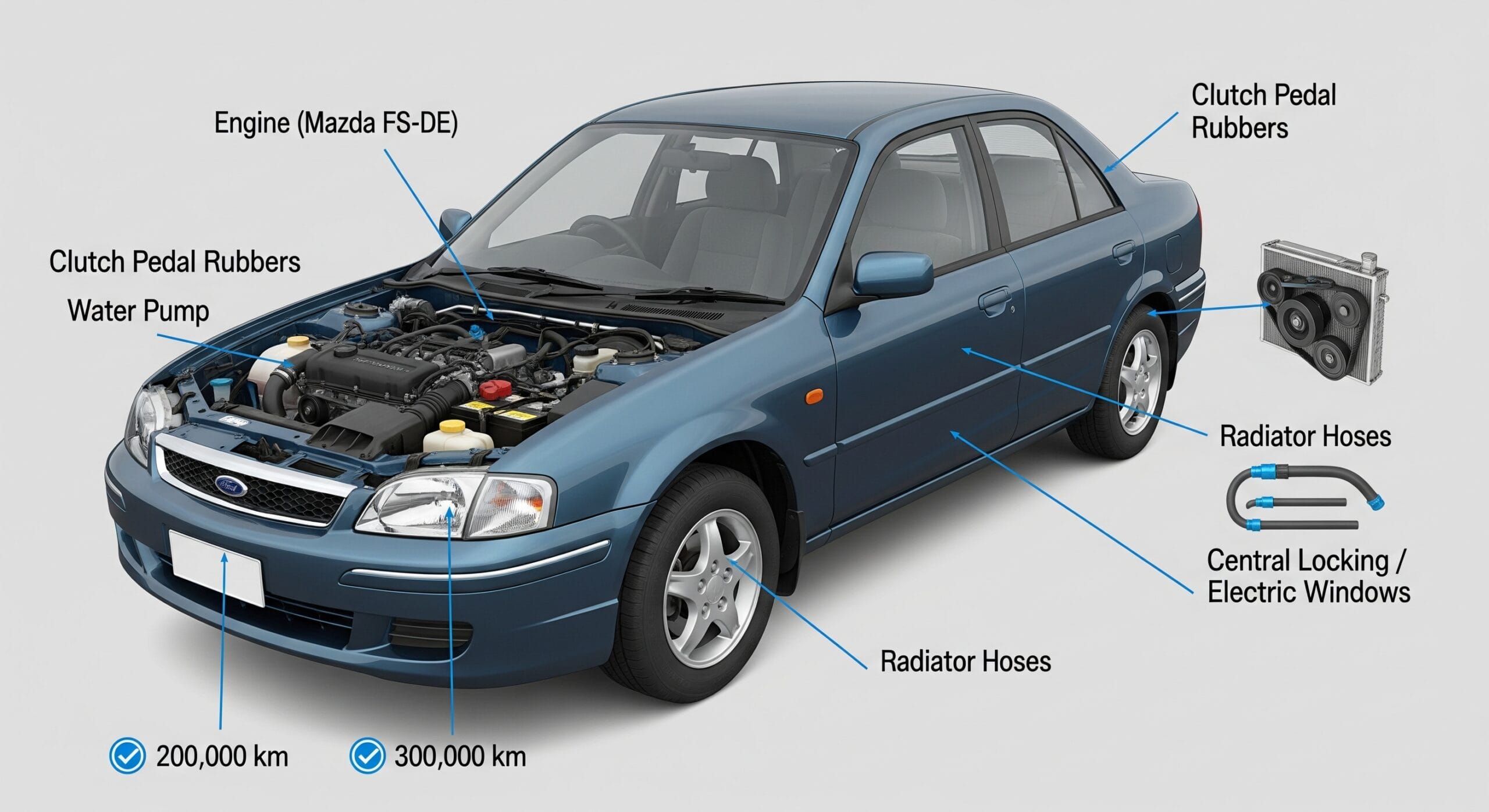
Ah, reliability, the million-dollar question for any older vehicle! Well, for the Ford Laser, especially the 2001 Ford Laser sedan, the news is mainly positive. Owners and mechanics consistently praise its dependability. I’ve heard stories of these cars hitting 300,000 km, even 500,000 km, with proper care and attention. Think about it: a car from 2001, still running strong? That’s quite impressive.
That said, no car is perfect, and the 2001 Ford Laser does have its quirks. You should be aware of a few common issues that might crop up. For example, some owners have reported that the Mazda FS-DE engines, which were used in some Ford lasers, can start to burn a bit of oil at higher mileages. It’s not necessarily a deal-breaker, just something to keep an eye on during your regular oil checks.
Another thing, the clutch pedal rubbers can wear out surprisingly quickly in manual models, sometimes in as little as 20,000 km. It’s a minor annoyance, not a major mechanical problem. Additionally, issues such as the water pump or radiator top hose may require attention, particularly if the car has high mileage, exceeding 275,000 km. These are everyday wear-and-tear items for any vehicle with that kind of mileage.
Common Mechanical Concerns:
- Oil Consumption: Possible in higher mileage Mazda FS-DE engines.
- Clutch System: Watch for worn pedal rubbers and occasional fluid seepage from the master cylinder.
- Cooling System: Water pump and radiator hoses can eventually leak at very high mileages.
Electrical Nuances:
- Central Locking: The driver’s door sometimes has trouble opening from the inside.
- Electric Windows: Front windows may occasionally malfunction.
- Intermittent Engine Stalling: This is tricky to diagnose, as it could be due to sensors or wiring issues.
The main takeaway is that consistent, basic maintenance, such as oil changes and timing belt replacement every 100,000 km, as recommended by Ford, makes these Ford lasers incredibly durable. Parts are generally standard, and heck, you can even find parts at junkyards, which says a lot about their prevalence and repairability.
What to Look For When Buying a 2001 Ford Laser for Sale
If you’re in the market for a 2001 Ford Laser for sale, you’ll be glad to know they’re pretty affordable on the used car market. Prices can vary quite a bit, though, ranging from approximately AUD 1,650 to AUD 4,100, depending on its condition, mileage, and specific variant. A 2001 Ford Laser LXi with lower kilometers, say under 86,000 km, might command a higher price, perhaps even around $4,000. Conversely, a car with more significant cosmetic issues or higher mileage would, naturally, be much cheaper.
When you go to inspect a potential Ford Lazer, here are a few things to keep in mind, in addition to the usual checks:
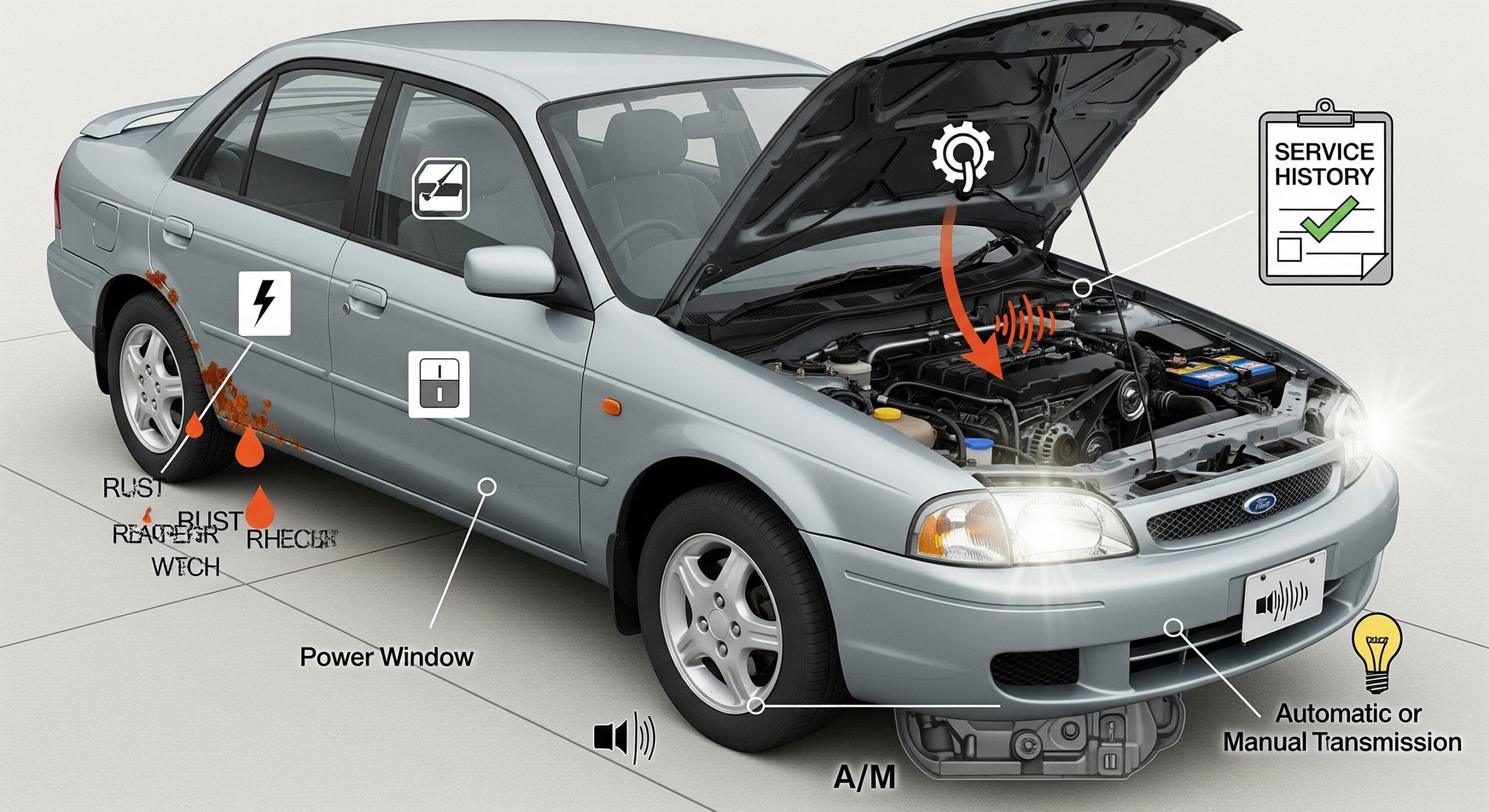
- Rust: It’s an older car, so check for rust, especially in less obvious spots. Surface rust on non-essential parts, like wiper arms, isn’t a huge deal, but body rust is something else.
- Engine Noise: Listen for any rattling from the engine bay or unusual squealing when cold, which could point to a slipping accessory belt or other issues.
- Transmission Check: If it’s an automatic, pay attention to any jerking, shuddering, or delayed engagement. A flashing “Hold” light on the dash? That’s a red flag for the Jatco FN4AEL automatic transmission, possibly signaling diff bearing issues. Manuals, on the other hand, should feel smooth through the gears.
- Electricals: Test all the lights, power windows, and central locking. Intermittent issues can be a real pain to track down later.
- Service History: Always, always, try to get a service history. It tells you a lot about how well the car’s been maintained. The suggested service schedule for the 2001 Ford Laser was every 6 months or 10,000 km.
Remember, what might seem like a cosmetic flaw, like peeling paint, isn’t nearly as important as solid mechanics. These cars were built to be dependable workhorses.
Features of the Ford Laser LXi and GLXi Models
The 2001 Ford Laser sedan was available in several variants, primarily the LXi and GLXi, and they offered a decent set of features for their time. Both were 4-door, 5-seat vehicles, designed with practicality in mind.
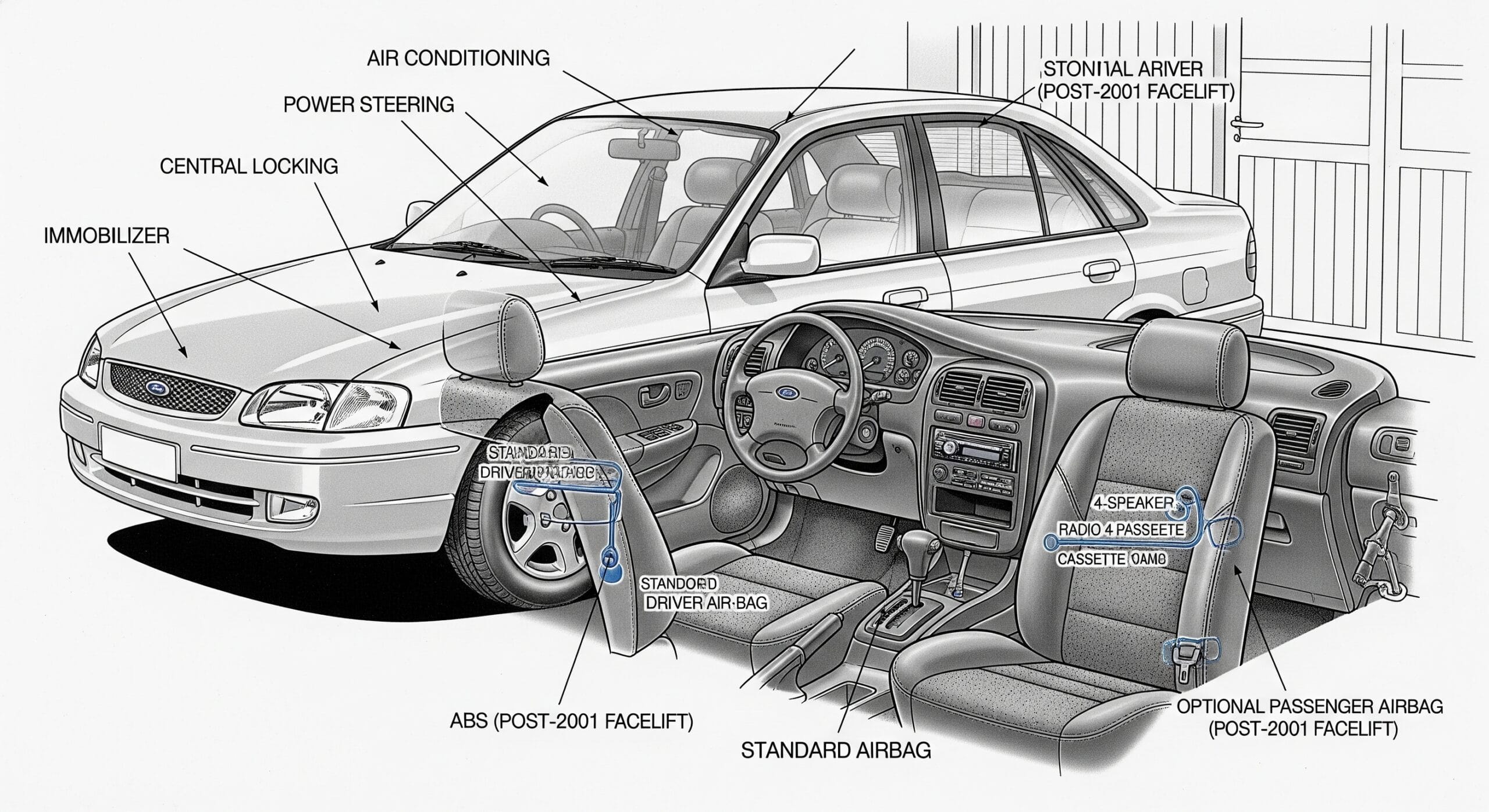
Standard across the board, you’d typically find a 4-speaker stereo with a radio and cassette player. Yes, a cassette player! That dates it, doesn’t it? Air conditioning was a standard comfort feature, which is a blessing in warmer climates, and power steering, often with a tilt-only steering column, made maneuvering a breeze. The interiors usually featured velour trim, which was a nice touch, giving it a slightly more upscale feel than some of its competitors. Central locking and an engine immobilizer were also standard, providing a basic level of security.
Regarding safety, this is where age becomes a factor. While a driver’s front airbag was standard on most models, a passenger airbag only became optional on the LXi and standard on other variants after the April 2001 facelift. ABS brakes were also optional from April 2001. You won’t find modern active safety features like Automatic Emergency Braking, Electronic Stability Control, or reversing cameras. This is a crucial consideration, especially if you’re looking for a first car for a younger driver. For its time, it was adequate, but today, it’s certainly limited in that regard.
The Ford Laser: A Shared History with Mazda
It’s fascinating, really, the history behind the Ford Laser. It wasn’t purely a Ford design. Instead, the Ford Laser was essentially a rebadged and restyled version of the Mazda Familia/323. This collaboration came about because Ford acquired a 25% stake in Mazda back in 1979. What a brilliant idea, right? Share platforms and assembly lines to save on costs. It meant the Laser benefited from Mazda’s strong engineering. This is why many parts are interchangeable with the Mazda 323, making maintenance and finding components a bit easier, honestly.
The Ford lasers were particularly popular in regions like Australia, New Zealand, and parts of Asia and Africa. In Australia, the sedan version was even sold as the Ford Meteor between 1982 and 1987. The 2001 Ford Laser belongs explicitly to the KN/KQ series, which was the final generation before the model was ultimately replaced by the Ford Focus in 2002. So, what you’re looking at is the culmination of two decades of compact car development under this shared lineage.
Finding Your Community: Ford Lazer Forums and Groups

Even for an older car like the 2001 Ford Laser, there are still communities out there where owners share advice, tips, and sometimes even parts. While you might struggle to find a Facebook group specifically for the “2001 Ford Laser sedan,” it’s just too niche; you’ll have much better luck with broader groups. Try searching for “Ford Laser owners,” “Ford Laser KN KQ,” or even “Mazda 323 BJ owners,” since they’re mechanically very similar.
Forums like the Australian Ford Forums or even general automotive subreddits like r/CarsAustralia often have discussions about these reliable old workhorses. People frequently ask about common problems, maintenance tips, or even where to find obscure parts. It’s always a good idea to tap into these resources; you’d be surprised by the wealth of knowledge and helpfulness of fellow enthusiasts. They’ve lived with these cars, after all.
Conclusion
Ultimately, the 2001 Ford Laser sedan holds a rather interesting position in the used car market. It’s pretty clear this car wasn’t a costly mistake for most owners; in fact, many laud its enduring reliability and impressive longevity. Equipped with either a 1.6L or 1.8L engine, it offers practical performance and reasonable fuel economy for daily driving. Yes, it lacks many modern safety features and can be a bit noisy on the highway, but considering its low purchase price, these trade-offs are often perfectly acceptable.
For those seeking a straightforward, economical, and notably dependable vehicle, a well-maintained 2001 Ford Laser can indeed be a very smart buy. It has its quirks, sure, like some of us do, but its core dependability and the general availability of parts truly make it a standout for budget-conscious buyers looking for solid transport that’s still got plenty of life left in it. Just make sure to get a good pre-purchase inspection!
Frequently Asked Questions (FAQs)
Many owners consistently report these vehicles surpassing 300,000 kilometers, with numerous examples even reaching 500,000 kilometers with diligent care. Seriously, this longevity stems from its fundamentally robust engine and straightforward mechanical design, allowing it to withstand years of regular use when appropriately maintained. Essentially, these cars were built to last, proving their endurance time and again.
Yes, finding parts for a 2001 Ford Laser is relatively easy. Given its shared platform with the Mazda 323, many components are interchangeable, vastly expanding your sourcing options. You’ll often find parts at local auto wreckers or junkyards due to their past popularity. Furthermore, online auto parts retailers and specialist Ford or Mazda parts suppliers typically stock a wide array of new and aftermarket components, ensuring continued repairability.
For a first car, the 2001 Ford Laser can be a very economical and dependable choice, truly. However, it’s crucial to acknowledge its safety limitations by modern standards. While a driver’s front airbag was standard, a passenger airbag and Anti-lock Braking System (ABS) became optional or standard on higher trims only after an April 2001 facelift. You simply won’t find advanced active safety features like Electronic Stability Control, automatic emergency braking, or reversing cameras. This is a significant consideration for inexperienced drivers navigating today’s roads.
Passenger comfort in a 2001 Ford Laser is acceptable for shorter commutes, but it does show its age on extended journeys. Owners frequently mention a noticeable level of cabin noise, especially when cruising at highway speeds. This is often because the engine tends to operate at higher RPMs, around 3000 rpm at 100 km/h, leading to a persistent drone. Additionally, the seating might become uncomfortable after several hours of driving, lacking the ergonomic support found in newer vehicles.